



Vol. 42, No. 02
02/01/2026
The National Security State and the American Cultural Revolution
AT A GLANCE
• America is threatened by a Marxist-inspired “Cultural Revolution.”
• Fully funded activist groups present themselves as fighting for separate causes, but in reality form a single revolutionary bloc.
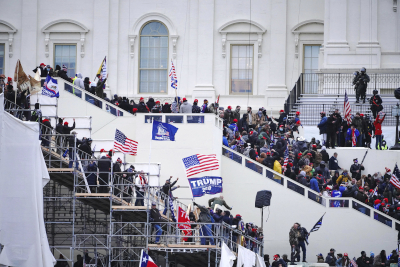
• January 6 was the planned inflection point that allowed the bureaucratic and activist alliance to declare open season on conservative and religious Americans.
• There must be a national effort to educate the public about the patterns, methods, and vocabulary of Marxist and neo-Marxist movements.
The American people have just taken their first full breath after surviving an attempt to smother the Republic through a Marxist-inspired cultural campaign carried out largely through the administrative state, media, academia, and politicized elements of the national security bureaucracy. Most Americans did not fully perceive it while it was happening. Many in the intelligence community either passively accepted it or actively furthered it. While the architects of this project are not finished, their effort has been damaged and delayed. It is only by the grace of God that the country has endured to this point.
The American Cultural Revolution is distinct from the one that ravaged China under Mao Zedong. It did not coalesce around a single, charismatic revolutionary figure. Instead, it spread along the arteries of bureaucracy, higher education, corporate structures, and activist networks. The long march through the institutions, as described by Antonio Gramsci, became the operational template. Rather than having our streets filled with Red Guards under the orders of an identifiable supreme leader, the United States experienced a coordinated convergence of agencies, NGOs, foundations, media outlets, and activist fronts, all advancing the same ideological project under different labels.
Because federal agencies differ widely in size, mission, culture, and internal resistance to revolutionary change, this revolution unfolded unevenly. It never achieved total dominance in a single decisive stroke. Instead, it advanced by fragmentary gains and suffered fragmentary defeats. Wherever the ideological project captured a human resources department, a training pipeline, a public-school system, or a central media platform, it encountered resistance in state governments, independent media, individual courts, and networks of courageous patriots who refused to comply. This piecemeal quality of implementation slowed the revolution and gave the American people time to see what was happening and respond.
Premium Content
Sign in with your ShopJBS.org account to read the full article, or subscribe below for unlimited digital access.
Log In to Continue Reading
- 12 Issues Per Year
- Digital Edition Access
- Digital Insider Report
- Exclusive Subscriber Content
- Audio provided for all articles
- Unlimited access to past issues
- Cancel anytime
- Renews automatically

- 12 Issues Per Year
- Print edition delivery (USA) *Available Outside USA
- Digital Edition Access
- Digital Insider Report
- Exclusive Subscriber Content
- Audio provided for all articles
- Unlimited access to past issues
- Cancel anytime
- Renews automatically