
Tufts Professor Canned Over Book With Errors, Faulty Scholarship, Improper Attribution
Yet again, a ballyhooed diversity, equity, and inclusion professor was ballyhooed way too soon. And the professor’s story is yet another story the far-left media have mostly left untouched.
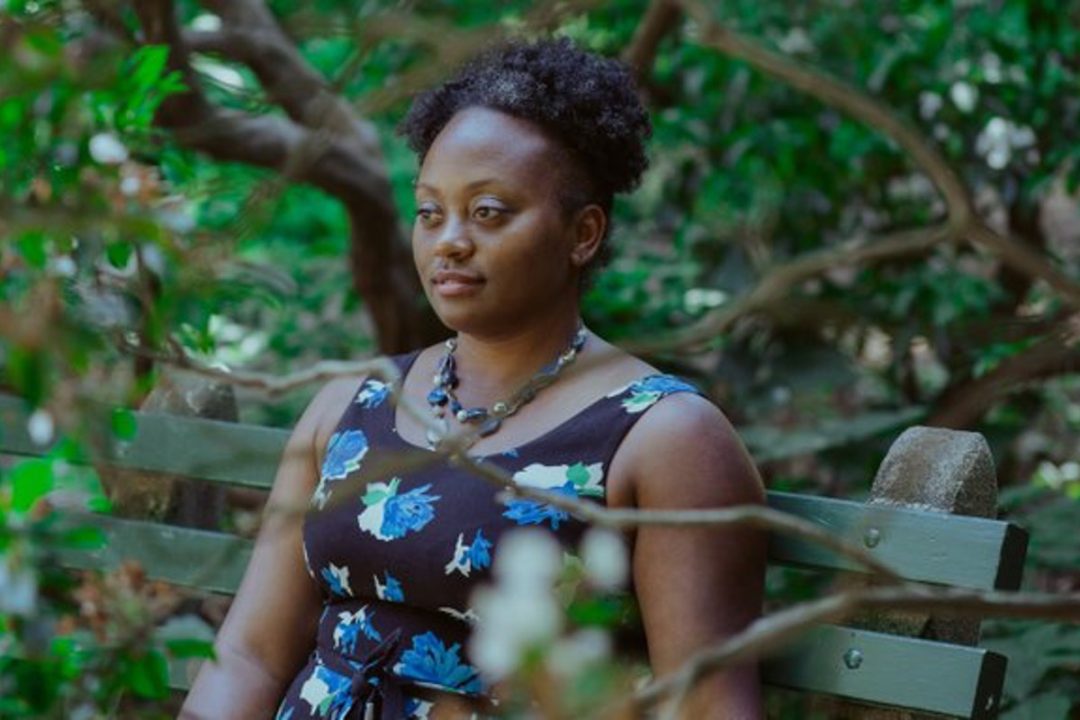
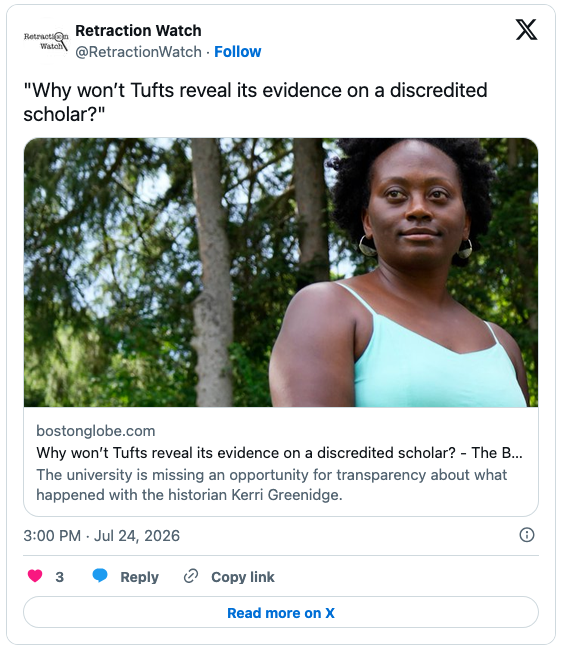
Only this time, as columnist Ann Coulter noted, plagiarism sleuth Christopher Rufo didn’t uncover the academic crime. Rather, it was retired history professor Myra Glenn. The former Elmira College academic uncovered what is at minimum sloppy scholarship, and at most academic fraud, by black “historian” Kerri K. Greenidge in her book, The Grimkes.
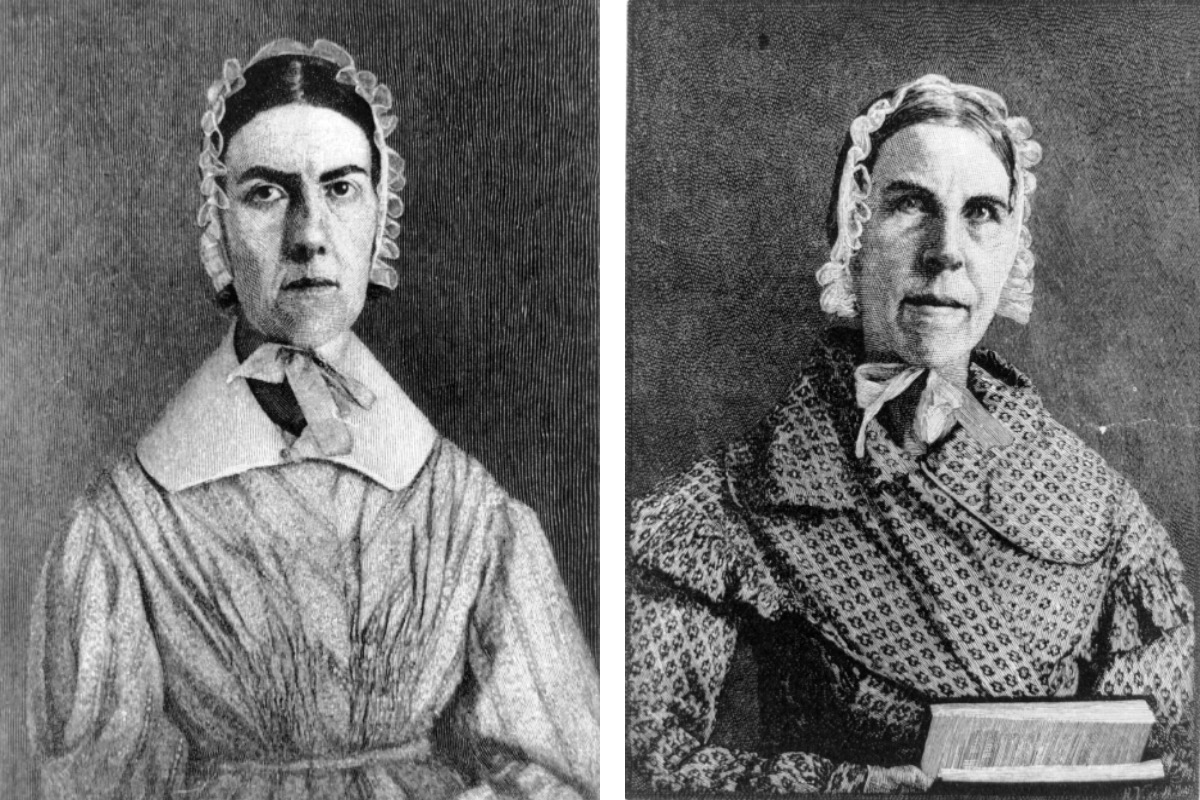
It tells the tale, supposedly, of two crazy Karens from South Carolina who left the South and traveled north to become abolitionists and women’s rights activists. The publisher recalled the book after Glenn’s review.
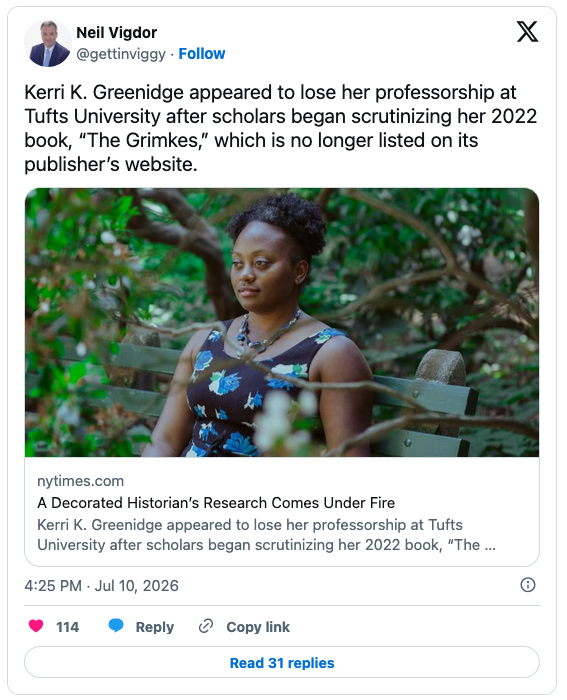
Greenidge was a professor at Tufts University in Massachusetts. No longer. Tufts also revealed that Greenidge did not give proper credit to another writer four years ago.
She’s just one in a long line of DEI academics caught fiddling with the truth.
“Where Is She Getting This?”
As The New York Times noted in its takeout of Greenidge’s fall from grace, all was well until skeptics began digging into The Grimkes, an excavation that Greenidge, naturally enough, attributed to “racism.”
Published by Liveright in 2022, the book was a smash among the literati. “Glowing write-ups came pouring in, including from The New York Times Book Review and Publishers Weekly, which named ‘The Grimkes’ one of the 10 best books of 2022,” the Times observed:
In 2023, the American Historical Association awarded Greenidge with the Joan Kelly Memorial Prize, which recognizes scholars in women’s history and feminist theory.
But “things began to unravel” when real scholars put a microscope on the book. One of them was Glenn.
“I said, ‘Where is she getting this?’” Glenn told the Times:
“Boy, it became a major problem.”
In March 2024, examining “The Grimkes” for Reviews in American History, a scholarly journal published by Johns Hopkins University Press, Glenn raised concerns about the book’s credibility.
That review is behind a subscription wall, but an excerpt at the Johns Hopkins website offers this:
Although well-written, The Grimkes is also a deeply flawed book. All too often Greenidge lacks the evidence to substantiate many of her major claims. Her work is also riddled with factual errors and repeatedly omits needed endnotes. She also fails to engage with the major scholarship noted above. For these reasons Greenidge fails to offer a compelling re-assessment of either the white or African American Grimkés.
But that wasn’t all, the Times reported. Glenn reported that the book contained letters between the two stone-faced sisters — who resembled angry petticoat Temperance tyrants from central casting at Twentieth Century-Fox — that Greenidge supposedly found at the University of Michigan. Alas and alack, Glenn said, the university “did not possess the letters in its archive, despite the book’s claims that they were kept there.”
“Glenn also disputed Greenidge’s account of an 1838 attack on Pennsylvania Hall in Philadelphia by an anti-abolitionist mob, which indicated that the Grimke sisters ‘led thousands of antislavery women through prayer’ and helped them escape the ‘flaming building,’” the Times reported:
“But as numerous sources have documented, no one was in the building when it was torched since antislavery activists cancelled a scheduled meeting, fearing impending violence,” Glenn wrote.
Cue Up the Usual Claim, DEI Gone Wrong
For her part, Greenidge was ready when the Times called upon her to explain.
She “said that her life’s work had been torn down by white scholars who disagreed with her conclusions about racism, slavery and white supremacy,” the newspaper reported:
“I am heartbroken that a field I have given my life to can treat me this way,” Greenidge said.
“The attack on Black women academics is real.”
While conceding she probably fouled up citations, Greenidge denied any wrongdoing:
“I have never plagiarized anything in my life,” she said. “I have never fabricated anything.”
Skeptics disagree. The publisher dropped the book from its website, and Tufts told the Times that Greenidge isn’t working there.
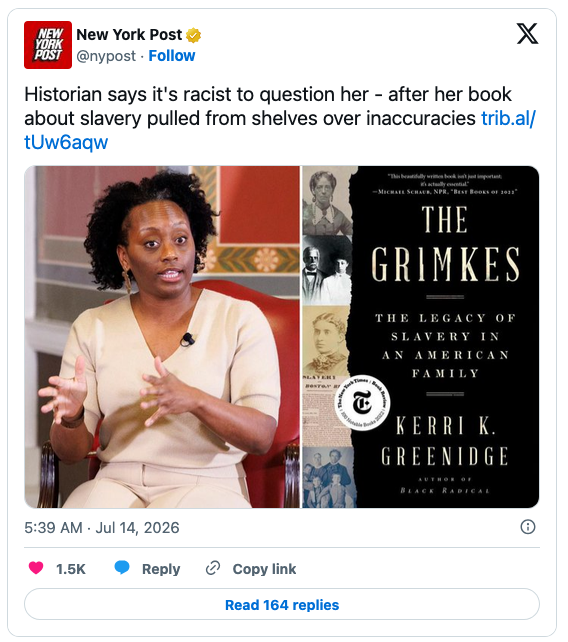
In an email, a spokesman told the Times that The Grimkes “contained multiple errors of fact.” Plus, in December 2022, Greenidge “failed to give appropriate credit to the work of another.”
“The university initiated a thorough peer review involving a panel of external scholars of American history which identified multiple errors of fact and citation,” the spokesman told the Times:
In keeping with its commitment to ethical conduct in research, the university proactively moved to correct the public record by informing publisher W.W. Norton of the peer review findings.
Greenidge declined to discuss details about her departure from Tufts or the status of her books or prizes.
She criticized the university’s peer review panel, which she said included two senior historians whom she described as hostile toward Black women in academia. She did not name them. She said that the university’s review was prompted by the complaints from a white woman scholar, whom she also declined to name. She said that she had sought a restraining order against that scholar.
Greenidge also raised questions about why The Times was writing about the accusations against her and the developments surrounding her book, suggesting that her race had played a part.
Not crediting another author is typically called plagiarism, a major problem among DEI hires at America’s top universities.
Other DEI Failures
While Rufo didn’t uncover the problem with The Grimkes, he revealed plagiarism at Harvard and other top universities in 2024.
After former Harvard President Claudine Gay was ousted for plagiarism, three more cases surfaced, one uncovered by the Washington Free Beacon. The website also found two cases at MIT.
Instead of letting Gay go after her extensive plagiarism was revealed, Harvard gave her another top job. Nor were the others fired.


