U.S. Launches New Airstrikes in Somalia As State Department Reverses UN Funding Cut
The United States launched at least five airstrikes in Somalia from November 13 to 15, supporting government troops fighting al-Shabaab. The campaign has surpassed every annual total before 2025.
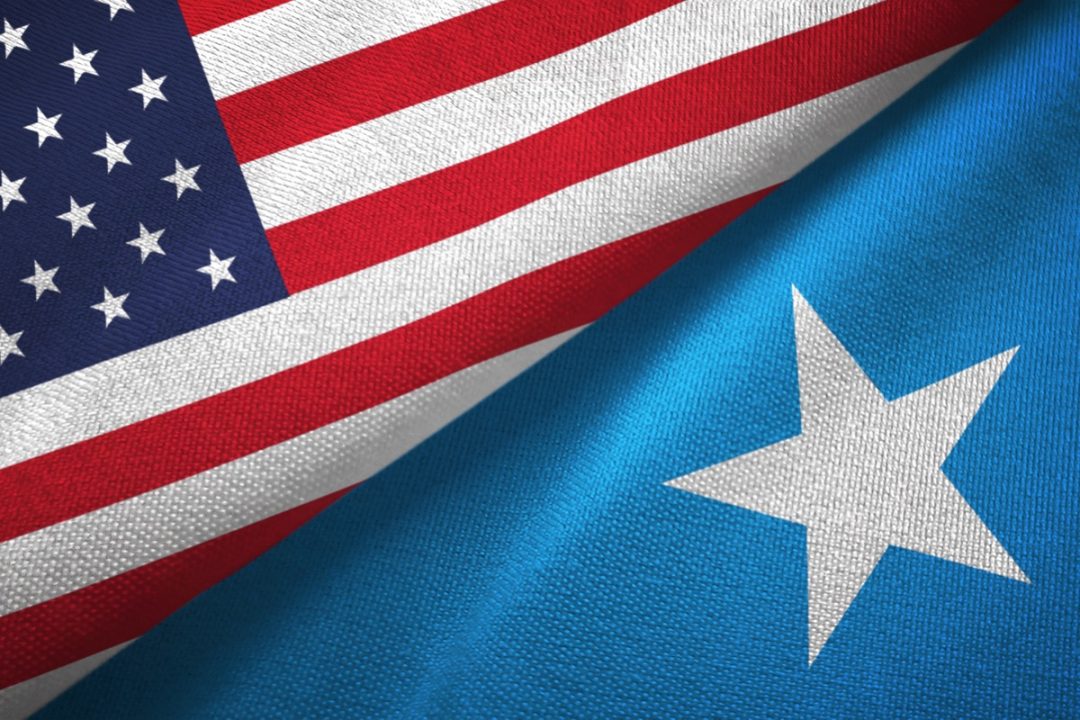
Meanwhile, the Trump administration reversed plans to cut UN support for African Union troops in Somalia. Washington now supports extending the mission for another year.
The War Nobody Notices
Antiwar.com news editor Dave DeCamp introduced his Wednesday report covering the latest airstrikes with a telling observation:
The war you didn’t know was happening is still happening.
Indeed, American forces continue bombing Somalia, while the conflict attracts little public attention, let alone questions over its congressional authorization.
DeCamp reported “heavy fighting between al-Shabaab and US-backed government forces.”
Al-Shabaab, an al-Qaeda affiliate, seeks to overthrow Somalia’s government, expel foreign troops, and impose its strict interpretation of Islamic law.
U.S. Africa Command (AFRICOM) confirmed five strikes from November 13 to 15. Two hit areas near Leego, about 70 miles northwest of Mogadishu. Others struck near Jamaame and Yora Lafagori. AFRICOM’s tracker lists another northwest of the capital.
Even AFRICOM’s accounts conflict. DeCamp noted that its press release and strike tracker “offer conflicting descriptions of the location” of the Yora Lafagori attack.
AFRICOM said it coordinated with Somalia’s government. It gave no casualty figures or operational details.
The attacks accompanied intense fighting near Leego, where the U.S.-trained Danab commandos launched an offensive. An ambush reportedly killed government soldiers, and Somali officials claimed to have killed senior insurgents.
American weapons have reportedly reached the insurgents themselves. In 2009, Antiwar.com’s Jason Ditz reported that Somali soldiers sold U.S.-supplied arms to traders, who allegedly resold them to al-Shabaab. Washington had supplied nearly 40 tons of arms.
The reported diversion was not deliberate U.S. assistance to al-Shabaab, but it illustrated the hazards of arming unreliable allies.
A Record-breaking Bombing Campaign
The five attacks brought AFRICOM’s published 2026 total to 97, according to DeCamp. New America’s broader tracking, which includes credible but officially unconfirmed strikes, put the number at 103.
The conflicting totals raise transparency concerns.
In October, AFRICOM told New America:
U.S. Africa Command publicizes all airstrikes conducted under its authority in Somalia on our public website. We do not maintain an undisclosed or unannounced strike count.
Researcher David Sterman identified strikes AFRICOM denied conducting. But other foreign militaries operate in Somalia, he cautioned.
Yet either tally exceeds every annual total before 2025. The record prior to then was 63 strikes in 2019, during President Donald Trump’s first term. His administration exceeded that in his second term, setting a new record in 2025.
Notably, the escalation in Somalia began under Barack Obama but accelerated dramatically under Trump. According to New America, the Obama administration conducted 13 strikes in the country in 2016, its highest annual total. As The New American reported in January 2019, Trump increased the number to 47 in 2018, more than tripling Obama’s record. He also doubled the American troop presence to roughly 500 personnel.
Al Jazeera noted another change: Trump also made it easier to authorize airstrikes. Early into his second term, his administration’s 2026 counterterrorism strategy restored greater approval authority to military commanders.
The outlet quoted Somali President Hassan Sheikh Mohamud, who acknowledged the change in September 2025:
During the era of President Trump, it is bigger and much easier than before.
AFRICOM chief General Dagvin Anderson told senators in 2025 that al-Shabaab and Somalia’s Islamic State affiliate intended to “attack U.S. interests.” But, he also admitted, “Whether or not they have that capability is not clear.”
About-face on UN Funding
The bombing surge coincides with a reversal in U.S. funding policy.
In July, Washington announced plans to end its support for the United Nations Support Office in Somalia (UNSOS), whose annual budget totaled roughly $500 million. The office provides logistical assistance to the African Union Support and Stabilization Mission in Somalia (AUSSOM).
A State Department spokesperson told Reuters:
The United States has provided nearly $2 billion in assessed contributions to UNSOS and its predecessor… Despite this investment, Somalia has been unable to independently sustain progress that AUSSOM and its predecessor missions have made to degrade and contain al-Shabaab or take ownership of most of its own security functions.
The cutoff threatened African Union forces holding territory against al-Shabaab.
But on November 15, the State Department told AFP it would “support a one-year renewal of the mandates” for UNSOS and AUSSOM.
One diplomat familiar with Somalia called the policy reversals “madness.”
Somalia’s government said the decision “reaffirms the enduring partnership between Somalia and the United States in the shared fight against terrorism.”
Still, the State Department ruled out an “indefinite commitment.”
The latest announcement did not specify a new U.S. contribution, and the UN Security Council must still approve the extension.
No Victory in Sight
Despite nearly two decades of American military intervention and billions in taxpayer funding, al-Shabaab remains entrenched. The Congressional Research Service estimates it has up to 18,000 fighters and raises $200 million annually through taxation and extortion. Militants have recaptured territory Somali forces seized in 2022 and 2023. Uganda, a major contributor to African Union forces, plans to withdraw by 2027.
Civilians bear the cost. Al Jazeera interviewed families injured or displaced during fighting near Jamaame in November 2025. One mother described the constant aircraft overhead:
The aircraft never leave us, night or day, and we have become accustomed to them.
AFRICOM denied that its strikes caused civilian casualties. A UN-linked network documented 12 deaths but could not establish responsibility.
Congress Sidelined, Taxpayers Billed
America’s bombing campaign in Somalia began under George W. Bush in January 2007, following Ethiopia’s U.S.-backed invasion. Barack Obama expanded the strikes, and in 2016 his administration classified al-Shabaab as an al-Qaeda “associated force” under the 2001 Authorization for Use of Military Force. Trump subsequently accelerated the campaign.
But who authorized this war?
Al-Shabaab did not exist in 2001. Congress never specifically authorized war against it, and the original statute neither mentions Somalia nor grants unlimited authority to fight terrorism worldwide.
In April 2023, the House rejected a resolution to withdraw U.S. troops, 321 to 102, with Republicans and Democrats alike opposing withdrawal. Yet rejecting withdrawal is not the same as authorizing war.
The financial toll is substantial. A Brown University study documented more than $2.5 billion in U.S. counterterrorism assistance since 2007, excluding military and intelligence operations, which are classified. Defense Priorities estimates that direct military involvement likely cost hundreds of millions more. Washington also provided nearly $1.6 billion to African Union troop-contributing countries, including Uganda, Kenya, Ethiopia, and Djibouti.
After nearly two decades of airstrikes and billions in taxpayer spending, Washington still owes Americans answers: What U.S. interests are at stake? What would victory look like? When will this war end? And why has Congress never specifically authorized it?