

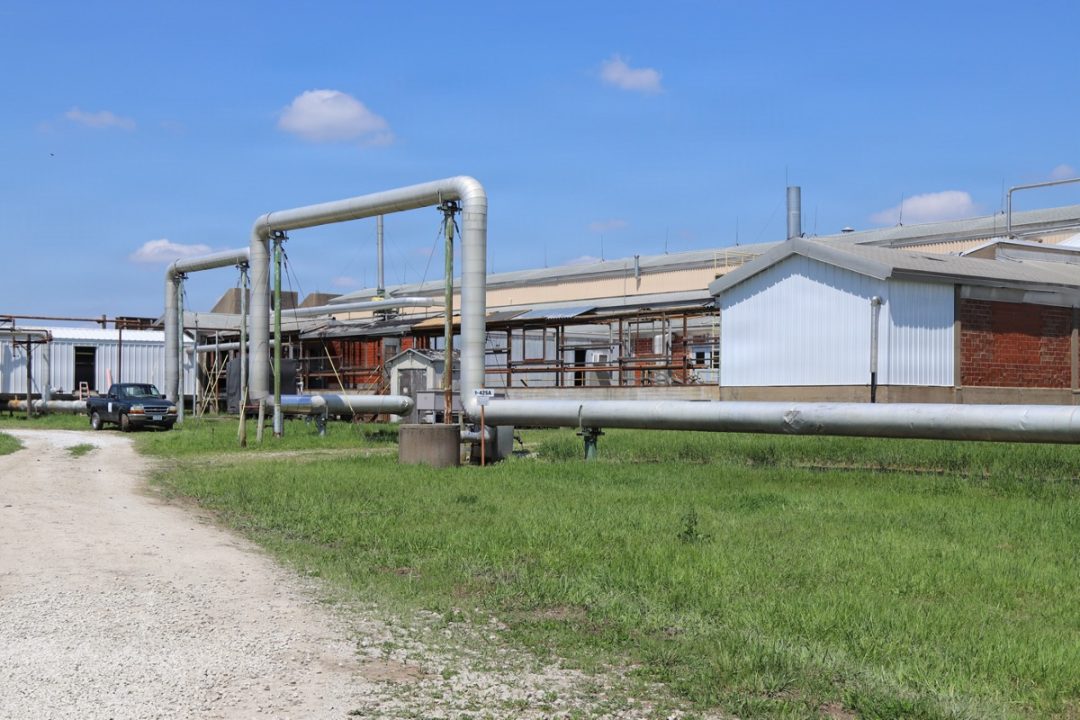
Court Halts Army Plan to Detonate Toxic Lead Amid Legal Challenges
The U.S. Army planned to dispose of nearly five tons of unstable, lead-based explosives at an Iowa ammunition plant by blowing them up and telling nearby residents to stay indoors. The explosions threatened to scatter toxic lead particles across surrounding communities and farmland. Now, a federal appeals court has halted the plan following a legal challenge by environmental groups questioning both its safety and legality.
The Order
On Thursday, the Eighth U.S. Circuit Court of Appeals temporarily suspended an Environmental Protection Agency (EPA) permit authorizing two explosions at the Iowa Army Ammunition Plant in Middletown, Iowa.
The court’s one-sentence order stated, in full:
An administrative stay of the emergency permit issued by the Environmental Protection Agency is granted until the emergency motion for stay is ruled upon by this court.
The order followed a petition and emergency motion filed that day by the Iowa Environmental Council and the Sierra Club, represented by Earthjustice. Both filings belong to one case.
It is an administrative pause, not a decision that the EPA acted illegally. The judges have yet to resolve the groups’ request for a longer stay or the underlying challenge to the permit.
The Army had already moved Friday’s detonation to Monday, November 23. The court’s intervention left even that revised date uncertain.
Twenty Years in Storage
The dispute concerns 68 drums containing roughly 9,700 pounds of lead azide, a highly sensitive explosive used in military ammunition.
According to the court filing, the Army stored the material for more than two decades in two earth-covered magazines. Inspectors discovered in March that the chemical had deteriorated. Changes in its storage solution had allowed crystals to form, making the material more sensitive to shock and friction.
The EPA permit describes an imminent danger of accidental detonation. The Army insists that moving the drums would expose workers to unacceptable risks.
Officials spent months reviewing disposal options, and the EPA issued successive emergency storage permits before approving in-place detonation on November 13.
The plant’s regular hazardous-waste permit did not authorize treatment at the storage site. The new emergency permit also required monitoring and possible cleanup beyond the facility’s boundaries. Those safeguards did not satisfy the challengers.
That authorization took effect immediately. Yet the EPA published public notice on November 16, three days later and only four days before the planned blasts.
The Army’s November 15 advisory acknowledged that explosions would send lead particles into the air and onto the ground. It urged people in projected impact areas to stay inside, close windows, limit outdoor exposure and clean contaminated surfaces afterward.
The Army’s plume projections also shifted as weather forecasts changed. Initial maps showed potential lead contamination extending dozens of miles into Iowa and Illinois. Yet officials across the region complained of inadequate warning. The Illinois EPA acknowledged that its federal counterparts had not even notified it of the planned explosions.
The Lawsuit
The environmental organizations argue that the EPA approved a dangerous disposal method without adequate safeguards or sufficient examination of alternatives.
Their emergency motion invokes the Resource Conservation and Recovery Act and federal rules governing miscellaneous hazardous-waste treatment facilities. It accuses the agency of arbitrarily accepting the Army’s conclusions about the necessity of open detonation.
The groups point particularly to chemical neutralization, which could destroy the explosive without creating a blast plume. The Army rejected that approach because it would require extended handling of unstable containers. The challengers say officials have not publicly supplied enough evidence to justify that dismissal.
They also contest the permit’s provisions for soil, water, crops, livestock, testing, and cleanup. Although the document requires sampling before, during, and after detonation, they argue that the measures do not adequately cover the possible exposure area. They want stronger protections for children, farmers, and nearby water supplies. Their filing warns that lead dust could reach communities 100 miles away under certain conditions.
The health stakes are substantial. The Centers for Disease Control and Prevention (CDC) says no safe blood lead level has been identified for children. Even modest exposure can impair learning and development.
Iowa Environmental Council counsel Michael Schmidt questioned whether officials seriously considered every alternative.
The Army Pushes Back
Acting Army Secretary Adam Telle announced Thursday that the military would delay the operation until Monday. He warned that falling temperatures could further destabilize the material and described detonation as the option posing the lowest overall risk.
On Friday, the Army, EPA, and Department of Health and Human Services (HHS) promised their most extreme safeguards to ensure “no risk to the public.” Yet the Army’s own advisory acknowledged that lead particles would settle on the ground.
But the Department of Justice (DOJ) raised a more consequential possibility.
In a November 20 court filing, federal lawyers pledged to oppose the environmental groups’ emergency motion by Sunday. They also cited a regulation allowing hazardous-waste treatment without an EPA permit in certain immediate emergencies.
Under that regulation, an explosives specialist must determine that an immediate threat requires an immediate response. Whether those conditions exist here remains contested.
That could become the government’s alternative legal route if the stay remains. But the filing did not announce that the Army would use the exception, nor did the court decide whether it would apply.
A Warning Across State Lines
Officials in Illinois are also demanding answers. In a Friday statement, state agencies said they still wanted the underlying plume-modeling data and details about federal monitoring. They warned that changing winds could send lead dust into western and central Illinois.
A bipartisan group of lawmakers had already urged the Army and EPA to delay the explosions, explore alternatives and explain the risks to farmland, families, and waterways.
Iowa Governor Kim Reynolds activated the state emergency operations center on Friday to coordinate preparations.
For now, the government faces two hazards: unstable explosives that cannot safely remain indefinitely, and the possibility of spreading toxic lead while destroying them.
The court has not solved that dilemma. It has required federal officials to confront the legal challenge before proceeding under their suspended permit.