
Vol. 42, No. 10
10/01/2026
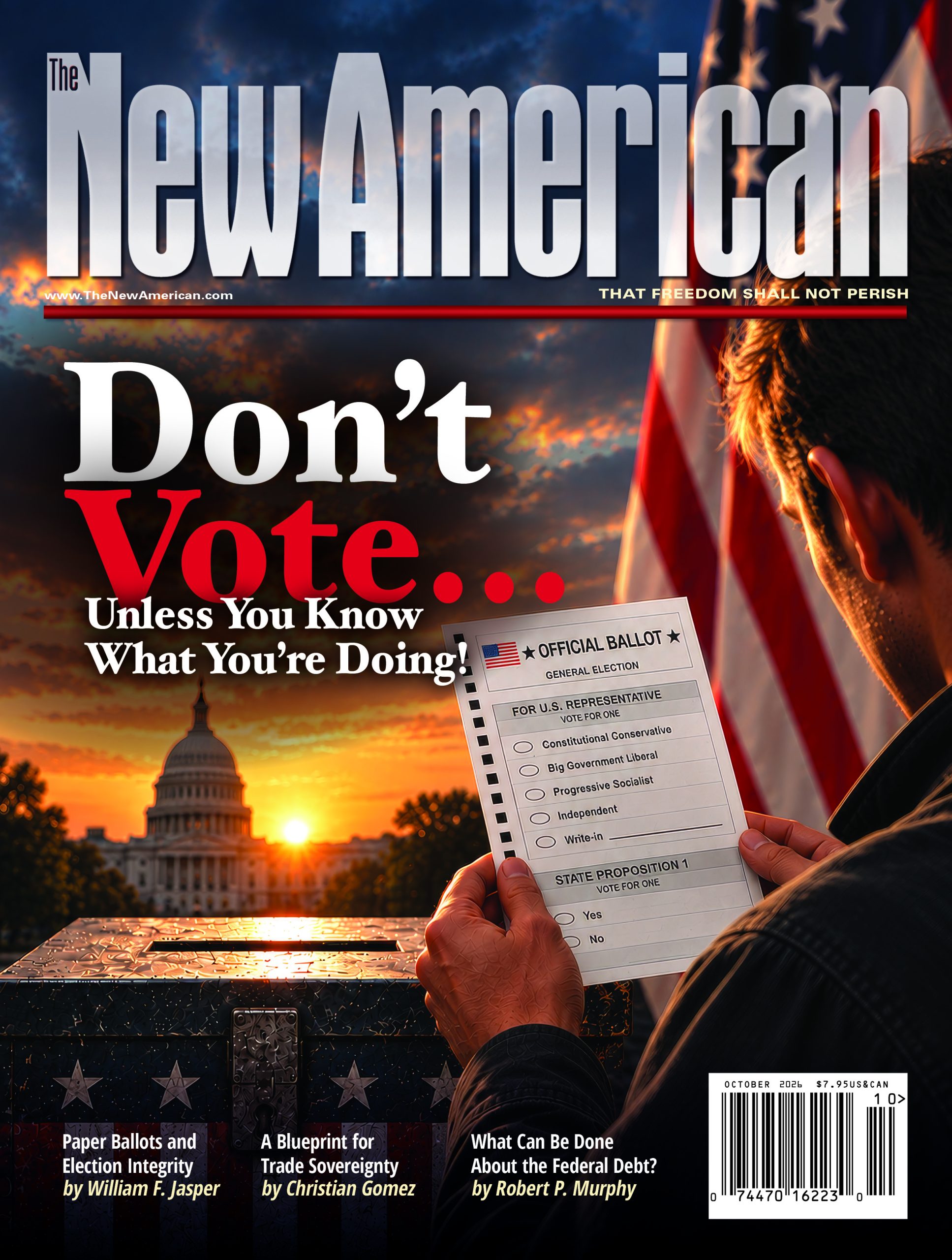
What Should an Informed Voter Look Like?
AT A GLANCE
• The early American Republic was dubbed the “empire of reason” by Noah Webster.
• George Washington and the other Founders understood the need for a well-informed electorate.
• A well-informed voter should be very familiar with the Constitution, with every principle of liberty, and with our Western heritage.
• If the ballot box is reclaimed by those who are truly informed, the Republic can be restored.
In October 1787, soon after the conclusion of the Constitutional Convention and during the tumultuous debates over ratification of the new document, a young American academic named Noah Webster, writing under the alias “A Citizen of America,” published a pamphlet, “An Examination into the Leading Principles of America,” that gave full-throated support to the new proposed constitution. Webster, a pioneering American educator known for the dictionary that still bears his name, had not been a delegate at the Constitutional Convention, but was nevertheless wise enough to comprehend its benefits and revolutionary character. “In the formation of our constitution,” Webster wrote,
The wisdom of all ages is collected — the legislators of antiquity are consulted — as well as the opinions and interests of the millions who are concerned. In short, it is an empire of reason. In the formation of such a government, it is not only the right, but the indispensable duty of every citizen to examine the principles of it, to compare them with the principles of other governments, with a constant eye to our particular situation and circumstances, and thus endeavor to foresee the future operations of our own system, and its effects upon human happiness. [Emphasis in original.]
Further on, he noted:
In no country, is education so general — in no country, have the body of the people such a knowledge of the rights of men and the principles of government. This knowledge, joined with a keen sense of liberty and a watchful jealousy, will guard our constitutions, and awaken the people to an instantaneous resistance of encroachments.
While Webster is credited with having coined the term “empire of reason” to describe the fledgling United States (a term later seized upon by modern historian Henry Steele Commager in a book of the same title), he was far from the only Founder to appreciate the importance of popular understanding to the maintenance of the new Republic and its novel form of government. George Washington, in his Farewell Address, urged his countrymen to promote “as an object of primary importance, institutions for the general diffusion of knowledge. In proportion as the structure of a government gives force to public opinion, it is essential that public opinion should be enlightened.”
Premium Content
Sign in with your ShopJBS.org account to read the full article, or subscribe below for unlimited digital access.
Log In to Continue Reading
- 12 Issues Per Year
- Digital Edition Access
- Digital Insider Report
- Exclusive Subscriber Content
- Audio provided for all articles
- Unlimited access to past issues
- Cancel anytime
- Renews automatically

- 12 Issues Per Year
- Print edition delivery (USA) *Available Outside USA
- Digital Edition Access
- Digital Insider Report
- Exclusive Subscriber Content
- Audio provided for all articles
- Unlimited access to past issues
- Cancel anytime
- Renews automatically