

Vol. 42, No. 10
What Can Be Done About the Federal Debt?
AT A GLANCE
• The ratio of debt to GDP has surpassed 100 percent, and interest on the national debt is now $2.8 billion per day.
• The notion that we “owe it to ourselves” is a dangerous illusion.
• We have several options to pay down the debt, including ignoring the problem, fiscal austerity, and partial default.
• The most likely outcome is that the government will try to print its way out of debt.
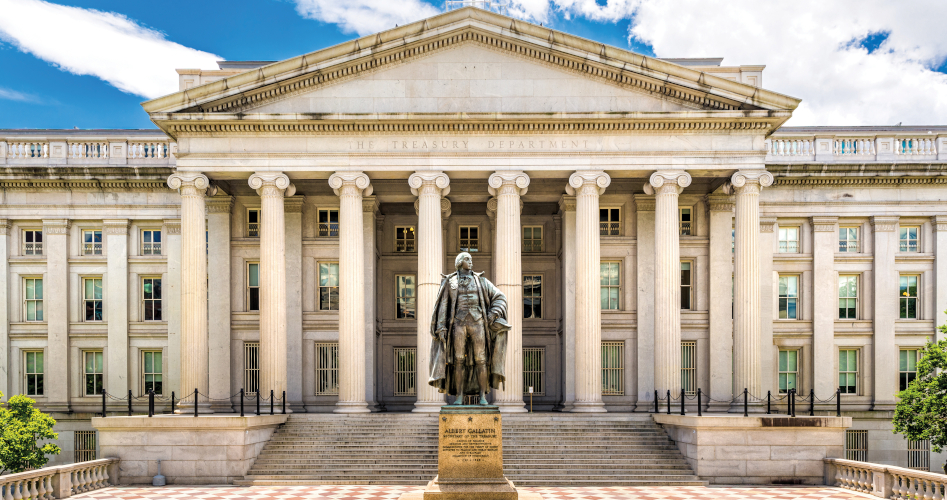
Earlier this summer, media headlines reported that the U.S. federal debt held by the public had exceeded the nation’s gross domestic product (GDP) — something that hadn’t happened since the end of World War II. More recently, the U.S. Treasury intervened in the foreign exchange markets to help prop up the sinking Japanese yen (at least in part to dissuade Japanese officials from selling off their U.S. dollar assets), while Treasury Secretary Scott Bessent expanded operations to buy back longer-term Treasury bonds. For his part, President Donald Trump recently lamented that seemingly good economic news perversely leads the Fed to hike rates, and a one-percentage-point increase translates to hundreds of billions of dollars in additional annual interest expense. The common thread in all of these stories is that the U.S. government’s debt load has reached such alarming levels that it influences seemingly unrelated policies.
But why does this staggering debt matter? How did we get here, and what options do we have going forward?
The Size of the Debt, and How We Got Here
As of this writing, the gross federal debt has just surpassed $40 trillion. However, that figure includes some $7.8 trillion of intragovernmental debt, i.e., the Treasury securities held by agencies of the federal government itself. This would include the so-called Social Security and Medicare trust funds (which stood at just under $3 trillion at the end of 2025), retirement and disability funds for military and civilian federal personnel, etc. Because this component of the debt is Uncle Sam owing money to himself, most economists focus on the smaller number — namely the federal debt “held by the public” — as more economically relevant.
Premium Content
Sign in with your ShopJBS.org account to read the full article, or subscribe below for unlimited digital access.
Log In to Continue Reading
- 12 Issues Per Year
- Digital Edition Access
- Digital Insider Report
- Exclusive Subscriber Content
- Audio provided for all articles
- Unlimited access to past issues
- Cancel anytime
- Renews automatically

- 12 Issues Per Year
- Print edition delivery (USA) *Available Outside USA
- Digital Edition Access
- Digital Insider Report
- Exclusive Subscriber Content
- Audio provided for all articles
- Unlimited access to past issues
- Cancel anytime
- Renews automatically