
Vol. 42, No. 10
Don’t Vote… Unless You Know What You’re Doing!
AT A GLANCE
• Voters who are uninformed can easily be beguiled into voting away their freedoms.
• Hitler would not have come to power in Germany if the German people had been informed.
• It is far better not to vote than it is to vote if you do not know what you are doing.
• That said, we have an awesome responsibility to become informed — and then vote.
Suppose that you have always wanted a brand-new Lamborghini and that you’ve finally been able to achieve your dream. Suppose, too, that you have a teenage son who does not yet have his driver’s license and who has little respect for the rules of the road. Would you allow him to take the Lamborghini out for a spin on his own?
If you were to do something so foolish, what might happen to the Lamborghini and your son? Would your son prove himself to be a model driver from the get-go? Or would he instead likely drive recklessly? And before learning that the freedom to drive so powerful a sportscar — or any car for that matter — entails a corresponding responsibility to operate the vehicle safely, might he wreck the Lamborghini and injure or kill himself or others?

As with driving a car, voting entails responsibilities. And as with driving a car, voting with little or no knowledge of what you are doing can prove to be lethal. Except that, in the case of voting, the death toll could end up being much more lethal — exponentially more so — than the tragic loss of life in an automobile accident.
If that sounds like hyperbole, consider how Adolf Hitler’s National Socialist German Workers’ (Nazi) Party came to power prior to World War II. The Nazis did not seize the reins of power in Germany by overthrowing the government from the outside, but by participating in the democratic process and acquiring power from within. In the July 1932 elections for the Reichstag, the Nazis won a plurality (37 percent) of the total vote, along with 230 seats in the 608-seat parliament. This electoral success made the Nazi Party the largest party in the Reichstag for the first time. It also set the stage for Hitler’s appointment as chancellor the following January in a coalition government. From that vantage point, Hitler was then able to consolidate power, oppress his own citizens, invade other countries, and kill millions of innocent victims.
Surely this was not what the German people wanted. But this is what they got. How did it happen? It did not happen because of a low voter turnout that worked to the advantage of the Nazis’ efforts to get out the vote, making the subset of Germans who voted woefully unrepresentative of the German nation. To the contrary, the turnout in the July 1932 elections that made the Nazi Party the largest party in the Reichstag was high — 84 percent! It happened because too many Germans who voted for the Nazis did not know what they were doing when they voted. Nazi Party head Hitler had promised to make Germany great and prosperous, and too many Germans voted for the false promises because they were ignorant of Hitler’s totalitarian designs.
This tragic example of people voting their own would-be dictators into power is not unique. Other well-known examples include the election of Salvador Allende in Chile in 1970, and the election of Hugo Chávez in Venezuela in 1998. Citizens who possess the voting franchise can (and sometimes do) unwittingly vote away their freedoms. Because of their lack of knowledge, they are easily deceived by political demagogues who promise them what they want, but ultimately take from them what they have — their property, their freedom, and even their lives. This is an important lesson of history that too many people fail to understand or learn, and we — the American people — are by no means exempt from this.
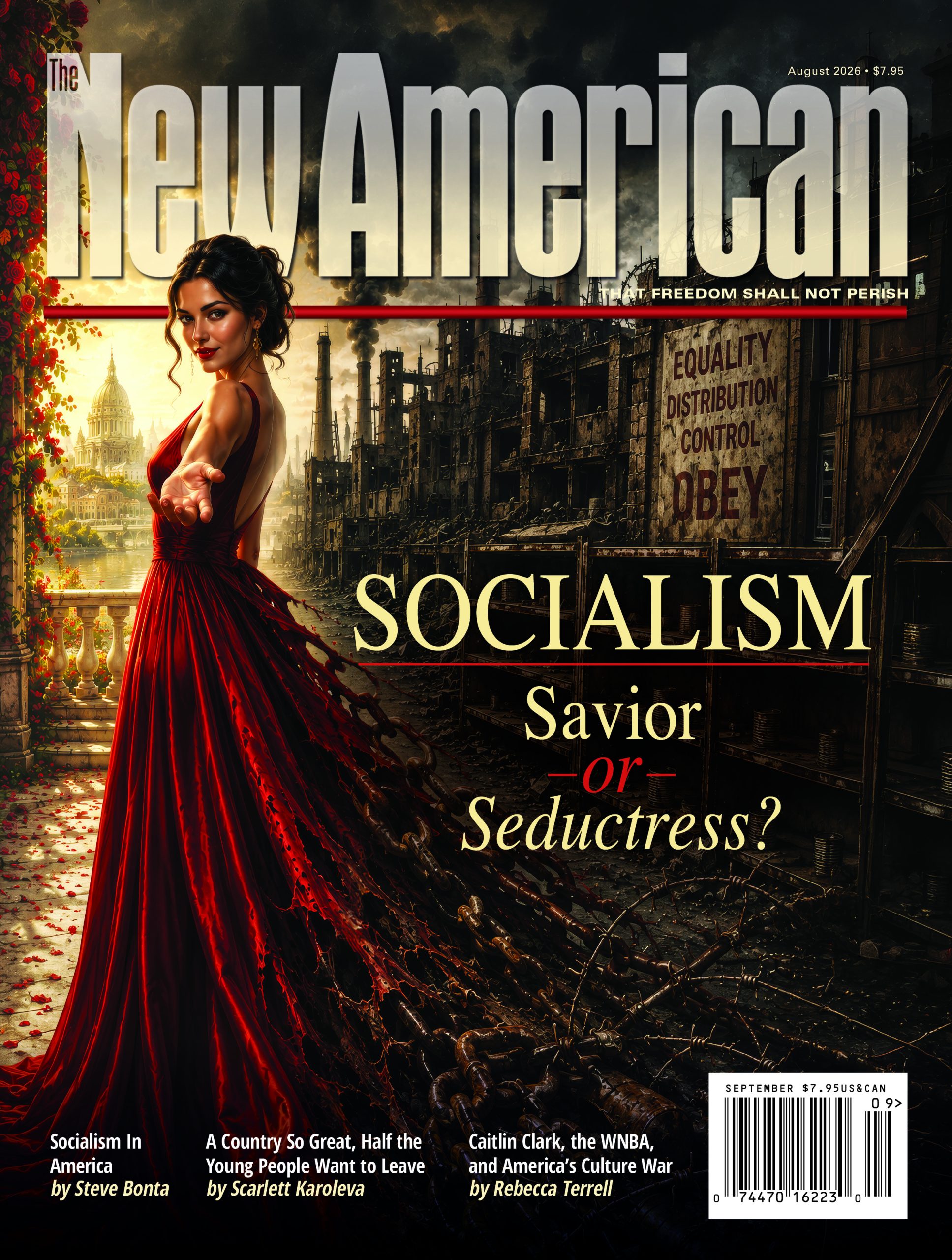
In our own country, the size of the federal government has grown over time far beyond its constitutional boundaries. The growth has occurred during both Democratic and Republican administrations and Congresses. If the growth continues, we will lose our freedoms — because not enough Americans possess the understanding to recognize the signposts on the road to serfdom. One such signpost is the growing welfare state. Too few people understand that government cannot give to the “have nots” without taking from the “haves,” and that taking from those who produce the wealth and provide the jobs will result in less wealth, a shrinking middle class, and an even larger welfare state. Another is the growing warfare state. Too few Americans understand that building a global empire to police the world, as opposed to using the military for its proper purpose of defending our country, is also unsustainable over time. And a third is the very fact that candidates for public office who openly run as democratic socialists — and often belong to the Democratic Socialists of Americans (DSA) — are increasingly winning elections.
Currently, two DSA members serve in the U.S. Congress: Representatives Alexandria Ocasio-Cortez (D-N.Y.) and Rashida Tlaib (D-Mich.). And one self-identified democratic socialist serves in the U.S. Senate: Bernie Sanders (I-Vt.), though he is not listed as a DSA member. Their numbers will likely increase. This year thus far:
- Angie Nixon won the Democratic nomination for U.S. Senate in Florida;
- Melat Kiros defeated longtime incumbent U.S. Representative Diana DeGette in the Democratic primary in Colorado’s 1st Congressional District;
- Claire Valdez won the Democratic nomination for Congress in New York’s heavily Democratic 7th Congressional District;
- Donavan McKinney won the Democratic nomination for Congress in Michigan’s heavily Democratic 13th Congressional District; and
- Christopher Rabb won the Democratic nomination for Congress in Pennsylvania’s 3rd Congressional District, which is considered the most heavily Democratic district in the country.
In addition, Abdul El-Sayed, who has said he is not a socialist but advocates socialist/progressive policies and is endorsed by avowed democratic socialists Sanders and Ocasio-Cortez, won the Democratic nomination for U.S. Senate in Michigan.
Larger turnouts will not save the day from the socialist advance in America — not without a gargantuan educational campaign to create widespread understanding among the American people. Yet larger voter turnouts — heavily populated with low-information voters — are exactly what the Left wants to achieve. All in the name of democracy, of course.
“Vote! Vote! Vote!”
Exhortations to vote are heard ad nauseam every election season. Not emphasized is the importance of becoming informed in order to participate responsibly in the democratic process. In fact, becoming informed is deemphasized to such an extent that the simple act of voting is portrayed by the powers-that-be as virtuous in and of itself. Of course, if that were true, then the higher the voter turnout, the better government we should have.
On July 2, 2023, The New York Times, a leading exponent of the establishment opinion cartel, published an opinion piece that encapsulated this propaganda in the headline, “Better Government in New York Depends on Higher Voter Turnout.” Written by Mara Gay, a member of the Times’ editorial board, the article began:
Preoccupied by daily concerns like paying astronomical sums of rent and deluged by the occasional barrage of apocalyptic wildfire smoke, the average New Yorker clearly wasn’t closely focused on the local primary elections of 2023.
By 6 p.m. on Election Day, June 27, just 182,277 of roughly 2.8 million eligible voters had cast ballots, according to an unofficial count from the city’s Board of Elections. That’s a citywide turnout of about 6.5 percent.
Turnout in New York elections is almost always depressingly low. Last week, it was abysmal, producing a slate of candidates chosen by just a handful of the millions of people who live in New York City.
Gay went on to say that “the low turnout may help explain why the actions of elected officials in the city are sometimes bizarrely out of step with the needs of the majority of the constituents they serve.” And she cited this example: “The limited competition also tends to encourage bad behavior among politicians. That’s probably one reason Mayor Eric Adams felt comfortable publicly berating a distraught constituent in recent days who dared to ask him why he had allowed the city’s Rent Guidelines Board to raise rents in thousands of regulated apartments.” Presumably, the distraught constituent didn’t understand a basic economic principle — that using the force of government to keep rents below market value will result in fewer housing units to rent and/or poorly maintained rental units — and did not care.
Gay concluded by saying that New York is mostly “electing local and state candidates who derive their political power from tiny slices of the electorate. It’s a recipe for bad government in one of the most populous, economically important states in the nation.”
But what happened in the Big Apple two years later supports the argument that increasing voter turnout may actually be a recipe for worse — not better — government, if that turnout is fueled by the participation of low-information voters. In 2025, 30 percent of the city’s registered voters turned out to vote in the primary elections, which was more than quadruple the turnout in the primary two years earlier. Winning the Democratic nomination for mayor in that primary was Zohran Mamdani, a member of the DSA, who went on to defeat his Republican opponent in the November election in which 2.2 million New Yorkers (42 percent of registered voters) turned out to vote.
Demagogues who claim to be champions of the people are better able to deceive them when get-out-the-vote drives disproportionately increase the number of low-information voters, thereby diluting the votes cast by better-informed Americans who are likely to see through the political quackery. Hence demagogues (along with many sincere Americans who have not thought this through) want to make voter registration easier, allow more time to vote (to the extent that Election Day has effectively become Election Season), and make voting more accessible. Left unsaid by the promoters of getting everyone to vote is the simple fact that those who take voting seriously, and who have done their homework, will vote anyway — notwithstanding the supposed obstacles the Left claims stand in their way.
Yet, some get-out-the-vote advocates have gone so far as to suggest making voting compulsory, as is now the case in Australia. For example, on March 18, 2015, President Barack Obama said in a speech in Cleveland: “In Australia and some other countries there’s mandatory voting. It would be transformative if everybody voted. That would counteract money more than anything.” But compulsory voting would by no means counteract money. It would instead make it easier for money to buy elections. This should be obvious, since people who’d not bother to vote unless forced to do so would tend to be low-information voters who’d be much more susceptible to the propaganda that big money can buy than more serious voters who do not need to be compelled to cast a ballot.
On July 22 of this year, the Chicago Tribune published an opinion piece by three political scientists titled “Political scientists: Why the US should consider making voting compulsory.” The authors said that “the U.S. government is unrepresentative because the electorate that puts it in power is also unrepresentative,” and that there is “a politically and legally feasible path to greater representation: compulsory voting.”
Not Just a “Democrat” Problem
Considering how far left and overtly socialist the Democratic Party has become, it may be tempting to assume that all of the low-information voters are Democrats. But that is not the case; there are many low-information voters in the Republican Party as well. Yes, the GOP looks like a bastion of conservatism compared to the Democratic Party, but many Republican politicians are neoconservatives who vote for bigger government and more internationalism. This magazine’s Freedom Index, which rates every member of Congress based on the U.S. Constitution, attests to this. (See FreedomIndex.us.)
U.S. Representative Thomas Massie’s recent election loss in this year’s Republican primary in Kentucky’s 4th Congressional District illustrates what can happen when a constituency — even a Republican constituency — lacks understanding. Massie’s adherence to the Constitution as measured by our Freedom Index is stellar. Yet he garnered just 45.1 percent of the vote in his 2026 primary election, a huge percentage drop-off compared to the overwhelming 75.9 percent of the vote he got in his Republican primary election in 2024. However, he still got more votes in the 2026 Republican primary than he did in the 2024 primary — 47,539 votes as compared to 39,929. How can that be? Many more people voted in the district’s 2026 Republican primary than voted in 2024 — 105,361 as compared to 52,593. That’s a doubling of the total vote! But this doubling was not matched by a corresponding increase in the number of informed voters who cast their ballots in the May 19, 2026 primary.
Many of those who cast their ballots that day were low-information voters who were beguiled by the powers-that-be into believing that Massie was a liberal cloaked in Republican garb. After all, the propaganda blitz against Massie claimed, he opposed Trump’s policies, he opposed Trump’s war in Iran, he voted against Trump’s Big Beautiful Bill, etc. Too many voters did not understand that Massie voted against Trump policies that were unconstitutional while supporting others that were not unconstitutional; that Trump’s decision to attack Iran without going to Congress for a declaration of war was one such unconstitutional policy; and that Trump’s Big Beautiful Bill raised the national debt ceiling by $5 trillion.
Though Massie was outspent in what turned out to be the most expensive congressional primary race in U.S. history, he was able to raise sufficient funds to get his message out. However, his spending was not enough to overcome the false narrative that too many low-information voters had bought into. If most Republican voters were truly informed, they would not have been beguiled.
Education Is the Key!
If America loses its freedom and — God forbid! — becomes another socialist/communist nightmare, it will not be because of an invading foreign army. It will be because of our own failure to take seriously the responsibilities of citizenship in a free society, and to do what is needed to keep the torch of liberty that we ourselves have inherited burning brightly so that we can hand it over to our children and grandchildren.
Abraham Lincoln made a similar point in 1838:
At what point shall we expect the approach of danger? By what means shall we fortify against it? — Shall we expect some transatlantic military giant, to step the Ocean, and crush us at a blow? Never! — All the armies of Europe, Asia and Africa combined, with all the treasure of the earth (our own excepted) in their military chest; with a Buonaparte for a commander, could not by force, take a drink from the Ohio, or make a track on the Blue Ridge, in a trial of a thousand years.
At what point then is the approach of danger to be expected? I answer, if it ever reach us, it must spring up amongst us. It cannot come from abroad. If destruction be our lot, we must ourselves be its author and finisher. As a nation of freemen, we must live through all time, or die by suicide.
What can be done to preserve and restore our freedoms? What must be done? Herding uninformed people into voting booths like cattle into boxcars will not do it. Neither will eliminating vote fraud — at least not by itself. Obviously vote fraud is a serious problem — as exhibited, for example, by the overwhelming evidence of massive fraud in the 2020 presidential election — and it must be eliminated through such steps as requiring paper ballots, getting back to the concept of an election day, etc. But it must not be overlooked that a much more serious problem is the overall lack of understanding of the American people. If that lack of understanding is not rectified, and soon, creeping — and perhaps galloping — socialism will continue apace in America.
Robert Welch founded The John Birch Society, the parent organization of this magazine, for the purpose of creating that understanding. “All we must find and build and use, to win, is sufficient understanding,” he said at the group’s founding meeting in 1958. “Let’s create that understanding and build that resistance, with everything mortal men can put into the fight — while there still is time.”
The political understanding that’s truly needed is found in the Declaration of Independence, which proclaimed the self-evident truths that rights are endowed to us by our Creator and that the purpose of government is to protect those rights. And it is manifested in the Constitution, which created a government based on the principles in the Declaration and in harmony with the laws of God.
Principled politicians who genuinely support the Constitution and say what needs to be said cannot realistically hope to garner the votes of a largely low-information constituency that’s easily led astray by the siren song of free bread and circuses. On the other hand, when their constituents are sufficiently informed to know that there is no such thing as a free lunch, then principled politicians will be electable. Not only that, but the dramatic shift in political winds brought about by the creation of sufficient understanding will cause many pragmatic politicians to change their positions in order to preserve their electability.
The amount of understanding that’s needed to reverse the growth of Big Government and turn the country around cannot possibly be created during the heat of contentious political campaigns alone. It must primarily be created throughout the year — every year, election year and non-election year alike. Carrying out that Herculean task is what The John Birch Society is about. We invite all Americans of good character to take a look at our program and consider becoming involved in our epic undertaking.
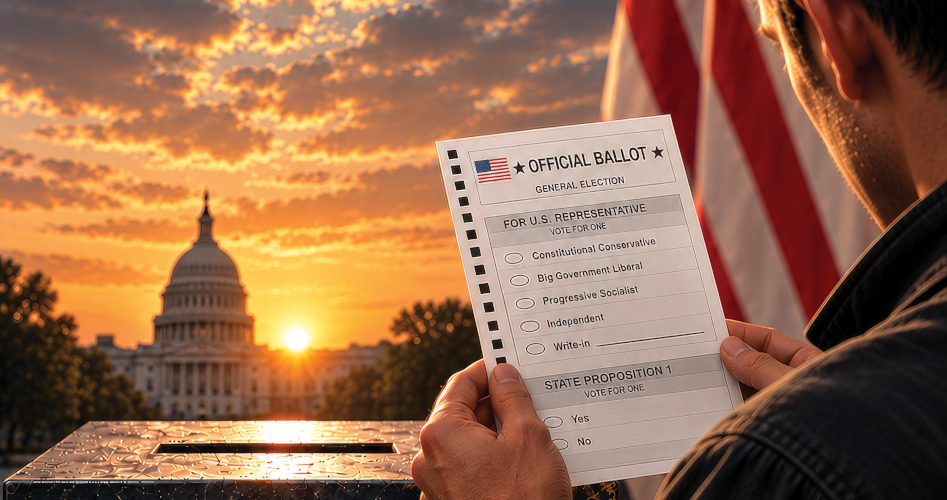
And to be absolutely clear, we encourage all eligible voters to vote — so long as they take the time to learn the principles of freedom and the records of the candidates. No one should vote — any more than he should drive a hot sportscar — without knowing what he’s doing. n
For a better understanding of what an informed voter should look like, and how to evaluate political candidates, please see the next article, "What Should an Informed Voter Look Like?".