


Vol. 42, No. 05
05/01/2026
Roots of the Conspiracy
AT A GLANCE
• The Mithraic Cult controlled the Roman government.
• Conspiratorial anti-Christian movements sought to overthrow Christianity during the Middle Ages.
• High-level occultists such as John Dee have always had a guiding influence over governments and potentates.
• Illuminism and the origins of leftist revolution are discussed.
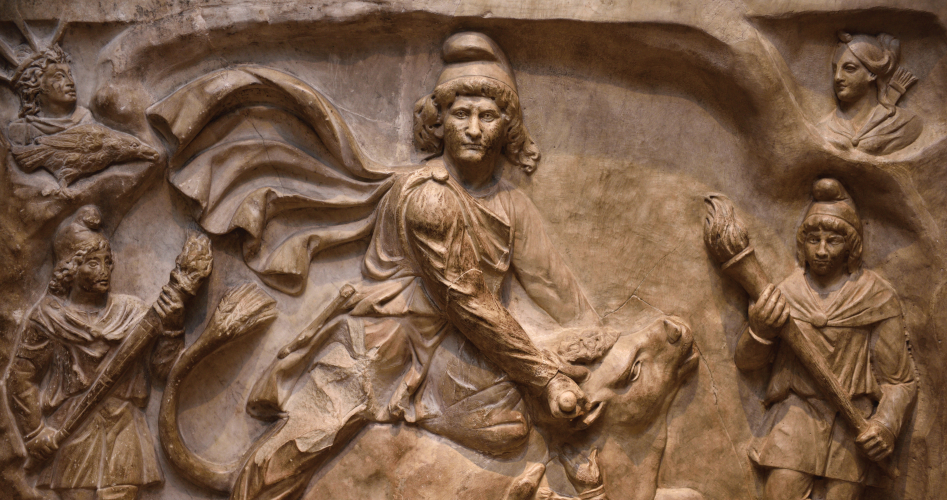
The man fled wildly through the dense forest, trying to outstrip his pursuers. A local farmer, he knew the forests and dells of the Vosges foothills in northeastern Gaul like the palm of his hand. But his pursuers were trained soldiers with keen-nosed military dogs, and were not far behind. In desperation, the man tried to hide in the concealing branches of an oak. But the dogs surrounded the tree, and the Roman legionaries closed in. He was taken and shackled and dragged back through the forest to the place all the locals feared, the secret underground shrine where their Roman military masters worshipped a dark and angry god. Screaming and protesting, far from help or sympathetic ears, the man was forced into a secret, cavelike chamber. Deep underground, he was surrounded by men in masks and cloaks, who chained him to the wall of a man-made cavern in front of a sprawling scene carved into subterranean rock, the image of a youthful god slaying a bull, surrounded by mysterious imagery and symbols. Across from that tableau, lit by guttering candles, was a frightening lion-headed idol standing atop an orb representing the Earth. The hapless farmer, immobilized by his shackles, could not avoid the horrifying gaze of the lion-headed statue. He could, however, read its name, carved into the pedestal: Deus Arimanius, or “the God Ahriman” — the Persian name for Satan.
The masked celebrants closed in, chanting votive formulae that the captive could not understand. Seeing the ceremonial dagger, he begged for mercy, but to no avail. The assembled worshippers gave a collective shout, “Nama Mithrae!” and the dagger flashed. The victim’s lifeblood drained before Deus Arimanius, and the celebrants broke into a frenzied dance, secure in the belief that, once again, the god that gave them power had been appeased.
For some reason lost to history, the pitiful remains of the sacrificial victim were left chained to the rock, where they were discovered many centuries later, in 1895, when the location of the secret shrine, called a mithraeum, was unearthed. Whether or not the victim in this remote spot was aware of it, the conventicle was but the small local branch of a vast secret society, a criminal conspiracy that had drawn in the political, financial, and military elites from every corner of the Roman Empire, and whose votaries included the emperor himself. The so-called cult of Mithras was Rome’s most powerful conspiratorial secret society, the archfoe of the early Christian Church, and the best-known instance of a literal conspiracy of elites that for centuries controlled the machinery of the Roman state, including banking, trade, politics, and the military.
Premium Content
Sign in with your ShopJBS.org account to read the full article, or subscribe below for unlimited digital access.
Log In to Continue Reading
- 12 Issues Per Year
- Digital Edition Access
- Digital Insider Report
- Exclusive Subscriber Content
- Audio provided for all articles
- Unlimited access to past issues
- Cancel anytime
- Renews automatically

- 12 Issues Per Year
- Print edition delivery (USA) *Available Outside USA
- Digital Edition Access
- Digital Insider Report
- Exclusive Subscriber Content
- Audio provided for all articles
- Unlimited access to past issues
- Cancel anytime
- Renews automatically