FBI Seeks Nationwide License-plate Surveillance as Bipartisan Backlash Grows
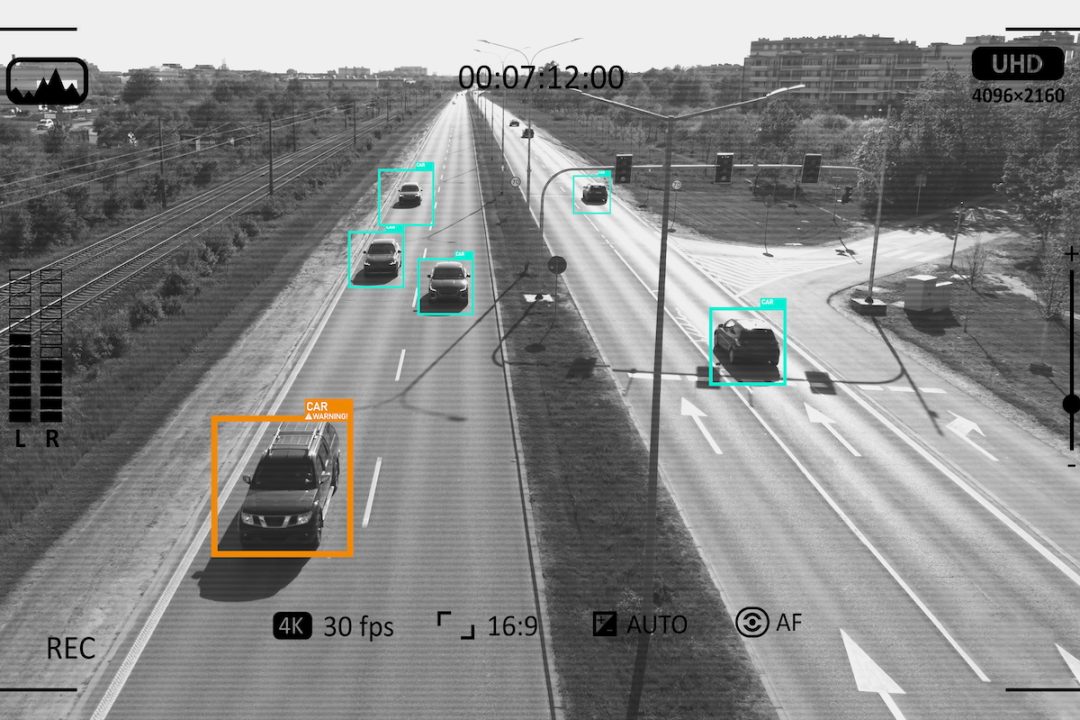
The expansion of the American police state continues apace. Apparently, having cameras monitor motorists across the country is not enough. The FBI, whose current director, Kash Patel, once railed against its surveillance abuses and proposed turning its headquarters into a “museum of the deep state,” now wants broader access to the information those cameras collect. The proposed system could allow federal agents to track Americans’ movements nationwide, with data arriving in near real time.
The plan is drawing scrutiny on Capitol Hill. Two Democratic lawmakers are demanding answers about the FBI’s proposed access to automated license plate reader (ALPR) networks, warning of sweeping surveillance powers with inadequate oversight. Meanwhile, a growing bipartisan coalition is pushing legislation to restrict or even prohibit federal use of the technology, raising fundamental questions about Americans’ privacy and constitutional protections.
FBI’s Surveillance Ambitions
The FBI’s plans are detailed in a federal solicitation first published May 11 and subsequently amended. The bidding period closed June 17, and the solicitation is now listed as inactive. That designation does not indicate whether the bureau has awarded or abandoned the contract.
Through the procurement, the FBI sought to establish an Indefinite Delivery/Indefinite Quantity (IDIQ) contract to purchase commercial license-plate reader data subscriptions through individual task orders.
The contract would serve the FBI’s Directorate of Intelligence, specifically its Public Source Program, which conducts research using publicly and commercially available information.
The solicitation describes its purpose as supporting:
Open Source Intelligence (OSINT) / Social Media searches and processing from License Plate Reader (LPR) tools or their data, to identify multiple investigative threats and use cases.
The FBI makes its broader objective explicit:
To evaluate and manage threats to personal safety, property, and law enforcement, the FBI requires professional service firms that can provide License Plate Readers (LPRs) for tracking subjects on roads and highways over the US and its territories.
Rather than install its own cameras under this contract, the FBI seeks subscriptions to existing commercial license-plate databases. Agents could search license plates, vehicle descriptions, locations, and timestamps.
The requirements extend well beyond basic vehicle identification.
The systems must provide data in “near real time,” identify vehicles recorded at multiple locations, search for several plates simultaneously, and issue automated alerts when vehicles of interest are detected.
They must also support persistent searches, allowing investigators to track vehicle sightings over time without repeatedly entering queries or remaining logged into the system.
The solicitation further requires artificial intelligence (AI) analytics, including natural language processing or machine learning. It also identifies event timelines and tracking as useful features.
The FBI also wants geofencing capabilities, allowing agents to search license plate records within designated geographic areas and visualize results on maps.
Nationwide Coverage and Untraceable Searches
The FBI divided the proposed contracts into six geographic coverage areas: the eastern and western continental United States, Hawaii, Puerto Rico, Alaska, and outlying territories, potentially including Guam and the U.S. Virgin Islands.
For the five principal regions, contractors must demonstrate operational coverage of at least 75 percent of locations within their respective areas.
The bureau also wants detailed maps of camera coverage and access to data from traffic cameras, speed cameras, toll plazas, and vehicle repossession companies.
Its requirements specify data retention of at least 30 days, preferably up to 120 days where legally permitted.
Perhaps most strikingly, the solicitation demands “blind logging” of searches.
Contractors must encrypt FBI queries, return search results, and delete the search criteria afterward. They may retain only a record that the FBI conducted a search and its timestamp.
The document explicitly states:
Searches must remain non-attributable.
Although the solicitation also requires capabilities for FBI auditing, contractors cannot independently retain or analyze the bureau’s search traffic.
The procurement could total up to $36 million over five years, according to Ars Technica.
Companies such as Flock Safety and Motorola Solutions could potentially qualify.
The FBI already facilitates license plate information sharing through the National Crime Information Center. But the proposed contracts would give investigators broader access to commercial surveillance networks, including historical vehicle records and automated alerts.
A New “Surveillance Vector”
In an October 2 letter, Representatives Greg Casar (D-Texas) and Shontel Brown (D-Ohio), both ranking Democrats on House Oversight subcommittees, demanded answers from Patel about the FBI’s surveillance plans.
They warned that direct access to commercial camera networks “raises the risk of substantial abuses of Americans’ data.”
They called the proposal:
Another surveillance vector for an administration thoroughly opposed to any oversight or accountability.
The lawmakers noted that ALPR databases already collect information about millions of Americans who are not suspected of crimes.
Such information, they warned:
Can be used to create a profile of individuals’ appearance and behavior and has already reportedly been used inappropriately by law enforcement.
They cited abuses, including the Los Angeles Police Department’s improper investigations of 161 people whose vehicles had been incorrectly flagged as stolen.
They also questioned federal access to locally collected data, citing inconsistent disclosures about Flock Safety’s relationships with Customs and Border Protection (CBP) and Homeland Security Investigations.
During an August congressional briefing, Flock representatives reportedly acknowledged continuing federal contracts but declined to provide details.
Casar and Brown demanded explanations of the FBI’s existing access, its legal authority for expanded surveillance, data retention policies, information sharing with Immigration and Customs Enforcement (ICE) and other agencies, and safeguards against abuse.
They requested answers by October 16.
The lawmakers concluded:
The American people are clearly concerned about law enforcement having access to Flock data and about government surveillance more broadly.
They warned that giving the FBI nationwide access would “subvert the clear preference of the American people.”
Bipartisan Backlash
Opposition to license plate surveillance is growing across party lines.
On September 2, Representatives Thomas Massie (R-Ky.) and Eric Burlison (R-Mo.) introduced the Flock-Off Act, which would prohibit federal funding for ALPRs, including subscriptions and data-sharing contracts like the one the FBI is seeking.
Massie declared:
Federal taxpayers should not be forced to fund the surveillance state.
The bill attracted Republican and Democratic cosponsors, including Ro Khanna (D-Calif.) and Chip Roy (R-Texas).
On October 2, Senators Bernie Sanders (I-Vt.) and Jeff Merkley (D-Ore.), joined by Representative Alexandria Ocasio-Cortez (D-N.Y.), unveiled legislation that would largely prohibit federal agencies from using ALPR cameras or accessing their data.
Sanders warned:
We cannot allow America to become a surveillance state where a handful of AI oligarchs profit by giving the government the power to track our every movement.
Senator Josh Hawley (R-Mo.) has also proposed restrictions, calling Flock’s technology “a surveillance network unlike any we’ve ever seen in this country.”
On October 23, 35 House Democrats demanded answers about reports that Immigration and Customs Enforcement Agency (ICE) had accessed Flock data indirectly through local police.
The growing bipartisan opposition reflects a fundamental concern: Government surveillance capabilities are expanding faster than the safeguards intended to protect Americans’ privacy.
Patel’s Earlier Assurances
The FBI’s proposed expansion also raises questions about Patel’s previous assurances to Congress.
During a September 16 Senate Judiciary Committee hearing, the director defended the bureau’s use of privately operated license-plate cameras.
He argued that the cameras capture information in public places where motorists have no reasonable expectation of privacy. He cited cases involving violent criminals and abducted children to illustrate the technology’s value.
But Patel also described the FBI’s existing arrangements in relatively limited terms:
Where the FBI partners with these individuals is on a case-by-case basis and not a rolling access basis.
He reiterated that the bureau did not maintain continuous access to those systems.
However, the May solicitation seeks subscription-based access to commercial ALPR networks, including persistent searches, automated alerts, and historical vehicle records. Those capabilities appear considerably broader than the case-specific arrangements Patel described.
The procurement does not establish that the FBI has already acquired such access. Nor does it explain how the bureau intends to reconcile the proposed capabilities with Patel’s public assurances.
The larger issue concerns the government’s growing ability to monitor Americans who have committed no crime.
Does the FBI intend to preserve meaningful limits on that power? Or will another expansive surveillance system become a routine instrument of federal law enforcement?
And what, exactly, became of Patel’s promises to rein in the surveillance state?
Related Articles:
Patel Confirms FBI Buying Americans’ Location Data
Report: Government Monitors Anti-Flock Social Media Critics