

Report: Government Monitors Anti-Flock Social Media Critics
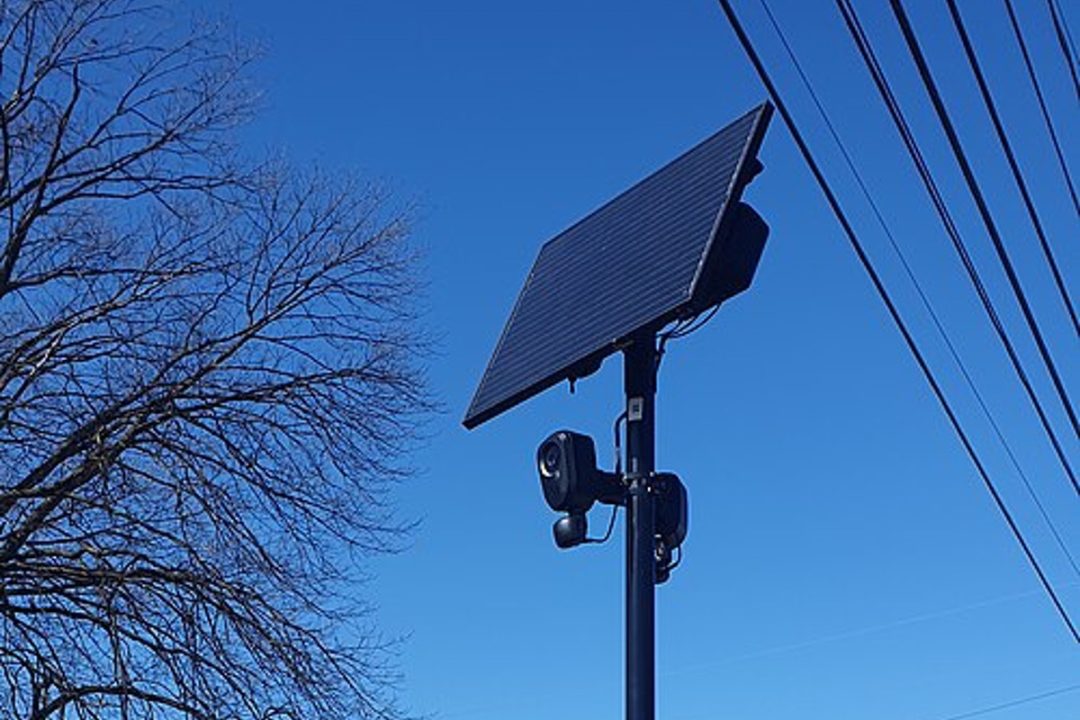
The fight over Flock Safety is no longer only about cameras watching cars.
Government intelligence centers are now watching some of the people who want those cameras gone, 404 Media reports.
According to documents obtained by the outlet, law enforcement fusion centers are monitoring social media accounts that oppose Flock cameras. They are also circulating warnings about protests, activists, and online discussions of ways to disable the devices.
Asked Monday about concerns over misuse of the technology, President Donald Trump said his administration was “studying” Flock, adding that the system had its “pros and cons.”
The political and financial connections make that response hard to ignore. Andreessen Horowitz, founded by major Trump donors Marc Andreessen and Ben Horowitz, led Flock’s latest $275 million funding round. Founders Fund, co-founded by longtime Trump megadonor and ally Peter Thiel, also invested.
The development does not prove that the administration is protecting Flock on behalf of its investors. But the appearance is difficult to dismiss. A government backed by powerful technocratic financiers is now overseeing an intelligence network that monitors activists campaigning against a company in which those same oligarchs hold substantial financial and political interests.
Watching DeFlock
404 Media reported last week that fusion centers in several states have circulated intelligence bulletins about DeFlock, the open-source project that maps automated license plate readers, or ALPRs.
Fusion centers connect local, state, and federal agencies. The Department of Homeland Security (DHS) describes them as focal points for receiving, analyzing, and sharing threat information across levels of government.
According to the report, the warnings traveled far beyond the jurisdictions in which they originated. The outlet obtained documents from intelligence centers in Colorado, Wisconsin, New Jersey, and Florida through a public records request to the New Mexico All Source Intelligence Center.
One New Jersey document was distributed to a nationwide ALPR working group and state fusion centers. A summary of 404 Media’s reporting also circulated to FBI headquarters email subscribers.
The bulletins focus heavily on social media. One warned:
[One] bulletin, from the Wisconsin Statewide Intelligence Center via the Northeast Florida Fusion Center, notes, “there is extensive and ongoing chatter on social media platforms such as Facebook and TikTok regarding various methods to interfere with or physically destroy Flock LPR cameras or compromise their connectivity.”
Another focused specifically on the use of DeFlock to locate cameras:
A new fusion center warning from the Colorado Information Analysis Center notes “people have begun utilizing the [DeFlock] app to locate and then destroy or disable the ALPRs. Multiple public accounts are posting videos of individuals vandalizing these cameras, adding momentum to the online discourse and influencing others to do the same.”
The Colorado bulletin also noted online encouragement from a neo-Nazi accelerationist group. But the document said that effort had lost momentum and provided no indication that its members actually attacked any cameras.
According to 404 Media, authorities also urged police to “increase patrols around ALPR[s].”
The concern is not imaginary. Flock cameras have been cut down, damaged, stolen, covered, or otherwise disabled in several states.
Police have an obvious reason to investigate destruction of property.
But the bulletins go further.
404 Media wrote that authorities are “trying to tie together people who politically oppose mass surveillance with vigilantes who destroy Flock cameras.”
The outlet credits WIRED investigative journalist Dan Boguslaw with first publishing several fusion center bulletins about DeFlock in July.
DeFlock Week of Action
The timing raises the stakes.
DeFlock’s “National Week of Action Against ALPRs” began August 16 and runs through August 22. Organizers describe it as a decentralized campaign of public meetings, town halls, educational events, and other local activities aimed at building opposition to ALPR surveillance.
The campaign is not small. Spectrum News Syracuse reported Monday that people in about 460 cities were participating.
DeFlock’s own toolkit urges participants to push elected officials toward ending ALPR contracts. It does not call for destroying cameras.
Will Freeman, who created DeFlock, told 404 Media that the project has never advocated vandalism,
DeFlock has never called for disabling cameras or covering license plates, contrary to what recent law enforcement bulletins claim.
He said some accounts use the DeFlock name without authorization. He also argued that the recent vandalism grew independently through social media.
Flock Faces a Wider Revolt
The government monitoring also comes as Flock faces its broadest public challenge yet.
DeFlock estimates that the company operates more than 132,000 cameras nationwide. Flock itself reports that more than 5,000 law enforcement agencies and over 6,000 communities use its technology.
Police departments credit the cameras with helping locate suspects, stolen vehicles, and missing people.
But the network has also provoked a growing revolt. As The New American recently reported, jurisdictions across the country are canceling contracts, shutting down cameras, or rejecting new deals with Flock. Critics point to unauthorized searches, federal access to locally collected data, and the sheer scale of tracking motorists who are not suspected of any crime.
The growing opposition has also crossed conventional political lines. Privacy advocates on both the Left and Right have challenged the idea that police should maintain vast, searchable databases of Americans’ movements simply because their cars traveled on public roads.
Flock responded on August 13 with a package of changes. The company plans to make misuse detection mandatory, require case codes for searches, and recommend a default retention period of seven days instead of 30. Agencies will also gain more control over what types of offenses can justify searches.
Flock says the changes will strengthen accountability without sacrificing public safety.
Critics remain unconvinced. The reforms may limit some abuses, but they do not change the basic architecture of the system. The cameras still collect location data on ordinary drivers, store it in searchable databases, and make that information available to law enforcement without requiring individualized suspicion.
The Associated Press reported that civil-liberties advocates and legal experts remain skeptical that Flock’s new safeguards resolve the larger questions surrounding warrantless access and police discretion.
The Surveillance State
The revolt against Flock therefore reaches beyond privacy policy.
Flock may sell itself as a public-safety company. At its core, however, the technology is surveillance infrastructure. Its cameras continuously turn the movements of ordinary motorists into searchable records of where and when their vehicles were seen.
That distinction matters when the people financing this technological order are also deeply intertwined with government.
Andreessen Horowitz openly invests in companies that regard government as a “customer, competitor, or key stakeholder.” Peter Thiel has gone further. A co-founder of the CIA-seeded Palantir Technologies, he once wrote that he no longer believed “freedom and democracy are compatible.” Their like-minded technocratic allies, many with direct ties to the administration and major government contractors, have likewise advanced ideas deeply at odds with the principles of limited government, individual liberty, and republican self-rule on which the United States was founded.
Against that backdrop, the growing revolt against Flock poses a threat far greater than a few vandalized cameras. It threatens public acceptance of an increasingly intimate relationship among government, surveillance companies, contractors, and the technocratic capital financing them.
Destroying a camera may be illegal. But that does not make resistance to the system itself illegitimate. Civil disobedience against tyranny has always tested that distinction.
That is what makes these bulletins so troubling. Citizens discovered a surveillance network, began organizing to expose and dismantle it, and the surveillance state turned its attention onto them.
For a republic, that should be the real alarm: The state is watching citizens because they object to being watched.