Judge Rejects DOJ Bid to Block Alaska Senate Results as Republicans Threaten Further Challenges
A federal judge has rejected the Trump administration’s attempt to block certification of Alaska’s Senate election if Republican incumbent Dan Sullivan loses.
In a 20-page ruling issued Sunday, U.S. District Judge Sharon Gleason dismissed the Department of Justice’s (DOJ) lawsuit, finding that the government lacked standing to obtain the relief it sought.
The decision came just two days before the November 3 election, with control of the Senate potentially at stake.
But the dispute is far from over. The DOJ has appealed, while prominent Republicans are questioning whether Democratic challenger Mary Peltola should be seated even if she wins.
The Case and the Ruling
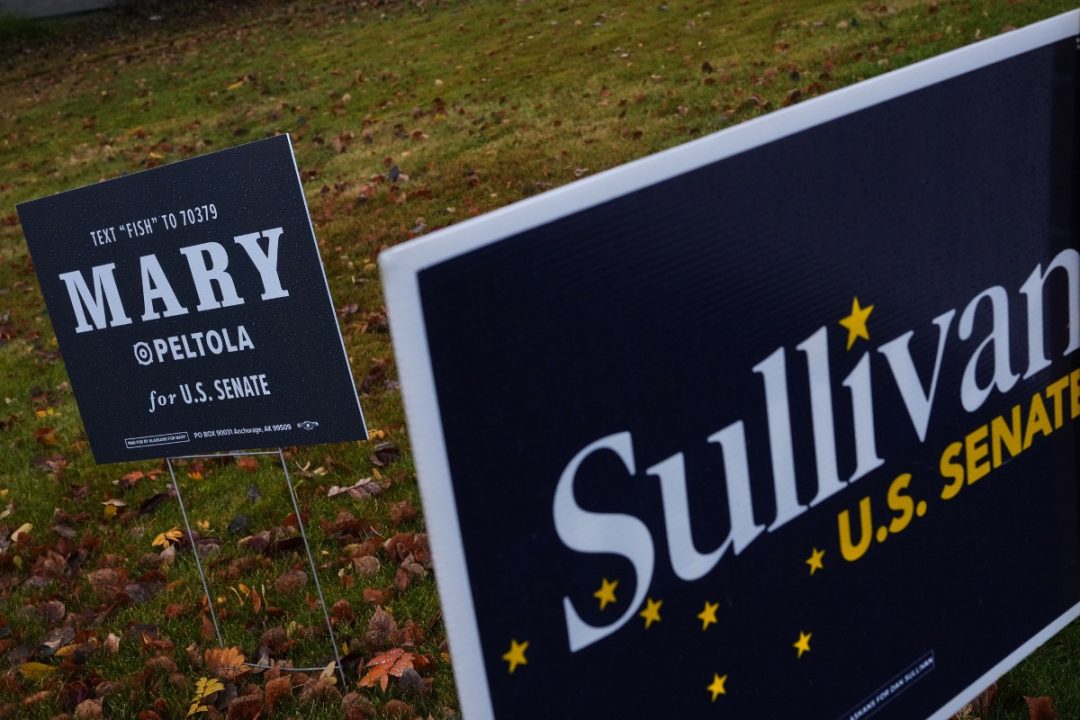
The lawsuit centered on an unusual feature of Alaska’s Senate race: Two candidates share nearly identical names.
Republican incumbent Dan S. Sullivan faces Democrat Mary Peltola and two other candidates, including retired teacher Daniel J. Sullivan, Jr.
The DOJ alleged that the second Sullivan deliberately entered the race to confuse voters and benefit Peltola.
It sought an order preventing Alaska from certifying the election if the incumbent lost by a margin smaller than the number of votes potentially diverted to his namesake. Federal investigators would then attempt to determine whether voters had mistakenly supported the wrong Sullivan.
Gleason found the proposed remedy unworkable.
In her order, she wrote:
The United States provides no workable plan as to how it proposes to segregate ballots cast for Daniel J. Sullivan on Election Day and then conduct a court-ordered unspecified “investigation” of those ballots in a manner that would preserve voter secrecy.
Alaska’s Constitution protects ballot secrecy. Moreover, many residents had already voted, and their ballots could no longer be separated or traced to individual voters.
Gleason warned that subjecting ballots to a law-enforcement investigation could undermine voter confidence and discourage participation. She also invoked the Supreme Court’s long-standing caution against changing election rules immediately before voting.
Her conclusion was unequivocal:
Simply, the Court cannot grant the United States the relief it seeks.
Gleason dismissed the case without prejudice but refused to allow another amended complaint, finding that further amendments would be futile.
Importantly, the ruling did not determine whether Democratic operatives improperly recruited the second Sullivan. Instead, the judge concluded that the federal government had failed to establish grounds for the court to grant its requested intervention.
A Disputed Candidacy and Allegations of Democratic Manipulation
The controversy began months before Washington intervened.
As we previously reported, Alaska election officials initially disqualified Daniel J. Sullivan after questioning the legitimacy of his candidacy.
He had sought to appear on the ballot as “Dan Sullivan” and changed his party affiliation shortly before entering the race.
However, Alaska’s courts rejected his disqualification. The state Supreme Court upheld his right to appear on the ballot in June.
Election officials subsequently distinguished the candidates by identifying the incumbent’s Republican affiliation and officeholder status. According to the sample ballot published by Ballotpedia, the two candidates appear as follows:
Sullivan, Dan S. (Registered Republican) Incumbent
Sullivan, Daniel J. Jr.
The controversy intensified after an October 28 investigation by The New York Times exposed efforts by Democratic operatives to recruit candidates who could weaken the Republican incumbent.
The New American detailed allegations involving Peltola campaign aides, Democratic Senatorial Campaign Committee officials, and political consultants.
The Times based its findings on interviews, messages, and documents. Peltola has denied knowing about the recruitment effort, while her campaign and national Democratic officials have disputed allegations of involvement.
The revelations raise serious questions about political manipulation. Recruiting spoiler candidates for electoral advantage is not inherently illegal. However, unlawful campaign financing, false sworn statements, or conspiracy to interfere with voting rights could constitute criminal offenses. Federal and Alaska state authorities are investigating whether the alleged scheme involved violations of the law.
Even if investigators establish wrongdoing, however, that would not automatically give the federal government the authority to block certification of Alaska’s election results.
Sullivan Accepts Results as Republicans Launch Investigations
Despite the administration’s legal challenge, Sullivan says he will respect the election results.
During a Sunday interview with CNN, host Jake Tapper asked whether he would accept the outcome “only if he won.” The candidate replied,
No, I’m going to accept the election results.
Sullivan nevertheless accused Peltola and Democratic officials of dishonesty about the recruitment controversy.
Other Republicans have taken a more confrontational approach.
House Oversight Committee Chairman James Comer (R-Ky.) suggested Sunday that Peltola might not be seated even if she wins.
Asked about that possibility during a Fox News appearance, Comer responded:
That’s a big possibility. I have not spoken to Senator Thune about that.
John Thune (R-S.D.), the Senate majority leader, would play a central role in any effort to challenge Peltola’s seating.
Comer has also launched a congressional investigation, requesting testimony from former Peltola campaign manager Elisa Rios and Democratic operative Jerid Kurtz.
He wants to determine whether money changed hands during the recruitment operation and whether participants violated federal law.
Meanwhile, Senator Ron Johnson (R-Wis.), chairman of the Senate Permanent Subcommittee on Investigations, has opened a separate inquiry.
On October 29, Johnson sent records-preservation and communications requests to Rios, Kurtz, and Democratic operative Anton McParland.
He described the alleged operation as “outrageous and possibly criminal behavior on the part of Democrat operatives.”
Johnson said his investigation would help ensure that potential evidence was not destroyed.
Republicans Question Whether Peltola Should Be Seated
Beyond the investigations, several Republicans have raised the possibility of preventing Peltola from taking office.
On Saturday, Senator Tim Sheehy (R-Mont.) posted on X:
Under no circumstances should Mary Peltola be seated if she wins an election in a fraudulent manner.
Senator Tim Scott (R-S.C.), chairman of the National Republican Senatorial Committee, also declined to commit to accepting a Peltola victory.
Asked twice during Sunday’s Meet the Press interview whether he would recognize the results if Alaska certified her victory, Scott avoided a direct answer:
Dan Sullivan is going to win.
President Donald Trump has likewise left the question open.
Asked Thursday whether Senate Republicans should refuse to seat Peltola if she wins, he responded, “Well, you’re going to have to see what happens.” He also questioned whether Peltola should have been allowed to run, and characterized the alleged ballot manipulation as voter fraud.
In an interview on the New York Post’s Pod Force One podcast, released Monday, Trump went further. Asked whether he would consider “redoing” the election if the race was close, he called the alleged recruitment scheme a “criminal act” and said he would consult his lawyers about the possibility.
These statements raise constitutional questions extending well beyond Alaska.
Neither the president nor the House of Representatives can decide who takes a Senate seat. Under Article I, Section 5 of the Constitution, the Senate judges the elections, returns, and qualifications of its own members.
That authority includes investigating contested elections and, when supported by evidence, rejecting an election result. But allegations of misconduct alone do not establish that an election was invalid.
With the DOJ appealing the ruling and separate federal, state, and congressional investigations underway, the controversy could extend well beyond Election Day.
What began as a dispute over two nearly identical names on the ballot has become a broader test of election integrity, federal authority, and the constitutional limits on challenging election results.