

Top Democrats Pledge to End Iran War, but Balk at Defunding It
The war against Iran helped drive voters away from Republicans in the midterms. But Americans expecting Democrats to end the conflict may soon find themselves deeply disappointed, as the party’s leaders appear far more eager to condemn the war than to stop paying for it.
December 11: The Test
Federal government funding expires December 11, when Congress must approve another spending package or face a partial shutdown. That gives Democrats an immediate opportunity to demand a binding prohibition on financing offensive military operations against Iran.
Republicans still control Congress. However, a Senate funding bill generally needs 60 votes to overcome a filibuster, and Republicans hold only 53 seats. Democrats therefore have considerable leverage before taking power in January.
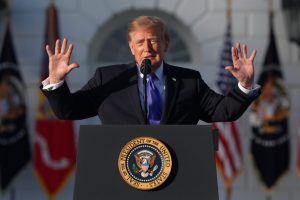
The conflict began February 28, when President Donald Trump launched attacks alongside Israel without congressional authorization. The war drove up prices and fueled voter anger, and Democrats swept the November 3 midterms by promising change.
By November 13, the conflict had cost taxpayers an estimated $48.3 billion, according to the Pentagon. That figure excludes damage to American military bases.
On November 9, Democratic leaders Representative Hakeem Jeffries and Senator Chuck Schumer, both from New York, declared that voters had given them a mandate to “stop the reckless war of choice in Iran,” among other priorities. They did not explain whether they would use the approaching deadline to fulfill that promise.
A funding cutoff would not instantly halt every operation, and existing appropriations and presidential resistance could complicate enforcement. But binding restrictions would carry considerably more force than another political appeal.
Jeffries: The War Powers Charade
Jeffries’ mask slipped on November 17.
Speaking at The Atlantic Summit, he promised to “move aggressively to end the reckless and costly war of choice in Iran right out of the gate” in January.
His proposed solution? Pass a war powers resolution and send it to Trump’s desk.
But Trump could simply veto it. Overriding that veto would require two-thirds support in both chambers of Congress, a threshold far beyond the current political reality, as Jeffries must surely understand.
The magazine’s editor-in-chief, Jeffrey Goldberg, then asked the question that exposed the limits of Jeffries’ promise: Would ending the war mean cutting off funding for U.S. operations in the Persian Gulf?
Jeffries answered:
Well, no, no. It means a cessation of hostilities.
In other words, Jeffries ostensibly wants the war to end, but has not committed to withholding the money that sustains it.
The distinction is hardly academic. On November 19, Senate Republicans defeated another war powers measure by a 51 to 48 vote. There is little reason to assume another congressional attempt would fare better.
At a November 9 news conference, Jeffries deferred funding negotiations to Democratic appropriations leaders Representative Rosa DeLauro (Conn.) and her Senate counterpart, Patty Murray (Wash.). On November 12, he again declined to commit to restricting war funding.
Nominated November 18 to become speaker next year, Jeffries has promised decisive action in January.
Schumer, Clyburn, and the Politics of Doing Nothing
Schumer has also pledged to end the war. After the election, he cited Congress’ “power of the purse” as a means of restraining an unauthorized conflict.
Yet he has not committed to blocking a December spending deal that leaves war funding intact.
Schumer faces a December 1 leadership challenge from Senator Chris Van Hollen (D-Md.), who says he wants precisely that confrontation.
Veteran South Carolina Democratic Representative Jim Clyburn offered even less clarity. On November 18, Zeteo reporter Prem Thakker asked whether Democrats should help Republicans continue funding the war. Clyburn said he had no “public opinion” and would consult party leadership.
Clyburn had just helped Jeffries secure his nomination, emphasizing the historic significance of his becoming the first black speaker of the House. Yet on a defining election issue, he declined to take a stand.
Representative Adam Smith (D-Wash.), the incoming House Armed Services Committee chairman, raised another objection. Asked by reporter Ryan Morgan about defunding, he pointed to American troops stationed in the region:
But if we cut off all funding, what does that do to the 50,000 service members who are in the region?
The argument conflates blocking offensive operations with abandoning troops. Congress can explicitly preserve funding for troop protection, withdrawal, evacuation, and other defensive purposes.
DeLauro, meanwhile, argues that a shutdown would not necessarily stop the war. She favors a temporary funding extension while Democrats prepare to govern in January. Incoming House Foreign Affairs Chairman Gregory Meeks (D-N.Y.) has similarly warned against disrupting “essential” government services.
Yet none of those concerns requires Congress to approve additional war funding without restrictions.
The Democratic Dissenters
Not every Democrat wants to postpone the fight.
On November 12, Senators Van Hollen, Michael Bennet (D-Colo.), Tammy Duckworth (D-Ill.), and Bernie Sanders (I-Vt.) announced that they would reject any short-term funding package without restrictions on the war.
Duckworth later joined Elizabeth Warren (D-Mass.) and Kirsten Gillibrand (D-N.Y.) in proposing an amendment barring new money for offensive operations without congressional authorization.
Representatives Ro Khanna (D-Calif.) and Yassamin Ansari (D-Ariz.) issued a similar ultimatum.
Senator Tim Kaine (D-Va.) has developed language preserving funds for self-defense and evacuations. According to The Washington Post on Monday, Republican Senators Susan Collins (R-Maine) and John Thune (R-S.D.) have even “signaled openness” to negotiating restrictions.
There is no guarantee of agreement. Trump could reject the restrictions, and Republicans remain divided. But Democrats have an alternative to surrendering their leverage before negotiations begin.
Yet a familiar pattern raises doubts about the outcome. Much like their outnumbered Republican colleagues who challenge their party’s establishment, some dissenting Democrats make principled arguments, demand accountability, and often find themselves on the losing side.
The resulting battles preserve the appearance of a genuine political struggle. Yet for all the fiery objections, right votes lost by razor-thin margins, and solemn promises, Washington’s wars march on and executive power keeps expanding, regardless of which party holds the reins.
Israel’s Escalation Push and AIPAC’s Influence
Meanwhile, Israel is pushing for renewed military escalation.
Prime Minister Benjamin Netanyahu is pressing Trump to launch another major bombing campaign against Iran, and Mossad director Roman Gofman reportedly traveled to the United States to make that case. Israeli officials have circulated intelligence claims concerning Iranian chemical and biological weapons capabilities and alleged plots against targets on American soil.
Some U.S. and Gulf officials question those claims. Middle East news source Al-Monitor reported November 20 that Netanyahu favors a rapid air campaign, but no publicly available evidence establishes an imminent Iranian chemical attack.
The political backdrop also deserves scrutiny. The American Israel Public Affairs Committee (AIPAC) has helped channel substantial campaign contributions to influential Democrats.
Federal Election Commission (FEC)-based figures show approximately $1.4 million in AIPAC and allied pro-Israel PAC contributions benefiting Jeffries since 2023. Clyburn received approximately $100,000 through AIPAC’s network. Schumer has benefited from roughly $101,000 in AIPAC and affiliated support, according to the same campaign-finance compilation.
The influence extends far beyond these leaders.
An independent analysis of FEC filings found that 166 of 259 sitting congressional Democrats had received money through AIPAC’s PAC since 2022.
The Deadline Is a Choice
Journalist Max Blumenthal warned in a November 19 appearance on Judging Freedom that Democratic leaders risk betraying voters who expected an end to the conflict.
He characterized Jeffries as a vehicle for AIPAC’s interests and argued that another war powers vote would not be a substitute for a funding ultimatum:
The Democrats in the Senate, on December 11th, when the government need to be funded, can attach a legally binding prohibition on U.S. military operations against Iran and tell the Republicans and Donald Trump that we will not vote to fund the government unless you end the war. And that’s the only way the war can be ended…. And they are not moving toward that showdown. And this is something that everyone in the anti-war community, every American that voted for the Democrats under the belief that they were going to end this war should be getting behind and demanding.
Blumenthal also suggested a more cynical political calculation: Democrats might benefit from allowing the war to continue damaging Trump and Republicans, even as American families bear the economic consequences.
The funding debate comes at an especially dangerous moment.
Washington is tightening its naval blockade of Iran. Under a November 18 military advisory, vessels receiving Iranian cargo through transfers at sea risk interception, seizure, or the use of force.
Tehran warned Monday that it would use “all available tools” to resist the blockade. Iran continues to restrict passage through the Strait of Hormuz, a vital artery for global energy supplies. Meanwhile, Netanyahu is pressing Washington to resume large-scale bombing.
Against that backdrop, December 11 is more than another government funding deadline. It is an opportunity for Democrats to translate their promises into binding restrictions on a war that Congress never authorized.
For now, the party’s leaders seem considerably more comfortable promising to end the war in January than confronting how to pay for it in December.
Related Article:
House Shelves Hegseth Impeachment, Exposing Washington’s Uniparty