
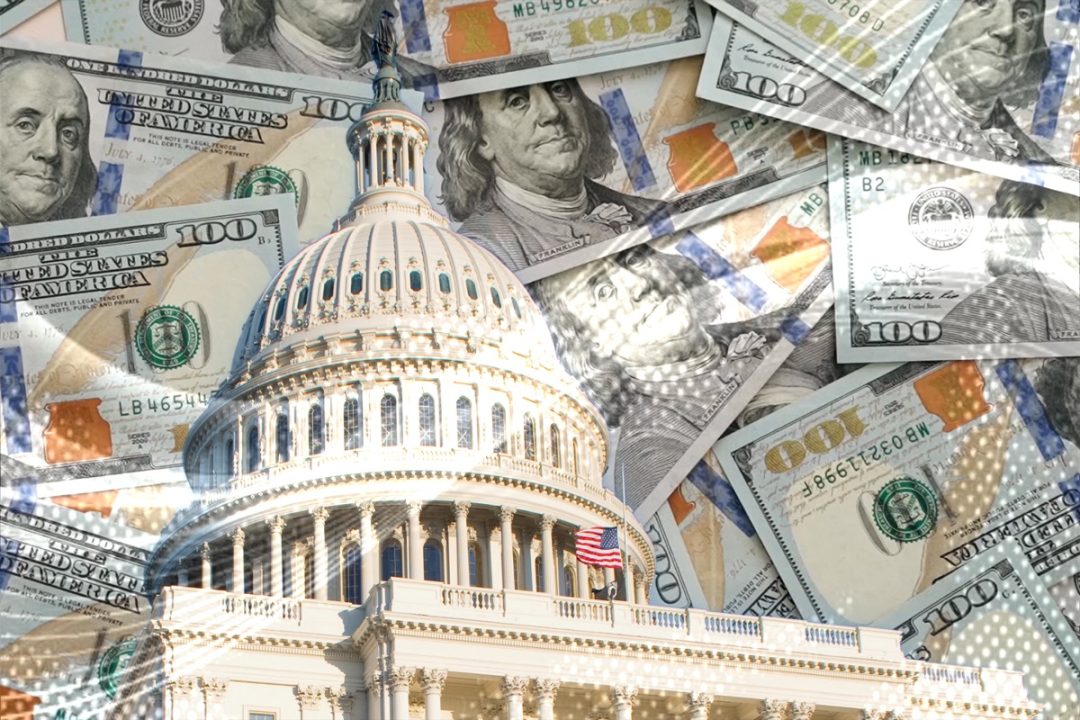
Washington’s Half-trillion-dollar Fraud Problem
Every year, Washington may be losing half a trillion dollars to fraud, more than the entire economies of most of the world’s nations. That is the implication of a new report from the Foundation for Government Accountability (FGA), released October 7, which estimates that fraud costs federal taxpayers as much as $521 billion a year, roughly seven percent of all federal spending.
The figure matches the upper bound of a 2024 Government Accountability Office (GAO) study, the first government-wide estimate of fraud, which put annual losses at between $233 billion and $521 billion. Separately, the GAO reports that agencies have admitted to some $2.8 trillion in “improper payments” since 2003, money paid to the wrong person, in the wrong amount, or for the wrong reason.
The most revealing statistic in the FGA report, however, is this one: Of more than 2,200 federal payment programs, only 64 are reviewed for improper payments each year. In other words, the government does not know how much it is losing, because it checks only a sliver of what it spends.
Unreconcilable Books
None of this would surprise Catherine Austin Fitts or Dr. Mark Skidmore. Fitts, a former assistant secretary of Housing and Urban Development (HUD), spent years warning that federal books could not be reconciled. In 2017, Skidmore, a Michigan State University economist, took up her challenge. Combing through reports from federal inspectors general, his team tallied some $21 trillion in “unsupported adjustments” at the Department of Defense and HUD between 1998 and 2015, accounting entries with no documentation showing where the money came from or went.
Shortly after Skidmore’s work drew attention, the Pentagon conducted its first department-wide audit. It has failed every one since. In December 2025, it failed its eighth, unable to fully account for its roughly $4.7 trillion in assets. Its stated goal of a clean audit is now 2028.
Too Big to Be Audited
The Constitution anticipated this danger. Article I, Section 9 requires that “a regular Statement and Account of the Receipts and Expenditures of all public Money shall be published from time to time.” A government that cannot account for its own money is not merely inefficient; it is failing a constitutional duty.
The deeper problem is size. James Madison promised in The Federalist, No. 45 that the powers of the federal government would be “few and defined.” A government of a few defined powers can be audited. A government running more than 2,200 payment programs, most never checked, cannot. No inspector general, task force, or new software can oversee an enterprise that has outgrown the capacity of anyone to understand it.
Washington’s usual answer to fraud is more bureaucracy to police the bureaucracy. The constitutional answer is simpler: Return the federal government to its enumerated powers. Programs that do not exist cannot be defrauded.
This article is part of The New American’s weekly online newsletter Insider Report, which is emailed to TNA subscribers each week. Click here to subscribe to The New American to receive the Insider Report and access exclusive content.