
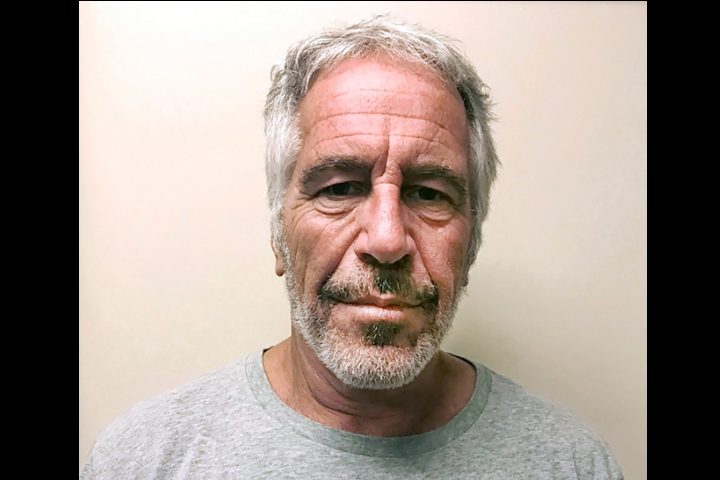
Previously Unseen Autopsy Evidence Suggests Epstein Was Strangled
Jeffrey Epstein supposedly hanged himself in a federal jail cell while guards slept, cameras failed, and investigators subsequently mishandled crucial evidence. Few found the official explanation convincing. Donald Trump even campaigned on getting to the bottom of the scandal, which unfolded during his first term. Yet his administration ultimately embraced the same conclusion: Epstein killed himself. Now, a new forensic analysis challenges that verdict, arguing that the notorious sex offender was strangled.
Epstein’s Neck Injuries
In a report published Monday, CBS News detailed Dr. Michael Freeman’s analysis of previously unpublished autopsy records provided by Epstein’s brother, Mark.
Freeman told the outlet,
The injuries that were documented by the medical examiner were not consistent with the suicidal hanging. And the injuries that were attributed to something other than potentially a physical struggle or assault were just overlooked.
Freeman, editor-in-chief of the Journal of Forensic and Legal Medicine, has investigated deaths in police custody and participated in high-profile forensic investigations.
He and his fellow researchers presented their findings Monday in London.
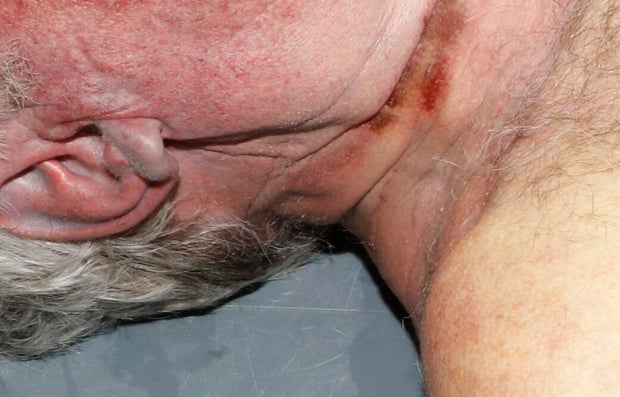
Freeman focused particularly on Epstein’s neck injuries. Autopsy photographs revealed two distinct ligature marks, the impressions left by pressure from a cord or similar material.
In suicidal hangings, such marks typically slope upward toward the suspension point.
Freeman acknowledged that one mark followed this pattern. But a second appeared lower on Epstein’s neck, running at a different angle.
He argued that hanging could not adequately explain both marks.
Could Epstein have attempted suicide twice?
Freeman rejected that possibility. The first attempt would have needed enough force to fracture Epstein’s hyoid bone and thyroid cartilage while leaving him conscious and capable of trying again.
He told CBS,
That’s not what suicidal hangings do…. The body becomes unconscious and then it is the weight of the body that produces the abrasion, not any kind of running jump at it. That opportunity really isn’t there. That’s not a realistic scenario for any hanging described in any of the literature throughout the world.
For Freeman, the differently angled marks strongly suggested another mechanism of death.
Signs of a Violent Struggle
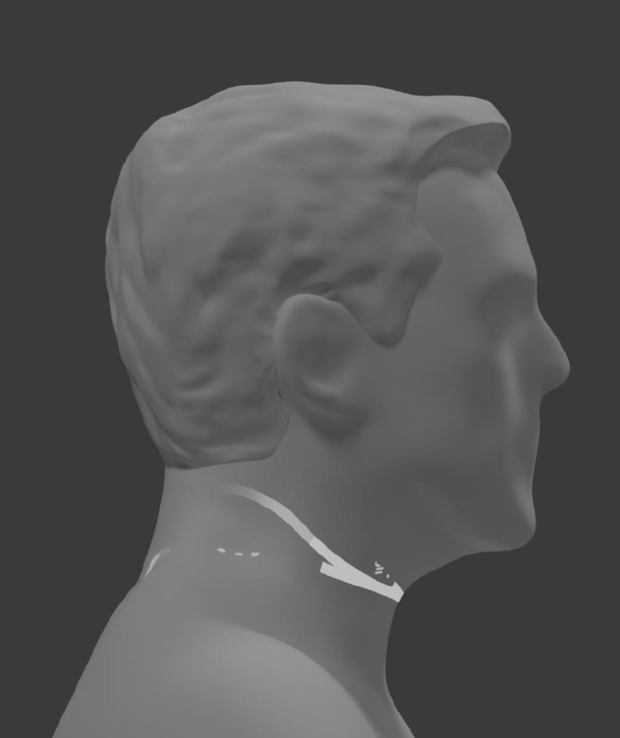
Freeman also constructed a three-dimensional biomechanical model using Epstein’s physical characteristics, documented injuries, and a corrections officer’s description of the death scene.
Officer Michael Thomas said he discovered Epstein hanging from a bedpost.
Freeman reconstructed the purported position of Epstein’s body to examine whether hanging could have produced the recorded injuries.
His analysis raised further questions.
Freeman identified substantial bleeding deep within Epstein’s left shoulder muscles, along with injuries to his face and back. He argued that these findings suggested blunt-force trauma rather than hanging alone.
The shoulder injury particularly troubled him. The medical examiner had attributed a minor arm abrasion to possible convulsions during hanging. Freeman argued that this failed to explain the deeper muscular bleeding.
He also identified marks above the neck ligature that he considered consistent with fingernail scratches, possibly indicating an attempt to remove a ligature during an assault.
In an interview with BBC Newsnight, Freeman described the injuries as evidence of a possible struggle.
The Knotted Fabric
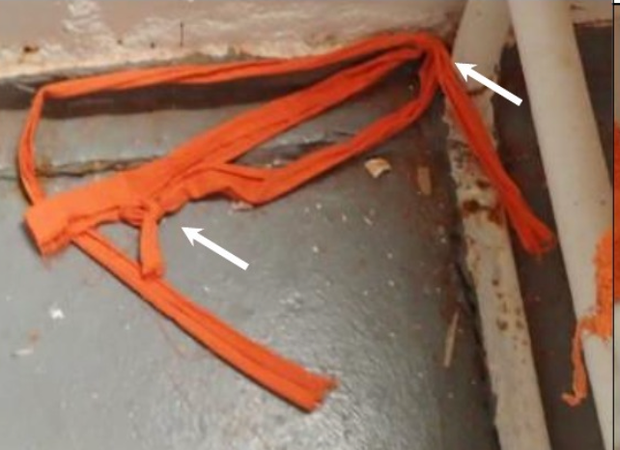
Freeman also examined photographs of torn orange bedding scattered around Epstein’s cell.
One photograph showed a narrow strip of fabric with two knots and a loop. He believes it could explain the irregular marks on Epstein’s neck.
Freeman explained,
That is a double knotted, looped, narrow ligature that was found in the cell that was dropped in a corner near the desk. And if we put those together in a format in which the knot, one of these knots, is applied as pressure to produce this irregular abrasion at the back of the neck, we actually have a fairly good explanation for all the injuries.
His reconstruction suggests that someone could have pulled the fabric tightly around Epstein’s neck from behind. The knots might explain the irregular abrasions, while the force could account for the horizontal neck injuries.
The same fabric might subsequently have been used to suspend Epstein’s body from the bunk bed.
Yet investigators failed to preserve the knotted strip. The medical examiner never examined it, leaving a crucial element of Freeman’s theory impossible to test directly.
Evidence Lost, Questions Unanswered
Other investigative failures further complicated the examination of Epstein’s death.
Thomas discovered Epstein around 6:30 a.m. and described the body as cold, suggesting he had died hours earlier.
Guards removed Epstein from the hanging position during resuscitation attempts. Investigators never obtained photographs showing his original position.
Authorities also failed to secure the cell properly, allowing potentially important evidence to be disturbed.
According to CBS, federal investigators waited two years to interview Thomas and another year to question the medical examiner who conducted the autopsy.
The original examiner had emphasized the absence of conventional defensive injuries, including damaged fingernails and wounds on Epstein’s hands.
Freeman disputes the significance of that finding. He believes investigators overlooked other injuries suggesting resistance.
His assessment remains contested. Freeman never examined Epstein’s body, and his research has not undergone peer review. He acknowledged that an academic journal rejected his submission.
New York City’s medical examiner continues to stand by the suicide ruling.
A June investigation by The New York Times uncovered evidence suggesting Epstein contemplated suicide. Most forensic experts consulted by the newspaper considered the physical evidence insufficient to determine the manner of death conclusively.
Freeman, however, remains convinced that the official finding is wrong.
The Jail’s Extraordinary Failures
The circumstances surrounding Epstein’s final weeks hardly inspire confidence.
On July 23, 2019, guards found him injured after an incident involving cellmate Nicholas Tartaglione, a former police officer facing murder charges. Epstein initially accused Tartaglione of attacking him, but later withdrew the allegation.
Officials briefly placed Epstein on suicide watch.
His next cellmate, Efrain Reyes, was transferred on August 9 without a replacement. Epstein spent his final night alone, despite orders requiring a cellmate.
The two guards responsible for monitoring him, Tova Noel and Michael Thomas, failed to perform mandatory checks and falsified records. Both faced federal charges but avoided trial through deferred prosecution agreements.
Most cameras in Epstein’s housing area failed to record.
A surviving recording captured an unexplained orange shape moving toward the staircase leading to his tier around 10:39 p.m.
Federal investigators suggested it was an officer carrying linens. Other analysts questioned that interpretation. The footage does not establish who or what appeared.
The Department of Justice (DOJ) inspector general’s 2023 report documented extensive negligence but found no evidence contradicting the suicide determination.
“Case Closed”
Former Attorney General William Barr repeatedly assured Americans that Epstein had killed himself. In November 2019, he described the failures surrounding his death as “a perfect storm of screw-ups.”
Barr claimed his personal review of surveillance footage established that nobody entered Epstein’s housing tier that night.
Yet a CBS investigation in July 2025 found that the camera did not adequately capture the staircase leading to Epstein’s tier. The available footage, therefore, could not conclusively support Barr’s claim.
Barr nevertheless maintained his position during a subsequent congressional deposition, raising questions about whether officials overstated what the evidence could prove.
Questions about the DOJ’s handling of the Epstein scandal extend beyond the disputed suicide ruling. Two prosecutors involved in cases against Epstein and his associates were subsequently removed under controversial circumstances.
In June 2020, Barr abruptly ousted Geoffrey Berman, the Manhattan federal prosecutor whose office had brought charges against Epstein.
Barr initially announced that Berman was stepping down. Berman publicly denied resigning. Barr then announced that Trump had fired the prosecutor at his request.
Five years later, Trump’s DOJ fired Maurene Comey, who had prosecuted cases involving Epstein and Ghislaine Maxwell.
In October 2026, a federal judge ruled that Comey’s dismissal was unlawful. The government announced plans to appeal.
Neither removal establishes a coverup. But both raise troubling questions about political interference in one of America’s most disturbing criminal cases.
Meanwhile, FBI Director Kash Patel has embraced the official suicide finding.
During congressional testimony in May 2025, Patel told Senator John Kennedy (R-La.) that he believed Epstein had hanged himself.
The FBI and DOJ reaffirmed that conclusion in July.
Related Article:
Classified Epstein Files Surface Despite DOJ Denials. Why the National Security Secrecy?