
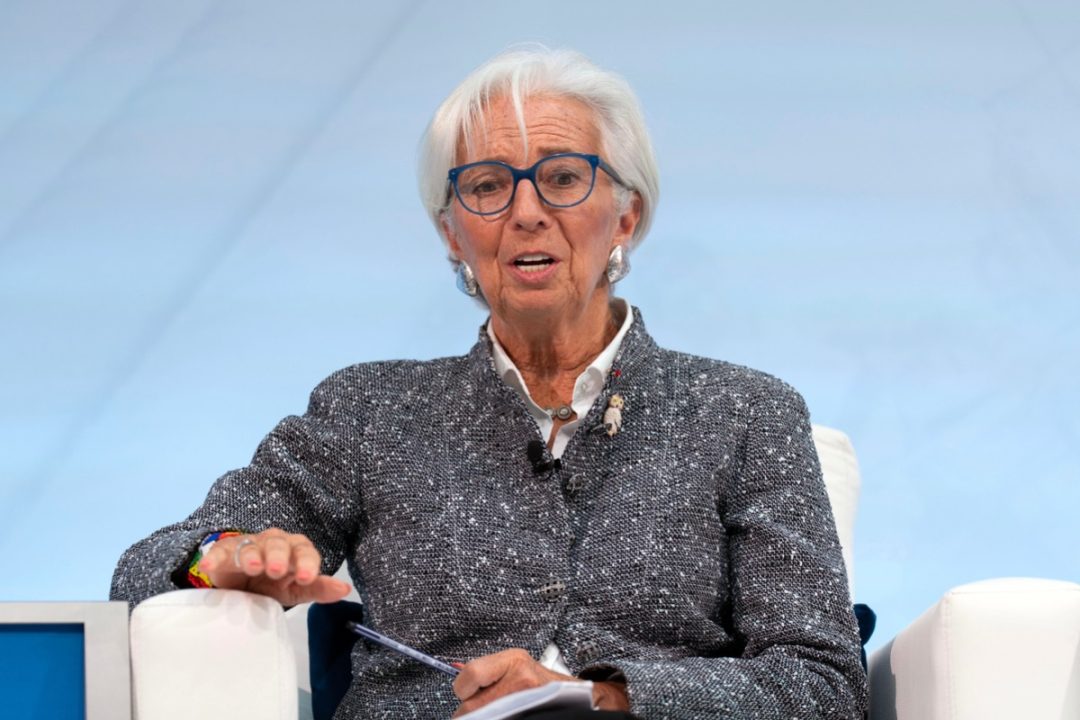
Lagarde to Step Down as ECB President
European Central Bank President Christine Lagarde announced on October 29 that she will resign from her position effective February 7, approximately nine months before her eight-year term is scheduled to end on October 31, 2027.
Stepping Down
In a video message posted on X, the 70-year-old French official, who has led the ECB since November 2019, informed colleagues and staff of her decision. Appearing with two bandages on her face, Lagarde stated: “I have just informed my colleagues that I will step down as ECB President on 7 February 2027 after the monetary policy Governing Council. It has been a great pride and a huge privilege to serve this institution.” She thanked those who supported the bank’s mission of delivering price and financial stability, and said she leaves “with a sense of good work done and an ECB that is fit for the future.”
The bandages promptly drew attention and speculation online. Lagarde addressed them directly, explaining they resulted from a minor surgical procedure earlier in the week.
At a subsequent press conference following the ECB’s decision to hold interest rates steady, Lagarde elaborated on her reasons for leaving early. She said she wants “the freedom of speech, the freedom of expression and the freedom to engage on matters that are not monetary policy matters.” She added that she could no longer remain comfortable with the political neutrality required of her ECB role: “I don’t think that I can remain neutral. I’m interested in the truth, and I see the truth being very often damaged, contradicted by misrepresentation.”
A Technocrat’s Technocrat
Lagarde’s term began when she succeeded Mario Draghi. Before that, she headed up the International Monetary Fund (2011-2019). The IMF has always been a vehicle for corporate bailouts and global economic governance, and Lagarde’s IMF years included the Greek bailouts run by the “Troika,” which tied loans to conditions set by unelected officials. She has also served on the World Economic Forum’s board of trustees.
During her tenure at the European Central Bank, she helped orchestrate ethically murky initiatives such as the Covid-19 pandemic response, the energy crisis linked to Russia’s war in Ukraine, and a push for the digital euro. She is a technocrat’s technocrat.
Related to the French Election?
Her early departure allows current European Union leaders to select a successor before France’s 2027 presidential election. The process to identify her replacement has already begun, with several names, including former national central-bank governors, being considered.
Lagarde will chair two more Governing Council meetings before stepping down. European Council President António Costa praised her leadership, and confirmed that the succession process would proceed without delay.
An unelected technocrat leaving early to speak freely on politics, possibly before a French election, is perfectly illustrative of the revolving door between global institutions and political power.
This article is part of The New American’s weekly online newsletter Insider Report, which is emailed to TNA subscribers each week. Click here to subscribe to The New American to receive the Insider Report and access exclusive content.