
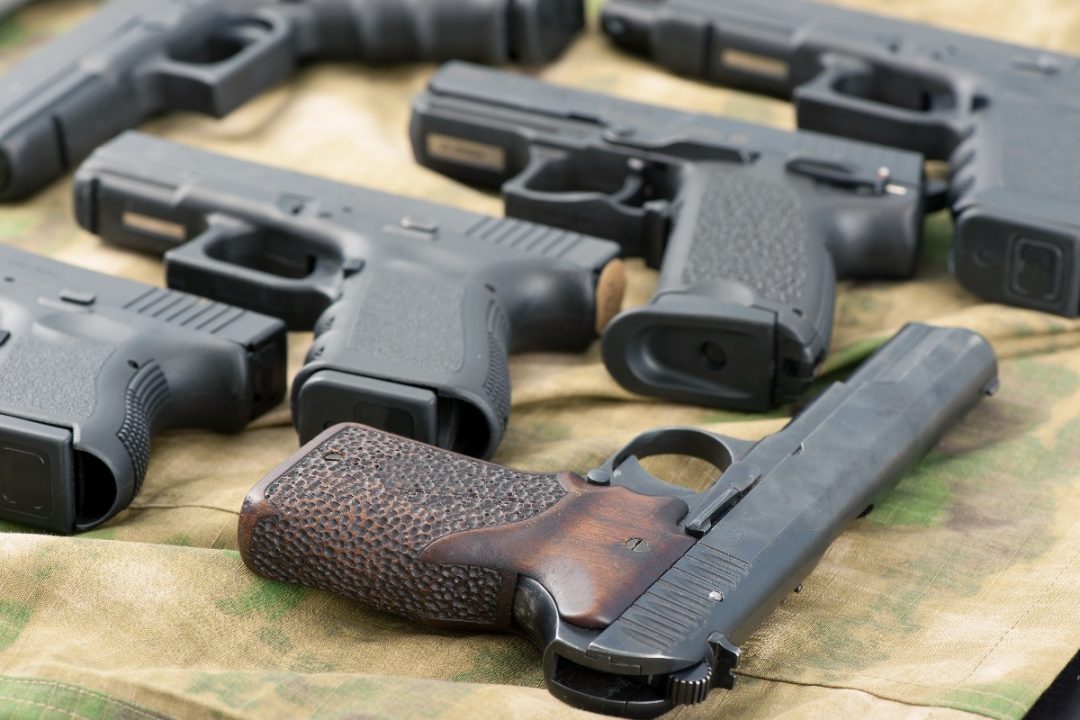
Australia Is Coming After People’s Guns
Australia is using a terrorist attack on a Jewish gathering that happened last year as an excuse to erode what remains of its citizens’ gun rights. Aussies are being coerced into giving up their guns through new firearm and ammunition ownership caps, restrictive reclassification, and buyback schemes.
The Buyback Scheme
The “biggest gun buyback in 30 years” kicked off on November 2, according to an announcement by the government of Australia’s most populous state, New South Wales (NSW). The buyback scheme is part of the Terrorism and Other Legislation Amendment Bill 2025 passed in NSW after the Bondi Beach mass shooting on December 14, 2025. The scheme, which also applies to the Australian Capital Territory (ACT), is designed to get all gun owners in compliance before the legislation goes into full effect. After that, violators face jail time. As for when the law commences, it has yet to be determined.
The Australian federal government has made it clear it wants to see the same draconian anti-gun laws across the entire continent, not just in NSW and ACT.
The NSW buyback program is expected to affect 18 percent of gun owners — about 50,000 — and yield 270,000 firearms. Every Australian state has a gun registry, implemented in 1996 after the Port Arthur massacre, so authorities know where all the legal guns are. In January, an Australian news outlet published this ominous sentence: “The government is now moving toward a comprehensive audit of all existing licences.”
Reducing the Number of Guns
The NSW government aims to eliminate as many privately owned guns as possible. It says on its website that “the National Gun Buyback Scheme is one part of the NSW Government’s broader package of legislative … firearm reforms designed to strengthen oversight, reduce risk and reduce the number of firearms in the community.” (Emphasis added.)
Minister for Police and Counter-terrorism Yasmin Catley told citizens that fewer guns mean a safer community because legal guns eventually end up in the wrong hands. “Evidence shows that fewer guns in the community means a safer community, it’s that simple,” she said in a statement. “Any gun can end up in the wrong hands which is why we introduced a suite of reforms to reduce risk, strengthen compliance and safeguards, and reduce the number of guns in our community.”
Some members of the NSW parliament objected to the law early on. MP Helen Dalton of Murray, representing rural areas, said, “We have close to 10,000 law-abiding firearms owners in Murray… None of them have behaved like terrorists, but they are being treated like they are.”
Capping Guns and Ammunition
The buyback scheme legally forces people who have more guns or ammunition than allowed under the impending law to give them up in exchange for money. People have one year “to understand their obligations under the new laws and safely surrender eligible firearms,” the government says.
The upcoming law caps the number of guns most people can have at four, unless they meet one of a few exceptions. Those exceptions are for someone who “uses firearms for the genuine reason of sport/target shooting, vertebrate pest animal control or business or employment”; or for the “genuine” reason of “primary production, occupational requirements relating to rural purposes, [or] animal welfare.” Farmers are an example of those who can have 10 firearms.
Reclassification
As for restrictions on specific firearms and ammunition, the new law works through a patchwork of reclassification. There are three main categories of firearms: A, B, and C. Instead of unlimited magazine capacity, most firearms in all three categories have a limit of five or 10 rounds. Most category A and B gun holders need to have a gun-club membership. Category C is a higher-tier license, but not just anyone who completes extra paperwork can get one. Its eligibility is narrowly restricted, meaning many recreational gun owners cannot qualify to keep the guns moved out of Categories A and B. Category C includes pump-action shotguns holding no more than five rounds and semiautomatic rimfire rifles holding no more than 10 rounds. The new law also puts straight-pull, pump-action and button/lever-release rifles and shotguns into Category C.
Licensing Changes
The gun owners of New South Wales have already been impacted by a slew of licensing changes this year. Instead of every five years, gun owners now have to reapply for their gun license every two years. “The practical effect of the shorter licence term is that you now face the Registry’s eligibility assessment twice as often, and each renewal is an opportunity for something in your circumstances to be reconsidered,” noted Aussie legal outfit Catron Simmons. In other words, there are now more opportunities for the government to take people’s guns away. Also, anyone who wants permission to have firearms will now have to abide by the new storage requirements. If they don’t, they’ll get in trouble. “Safe storage requirements are enforceable offences, not guidance,” according to Catron Simmons. “An inspection that finds a storage breach is a charge, not a warning.”
The new law also includes citizenship requirements on legal gun ownership, the only restriction that has any semblance of sense.
Once the law goes into effect, those who haven’t complied can get in serious trouble. Catron Simmons laid out the risks:
Once the caps and reclassifications commence, holding something you are no longer authorised to hold is unauthorised possession. Depending on the firearm, that runs from five years to fourteen, and to twenty where more than three firearms are involved and one is a pistol or prohibited firearm.
The Catalyst: Bondi Beach
On December 14, 2025, two Pakistani immigrants opened fire on a crowd that had gathered in Archer Park at Bondi Beach, Sydney, to celebrate the Jewish festival of Hanukkah. Fifteen people were killed and another 40 wounded. It was clear the target was Sydney’s Jewish community. After the attack, Prime Minister Anthony Albanese heard from “a diverse range of individuals and community organizations” demanding a national investigation into the rise of antisemitism.
On January 8, 2026, Albanese established the Royal Commission on Antisemitism and Social Cohesion with four aims in mind: tackle antisemitism “by investigating the nature and prevalence of antisemitism in institutions and society, and its key drivers in Australia, including ideologically and religiously motivated extremism and radicalization”; make recommendations to policing agencies on how to tackle antisemitism; look into the circumstances that led to the Bondi attack; and make recommendations for “strengthening social cohesion in Australia and countering the spread of ideologically and religiously motivated extremism in Australia.” A major takeaway was gun confiscation.
A Lesson for America
Americans need to pay attention to what is happening in Australia. History repeats itself — or, as some argue, it at least rhymes. Australia’s descent followed the same blueprint we’ve seen anti-gunners try to implement here.
The National Firearms Agreement of 1996 enables the Australian government to know where all the legal firearms are. There is no legal registry in the United States, but, as we previously reported, the ATF keeps an illegal national gun registry that keeps 1,414,088,513 records of guns and gun owners. Congressional calls for its destruction have proven futile.
Also, Americans need to keep in mind the old political mantra “never let a good crisis go to waste.” The NSW government made a push for gun control right after the 2025 shooting occurred, while the shock and outrage were most intense. Americans have seen numerous calls for gun control after horrific mass shootings. Fortunately, those calls have so far mostly remained unheeded.
The Bondi Beach shooting was carried out by Muslim migrants. The previous U.S. administration allowed millions of migrants into the country, many of them violent. Should a group of them carry out a mass shooting, expect Democratic lawmakers to draft draconian gun-control legislation.
Americans must stay alert, lest we become Australia, a country not so different.