

Let-’em-eat-cake California Pols Are Chewing Up State’s Restaurants With Regulations
California is our country’s “first Third World state,” historian Victor Davis Hanson noted some years ago. Part of this is that it’s increasingly hard doing business in the Golden State — legally, that is. Just consider the restaurant arena:
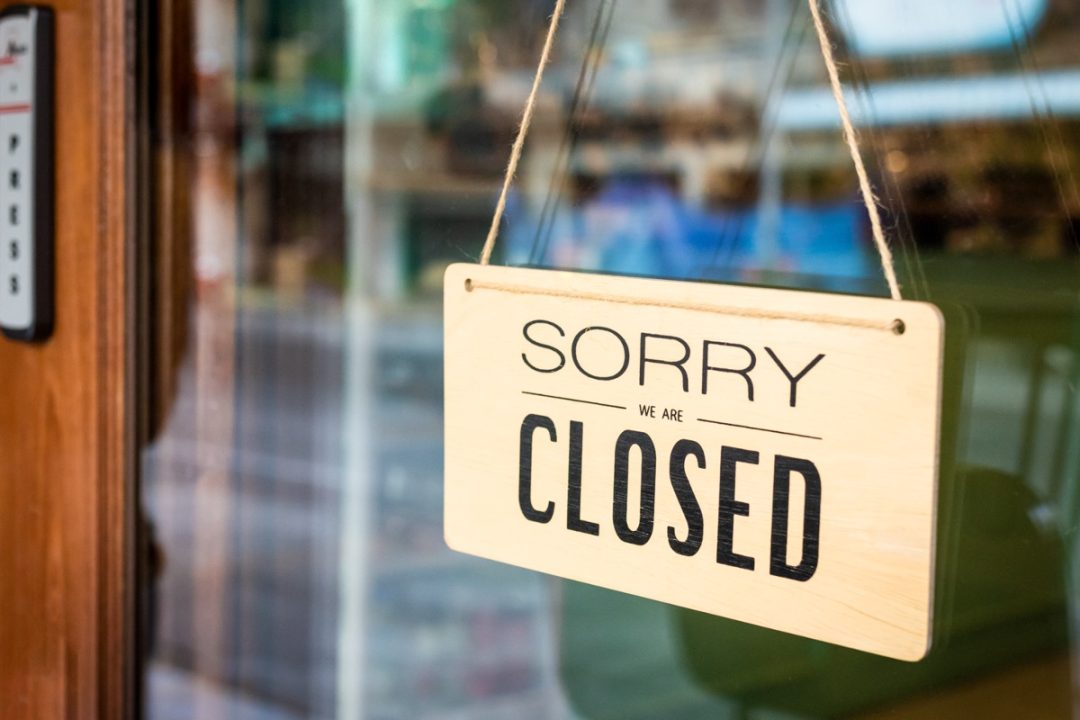
Approximately two eateries were closing daily during the first half of 2026 (around 391 in total).
And in Los Angeles alone, a peak 2025 closure period saw a city restaurant shuttering every single day.
But let not your heart be troubled. You know those street vendors who evade regulations and avoid costs? As Governor-elect Xavier Becerra (D-Calif.) said, trumpeting them:
[T]here’s real street tacos and you don’t get them in some establishment that’s been around for a long time.
(Of course, they may avoid health inspections, too. But what’s the Third World experience without a little food poisoning?)
As the CA Post Editorial Board put it this week, “With politicians like that in charge of the state, it’s no wonder that restaurants are in trouble.”
The Math Ain’t Mathin’
The restaurant business is a tough one, too, for manifold reasons. First, profit margins are only three to five percent. It thus doesn’t take much of an extra regulatory burden to propel a normal eatery into the red. Additionally, many “restaurants are still paying off loans they needed to survive the pandemic closures,” notes the California Restaurant Association.
The bottom line is that “there’s almost no harder way to make a living,” the aforementioned Post writes, before elaborating:
If your cook calls in sick, guess who has to work the grill?
If the sous chef decides to quit without warning, guess who has to wake up at 3 a.m. to butter 300 slices of bread?
It’s always the owner.
But California adds additional challenges.
As The California Post noted earlier this month, a beloved Malibu restaurant, Ollo Malibu, closed suddenly.
The owners had tried to keep their place open, but could not withstand the cumulative cost of fires, coastal floods, and construction along the Pacific Coast Highway.
Restaurants also face other obstacles. Taxes, regulations, and pressure from unions to use their preferred contractors all take a heavy toll.
Just consider the Bon Vivant Market & Café, opened in 2012 by owner Tricia La Belle. As the Los Angeles Business Journal related in November, when La Belle
first opened the eclectic French American-inspired restaurant in Atwater Village … she faced her challenges though they were still manageable.
Minimum wage in Los Angeles County was $8 per hour, and the prices of food, electricity, insurance and other costs were low enough to allow room for her local operation to breathe.
Thirteen years later, that margin has all but vanished. The county’s minimum wage has more than doubled to … [$18.47] — it’s … [$18.42] in the city — and [covered] fast-food workers now make $20 an hour. According to La Belle, electricity has jumped nearly 90%; insurance premiums have climbed as much as 400%; and food and liquors [sic] costs are up as much as 50%. The result: a business model on overload.
Again, too, La Belle has much company. This means that many restaurant jobs — at least 23,000 — have been lost statewide since 2023.
Among other things, this calls into question the wisdom of the minimum wage. As late economist Walter E. Williams might’ve said on the topic, “Would you rather have some jobs available at $10 an hour?”
“Or no jobs available at $20 an hour?”
Also realize that minimum-wage positions are often for youngsters trying to gain work experience or earn some pocket money. Thus did people under age 25 account for 43 percent of 2024 workers earning the federal minimum wage or less.
The Psychology of Economic Destruction
Of course, reasoned arguments illustrating leftist economic policy’s folly only convince those who actually want national prosperity. This leaves many left-wing politicians out. In fact, the Left (socialists, communists, statists — call them what you will) has typically despised the “bourgeoisie”: the middle classes.
Explaining why from a classical Marxist perspective, Hungarian communist revolutionary Béla Kun wrote in 1918:
“The internal enemy” of the proletarian Russian Revolution is constituted first and foremost by the lower middle classes. The expropriation of the expropriators being carried out at present does not represent the most serious obstacle in the path of proletarian dictatorship. In the path of the expropriation of capital the obstacles are of a purely objective nature. The small group of large capitalists has not the masses on its side, and therefore speedily becomes powerless in face of the armed proletariat. The lower middle classes of society, on the other hand, represent a considerable section of the population, especially in Russia — to say nothing of the propertied section of the peasantry. To reckon with the wishes of these lower middle classes would mean the halting half-way of the work of the Revolution: it would mean an end of the aspirations towards the destruction of capitalism.
It’s not much different in our time and place: The middle classes still stand in the way of leftists’ power. After all, poor and very wealthy Americans generally support left-wing Democrats. It is the middle class that’s more likely to vote for conservatives.
This is no surprise, as the middle class is also where most of the virtue lies. The poor often want and demand handouts. The very wealthy may desire crony capitalism and regulations that large corporations can shoulder but small businesses cannot. The middle class (e.g., most restaurateurs), however, works hard, behaves responsibly, and just wants to be left alone to pursue happiness. They are largely self-sufficient — a dirty word to those whose power relies on a dependent population.
Another factor: Successful entrepreneurship reflects ability and is an objective good. As such, people who can’t manage it are sometimes jealous of those who can. Many of these green-eyed leeches gravitate toward government, too, through which they’re empowered to destroy the object of their envy.
Put simply, it’s a good bet that insofar as street vendors vote, they support statists such as Governor-elect Becerra. Hard-working, tax-paying restaurateurs likely do not.