Attorney General Blanche Dismisses Privacy Fears Over Flock Surveillance Cameras
Apparently, mass surveillance stops being a privacy problem when the government finds it useful.
On Friday, Attorney General Todd Blanche enthusiastically defended automated license-plate readers, dismissing privacy fears even as bipartisan opposition grows and reports of police abuses continue to mount.
His remarks come as the Trump administration seeks to expand federal access to commercial surveillance networks capable of tracking Americans nationwide, while extending Washington’s footprint in local policing through federal grants and closer law-enforcement partnerships.
Blanche Defends Flock
Speaking at a Justice Department event in Jacksonville, Florida, Blanche defended automated license-plate readers (ALPRs), including those operated by Flock Safety, an Atlanta-based surveillance technology company.
Asked whether he supported their use by police, Blanche declared:
If you’re asking whether I support law enforcement reading license plates, yes, as every single citizen in this country should.
He argued that the cameras help police identify vehicles involved in murders, robberies, and other serious crimes. A victim whose attacker escaped by car, he suggested, would appreciate technology capable of locating the vehicle.
Blanche then dismissed objections to Flock’s surveillance network:
So there’s a lot of misinformation around about Flock.
He insisted that Americans’ privacy remains important, but maintained that current license-plate recognition technology does not infringe upon it:
And so, I’m not suggesting that privacy doesn’t matter, to the contrary. But what I am suggesting is that the technology around license plate readers does not affect the privacy of American citizens.
Although Blanche acknowledged that future technological advances might warrant restrictions, he expressed strong support for the systems currently deployed:
So yes, I very much support that technology and I think that every city that has used it has seen its success over and over and over again.
His position rests on a familiar distinction: Police observing vehicles in public is not inherently the same as intruding upon private activities.
Yet modern ALPR networks do considerably more than read individual license plates.
They automatically record vehicle descriptions, locations, and timestamps, building searchable databases that authorities can use to reconstruct movements across multiple jurisdictions.
The issue is therefore not merely whether police can observe a passing vehicle. It is whether government agencies should possess an increasingly comprehensive record of where Americans travel, whom they visit, and how frequently they return to particular locations.
Flock’s Documented Abuses
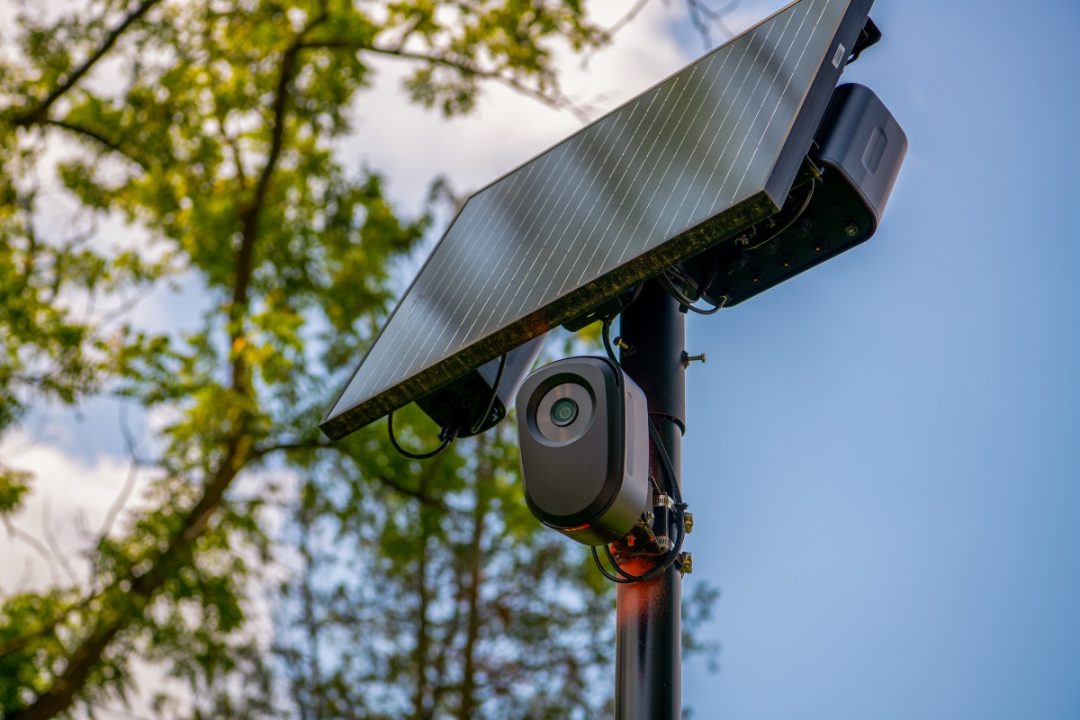
Flock’s cameras are deployed in thousands of American communities, recording license plates, vehicle descriptions, locations, and timestamps. Police agencies can share these records across jurisdictions, creating a searchable network of Americans’ movements.
Flock maintains that customers control their data and that federal agencies cannot access it without authorization.
Yet official investigations have documented serious violations.
In August 2025, Illinois Secretary of State Alexi Giannoulias announced that an audit found Flock had improperly allowed U.S. Customs and Border Protection (CBP) to access Illinois license-plate data, violating state law.
A subsequent University of Washington investigation found that Border Patrol had searched Flock records belonging to at least 10 Washington police departments that had not explicitly authorized such access. Researchers also documented local officers conducting searches on behalf of Immigration and Customs Enforcement (ICE).
Flock founder Garrett Langley acknowledged shortcomings in the company’s federal partnerships:
We clearly communicated poorly. We also didn’t create distinct permissions and protocols in the Flock system to ensure local compliance for federal agency users.
The company subsequently suspended federal pilot programs and introduced additional access restrictions.
Abuses extend beyond federal data sharing. As The Washington Post reported, officers have repeatedly misused ALPR databases to monitor romantic partners and personal acquaintances, often without their departments detecting the misconduct.
These documented failures challenge Blanche’s assurances that the expanding surveillance network presents no meaningful threat to Americans’ privacy.
Bipartisan Opposition Mounts
Blanche’s remarks drew immediate criticism from Senator Ron Wyden (D-Ore.), who told Politico that the attorney general’s dismissal of privacy risks was itself misinformation.
Wyden cited incidents involving stalking and wrongful arrests, accusing the administration of being “completely out of touch with Americans’ concerns.”
In September, Senators Katie Britt (R-Ala.) and Raphael Warnock (D-Ga.) wrote to Blanche, demanding stronger protections against misuse and warning:
We are deeply concerned about the misuse of ALPR systems and believe that appropriate safeguards are necessary to protect against unauthorized access and abuse[.]
The lawmakers also requested details about federal funding and oversight.
Congressional opposition extends further.
Representatives Thomas Massie (R-Ky.) and Eric Burlison (R-Mo.) introduced the Flock-Off Act to prohibit federal funding for ALPR surveillance.
Senators Bernie Sanders (I-Vt.) and Jeff Merkley (D-Ore.), joined by Representative Alexandria Ocasio-Cortez (D-N.Y.), proposed the Ban Flock Act, which would prohibit federal use of ALPRs and their data, restrict federal grants to jurisdictions employing the technology, and allow Americans to sue over violations.
Representative Greg Steube (R-Fla.) has introduced legislation requiring federal agencies to obtain judicial warrants before accessing or sharing ALPR surveillance data, with limited emergency exceptions. The bill would also tie certain federal police grants to similar privacy safeguards.
These efforts reflect growing resistance to the technology across party lines.
FBI Eyes Nationwide Vehicle Tracking
While Americans increasingly challenge ALPR surveillance locally, the Trump administration is pursuing considerably broader federal capabilities.
As we reported in October, the FBI issued a procurement solicitation seeking subscriptions to commercial license-plate databases covering the United States and its territories.
The proposed capabilities include near-real-time searches, automated vehicle alerts, historical tracking, and geographic searches.
Particularly troubling is the bureau’s requirement for search procedures that prevent contractors from retaining identifiable FBI queries.
The proposed contract could reach $36 million over five years. The available records do not establish whether it has been awarded.
FBI Director Kash Patel previously characterized the bureau’s use of privately operated cameras as case-specific, rather than continuous. The procurement proposal raises obvious questions about that distinction.
Tightening Federal Grip on Local Policing
The Jacksonville event highlighted another troubling trend: the Trump administration’s growing influence over local law enforcement through federal funding.
Blanche announced more than $73 million in grants for local policing, investigative capabilities, and new technology. The award is part of the DOJ’s nearly $300 million Model Cities Initiative, which also funds police operations in Louisiana, Mississippi, and Missouri.
At the event, Associate Attorney General Stanley Woodward praised closer federal cooperation:
When we bring federal law enforcement partners like the FBI to towns and communities across the country to work with state and local law enforcement like here in Jacksonville, it turns out that public safety isn’t controversial.
The initiative is hardly isolated. As we reported in August, the administration offered $3 billion in grants conditioned on local participation in federal immigration enforcement. In September, the DOJ announced another $25 million program supporting federally coordinated law enforcement operations.
The John Birch Society (JBS) warns that such funding arrangements threaten local police independence and accountability.
For an administration that promised to dismantle the surveillance state, defending its machinery while drawing local police further into Washington’s orbit raises serious alarms about the direction of its policies.
Related Articles:
Report: Government Monitors Anti-Flock Social Media Critics