
U.S., Israel Negotiating New Aid Package Despite Trump’s Election Day Pledge
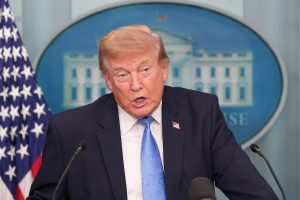
The United States and Israel are negotiating a five-year agreement in which the former will continue to provide military assistance to the latter at current funding levels, contrary to President Donald Trump’s Election Day claim that such aid would be terminated at the end of the year.
Israeli news site Ynet reported Monday that “representatives working on behalf of Secretary of State Marco Rubio … and officials from Israel’s Defense Ministry and its embassy in Washington” are currently in talks to extend the present aid pact, which expires at the end of 2028, for an additional half-decade.
Uncool Aid
According to Ynet, “The Israeli teams were stunned by Trump’s announcement that aid would end by the close of 2026 and did not understand what he meant.” But at least one “senior Israeli official” understood it quite clearly, telling Ynet “that Trump made the statement largely for domestic political reasons.” Indeed, Trump himself confessed as much, telling Fox News aid to Israel was Democrats’ “best talking point.”
Of course, leftists aren’t alone in seeking an end to aid to Israel and other foreign countries. Those who, unlike the Left, heed the wisdom of the Founding Fathers also oppose it because it both violates the Constitution and creates “entangling alliances” between the United States and other nations. Furthermore, forcibly transferring wealth from American taxpayers to foreign governments — which rarely use it to benefit their own citizens — is immoral.
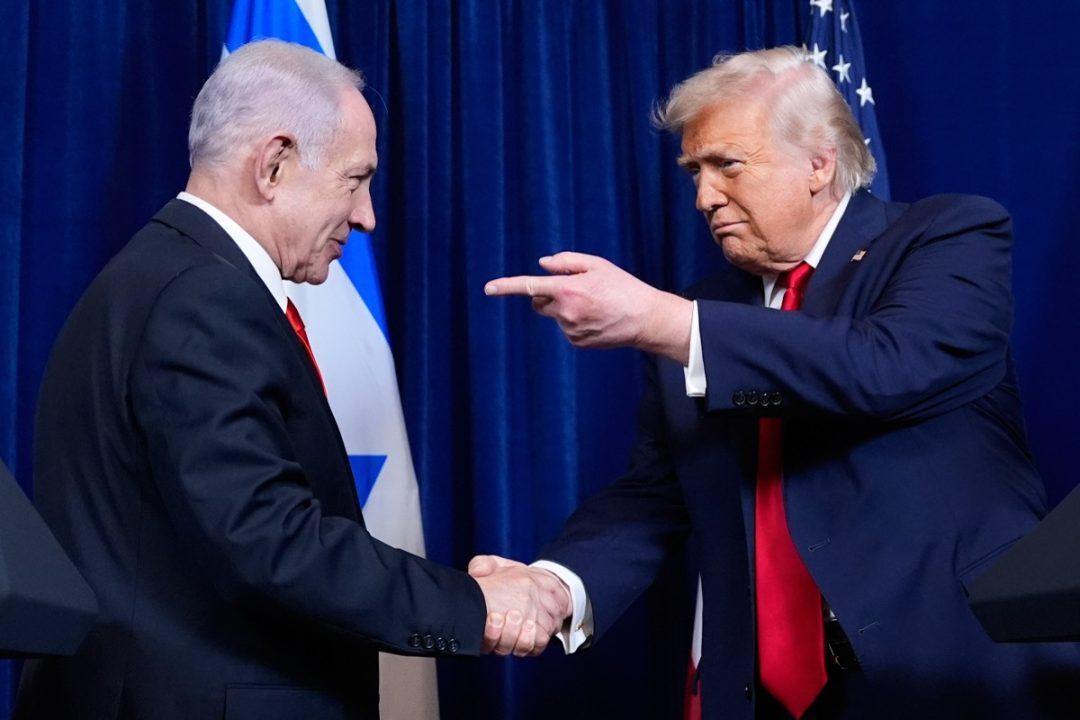
Trump claimed that he and Israeli Prime Minister Benjamin Netanyahu had agreed that ceasing military assistance within two months was the best course of action. “But,” wrote Ynet,
the emerging arrangement does not envision an immediate halt. Instead, U.S. military assistance would be phased out over five years after the current agreement expires in 2028. Under the existing model, Israel receives $3.3 billion annually in Foreign Military Financing for 10 years, or $33 billion in total. The emerging agreement would provide a similar annual level for only five years, amounting to roughly $16.5 billion, before direct military assistance ends.
The annual $3.3 billion buys Israel weapons, military equipment, and munitions produced by U.S. companies. On top of that, Israel gets another $500 million per year for “joint missile-defense cooperation, funding research, development and production of active defense systems,” Ynet noted. “Under the emerging agreement, that amount is expected to increase as the threat from drones and missiles grows.”
Capitol Ideas
Israel wants to get the new agreement finalized before the end of the year, when control of Congress will be transferred to Democrats. Although such an agreement, known as a Memorandum of Understanding, does not require Senate ratification, Congress must appropriate the aid funds each year. Considering that dozens of incumbent Democrats voted repeatedly this year to curb such assistance and that newly elected Democrats tend to be opposed to it, Israeli officials “fear the incoming Congress could place obstacles in the way or delay military assistance” regardless of any executive agreements, reported Ynet. (In fact, Congress has a duty to do just that — and more — constitutionalists would say.)
Regardless of these politicians’ feelings toward Israel and the ends to which its puts U.S. aid, many have a practical reason for keeping the gravy train rolling, observed Ynet:
Much of the money is ultimately spent in their own states and supports American defense manufacturers. After Netanyahu publicly expressed his desire to eventually end U.S. military aid, senators approached Israeli officials and asked whether Israel understood the consequences.
“We are moving here from a model of aid to a model of partnership,” the senior Israeli official said. “It is important to remember that most of the security assistance remains in America and contributes to the American economy. Cutting it would also hurt American industries and require adjustments.”
Perilous Partnership
That “partnership” may, in fact, result in Israel’s getting far more out of Washington even if Congress balks at funding the traditional aid package. The National Defense Authorization Act (NDAA) that passed the House of Representatives in July includes what The New American described as “the notorious Section 219 … which would all but merge the U.S. and Israeli militaries.” Specifically:
The two militaries would cooperate on “missile and air defense technologies,” as well as cyber-defense, electronic warfare, and artificial intelligence.
The measure gives Israel — notorious for hostile espionage against the United States, its main benefactor — unprecedented access to U.S. national-security secrets.
The measure “lays the groundwork for bilateral research and development, co-production of weapons, joint ventures, licensing agreements, and seemingly every manner of U.S.-Israeli military-industrial complex cooperation,” Ben Freeman explained for Responsible Statecraft:
The U.S. and Israel already work together heavily on missile defense, but this provision would greatly expand coordination to seemingly every area of defense tech, including AI, quantum, autonomous systems, directed energy, cyber, biotech, and many more. It also proposes “network integration” and “data fusion.” In other words, the U.S. military’s data could soon be the Israeli military’s data.
Since the funding for this “partnership” will be part of the Defense Department’s budget, it will be much less visible and even harder to stop than the current, straightforward wealth transfer.
The Senate has not yet passed its version of the NDAA, so there is still time to prevent the military merger.
Meanwhile, anyone who thought Trump’s promise to shut off aid to Israel was anything more than a political Hail Mary now has a heaping helping of kogel mogel on his face.