
Critics Contradict Trump: Aid to Israel Not Ending, but Moving to Pentagon in 2027 NDAA
Critics of aid to Israel say President Donald Trump’s 11th-hour election appeal saying he would end this nation’s almost $4 billion annual commitment to Israel is a hollow promise.
The reason: The money will simply move from the State Department budget to the Pentagon’s because of a little-known codicil tucked into the National Defense Authorization Act of 2027 (NDAA). The measure would essentially merge the U.S. and Israeli militaries.
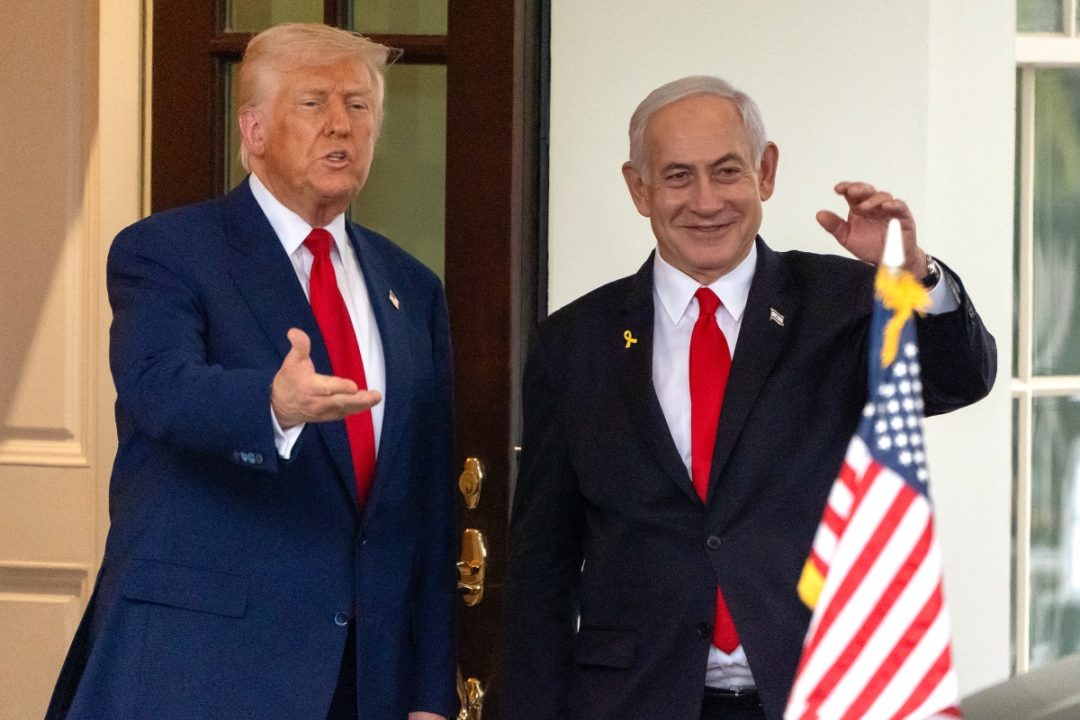
Trump said he and Prime Minister Benjamin Netanyahu agreed that the aid must end. But that claim is rather disingenuous too, given that Netanyahu himself wants the U.S. and Israel to become “partners,” as he wrote in a letter to an Israel-first, GOP U.S. congressman.
The NDAA Measures
As The New American reported during the summer, the U.S. House of Representatives passed the NDAA with the notorious Section 219 (formerly Section 224), which would all but merge the U.S. and Israeli militaries. That would give the insignificant nation, which is of no importance to the average American, virtual control of the Pentagon and U.S. military policy.
Section 219 will “expand and accelerate bilateral defense technology research, development, testing, evaluation, integration, and industrial cooperation,” the measure says, by a number of means, including:
• identifying jointly developed or Israeli-origin technologies with operational utility for potential integration into United States systems and programs … ;
• ensuring collaborative research initiatives involving government, private sector, and academic institutions in the United States and Israel, … in a manner that protects sensitive technology and information and the national security interests of the United States and Israel; …
• establishing frameworks for joint ventures, licensing agreements, and United States-based co-production or manufacturing partnerships with Israeli industry.
The two militaries would cooperate on “missile and air defense technologies,” as well as cyber-defense, electronic warfare, and artificial intelligence.
The measure gives Israel — notorious for hostile espionage against the United States, its main benefactor — unprecedented access to U.S. national-security secrets.
The measure “lays the groundwork for bilateral research and development, co-production of weapons, joint ventures, licensing agreements, and seemingly every manner of U.S.-Israeli military-industrial complex cooperation,” Ben Freeman explained for Responsible Statecraft:
The U.S. and Israel already work together heavily on missile defense, but this provision would greatly expand coordination to seemingly every area of defense tech, including AI, quantum, autonomous systems, directed energy, cyber, biotech, and many more. It also proposes “network integration” and “data fusion.” In other words, the U.S. military’s data could soon be the Israeli military’s data.
As if that isn’t bad enough, Freeman explained, the measure gives Israel power over a significant political issue: jobs. “By expanding or starting new co-production facilities like it already has in Mississippi and Arkansas, the Israeli government could boast of providing jobs on U.S. soil, thereby securing allies among members of Congress who represent the districts where those jobs lie,” he wrote.
Thus will Israel have even more control over American politicians, party regardless.
The Senate has not passed its version of the NDAA, which contains the same measure.
The idea for the merger came from Netanyahu in a missive to GOP Representative Marlin Stutzman of Indiana. “I was glad to receive your proposed Congressional resolution endorsing my plan to shift the framework for US-Israel defense cooperation from aid to partnership,” he wrote to Stutzman:
As I said in our meeting in Jerusalem on May 27, 2026, Israel deeply appreciates the financial component of the military aid the United States has generously provided us over the years. The time has now arrived for us to move from aid recipient to partner.
Trump’s Critics: Aid Won’t End
As The New American’s Veronika Kyrylenko reported, Trump said annual aid to Israel will end soon.
“They don’t need it,” he said of the $3.8 billion in assistance, because “Israel is a very thriving country.” And Trump’s pal Netanyahu, the president said, came up with the idea.
“I was approached by Bibi Netanyahu, and we’ve been talking about it for a couple of years because it’s a lot of money,” Trump said.
“I think it would be appropriate if we do not receive aid,” Netanyahu told Trump.
But not so fast, said the Quincy Institute’s Annelle Rodriguez Sheline. “Trump is omitting a key fact,” she wrote on X:
The NDAA (Pentagon $ bill) will move US funding for Israel into the defense procurement process:
1 Less oversight & legal requirements
2 Inability to turn off the funding
3 Integration of US & Israeli militaries
US $ to Israel will increase
Sheline also called out Reuters for not including the NDAA material in its story.
The “plan is to effectively merge the [Israel Defense Forces] with our military through a provision in the NDAA, allowing the Israelis to help themselves [to] what we pay for without any of us knowing about it,” Israel foe Ana Kasparian of the Young Turks explained:
We pay, they take advantage.
This has the additional downside of [allowing] our “ally,” which loves to spy on us, to do even more of it.
They think you’re stupid.. Don’t fall [for] it. We need to decouple from Israel and not play these games.
Israel has received $3.8 billion annually under a memorandum of understanding inked during Barack Hussein Obama’s administration. But critics note that Israel has received far more than that.
After the October 7, 2023 terror attack by Hamas, which Netanyahu knew was coming, Joe Biden’s administration robbed American taxpayers of anywhere from $31.35 billion to $33.77 billion to provide military aid to Israel, the data show.
Those figures do not count the cost of the war against Iran that Trump has waged on Israel’s behalf and that gave Democrats control of Capitol Hill. So far, the war has cost $48.77 billion, the Iran War Cost Tracker says.