Lithuania Moves to Host Nuclear Weapons on Russia’s Border
Lithuania is preparing to dispense with the last legal barriers to stationing nuclear weapons on Russia’s doorstep, and almost no one in Washington is talking about it.
On September 22, Lithuania’s parliament voted 99 to 13 to advance an amendment repealing Article 137 of its constitution, approved by referendum in 1992, which bans weapons of mass destruction and foreign military bases on Lithuanian soil. On October 6, the amendment passed its first reading 106 to 18. A final vote is scheduled for January 12; it needs 94 of 141 seats.
U.S. Involvement
Meanwhile, the Financial Times reported, the United States is considering expanding nuclear arrangements beyond the six NATO countries that currently host American nuclear weapons, possibly including dual-capable aircraft on NATO’s eastern flank. Lithuanian Defense Minister Robertas Kaunas confirmed that his country is “certainly not standing on the sidelines” of those talks.
Former Russian president and current Security Council Deputy Chairman Dmitry Medvedev warned that Lithuania would “disappear from the map of the world” if it lifted the ban, and Kremlin spokesman Dmitry Peskov said Russia would take “all necessary measures to guarantee its security.”
Yet the American people, whose weapons and whose sons and daughters would be at the center of any crisis, have had no say.
Provoking Russia
To understand why Moscow views this as provocation, recall February 9, 1990. Meeting Soviet leader Mikhail Gorbachev during negotiations over German reunification, Secretary of State James Baker, according to the U.S. memorandum of the conversation, said there would be “no extension of NATO’s jurisdiction for forces of NATO one inch to the east.” The Soviet record has Baker saying “not an inch.”
Declassified documents published by the National Security Archive show that Baker’s promise was one of a series of similar assurances from Western leaders. As former CIA Director Robert Gates later put it, Gorbachev and others were “led to believe” NATO would not expand.
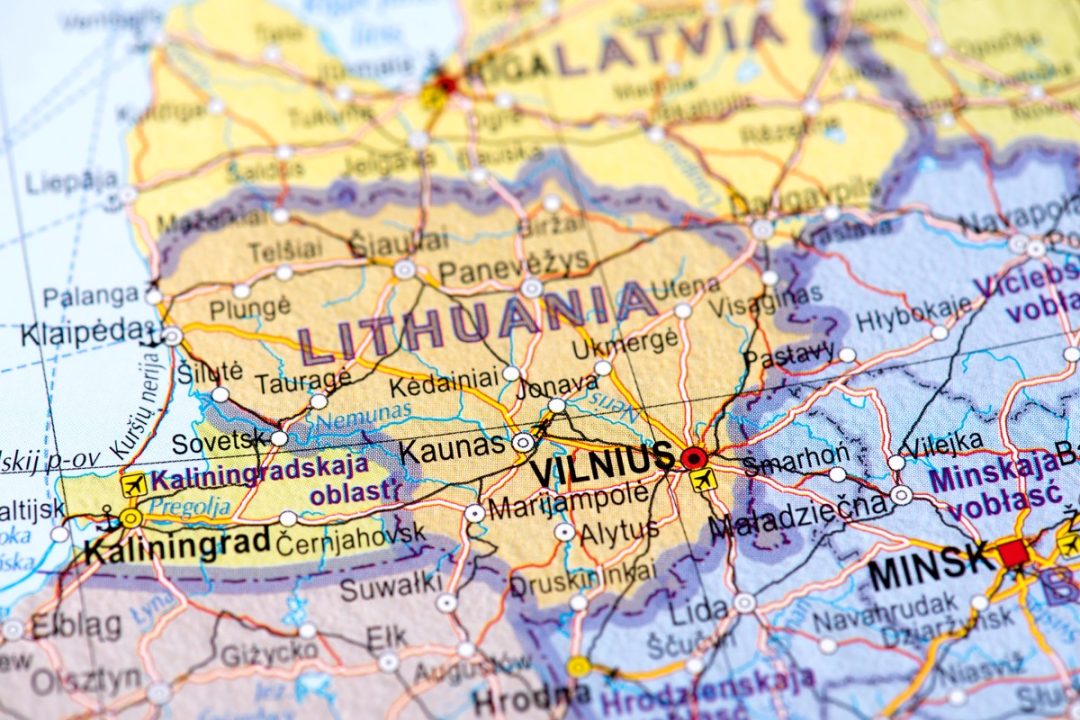
Political commentator Pat Buchanan said at the time, “By moving NATO onto Russia’s front porch, we have scheduled a twenty-first-century confrontation.” He added, “Offering NATO memberships to Estonia, Latvia, Lithuania, and, as some urge, Ukraine, is rashness bordering on madness.” Referring to maps then-President Bill Clinton’s team must have ignored, Buchanan warned, “This would put the Russian base at Kaliningrad behind NATO lines and bring into a U.S.-led alliance three nations with huge Russian minorities.”
Since 1999, when Buchanan wrote those words, NATO has absorbed 16 additional countries, including three former Soviet republics: Estonia, Latvia, and Lithuania. Expansion has been followed by permanent military infrastructure. In Romania, NATO is spending an estimated $2.7 billion to turn the Mihail Kogălniceanu air base near the Black Sea into its largest base in Europe, housing up to 10,000 troops by 2030. In northern Poland, the U.S. Aegis Ashore missile defense site at Redzikowo, about 155 miles from Russia’s Kaliningrad exclave, became operational in December 2023, drawing condemnation from Moscow.
Lithuania would add nuclear weapons to that picture.
Danger of Entangling Alliances
The Constitution gives Congress, not the executive branch or NATO’s working groups, the power to declare war. Yet decisions that could make American nuclear weapons a first target in a European war are being worked out quietly, at what Lithuania’s own defense minister calls the “working level.” The American Republic was predicated on deriving its legitimacy from the consent of the governed. Yet no authorization from the American people was ever given for expanding NATO. The current situation provides the occasion to reflect upon the fact that “entangling alliances,” as George Washington called them, are a standing threat not just to America and her liberties, but to world safety itself.
This article is part of The New American’s weekly online newsletter Insider Report, which is emailed to TNA subscribers each week. Click here to subscribe to The New American to receive the Insider Report and access exclusive content.