
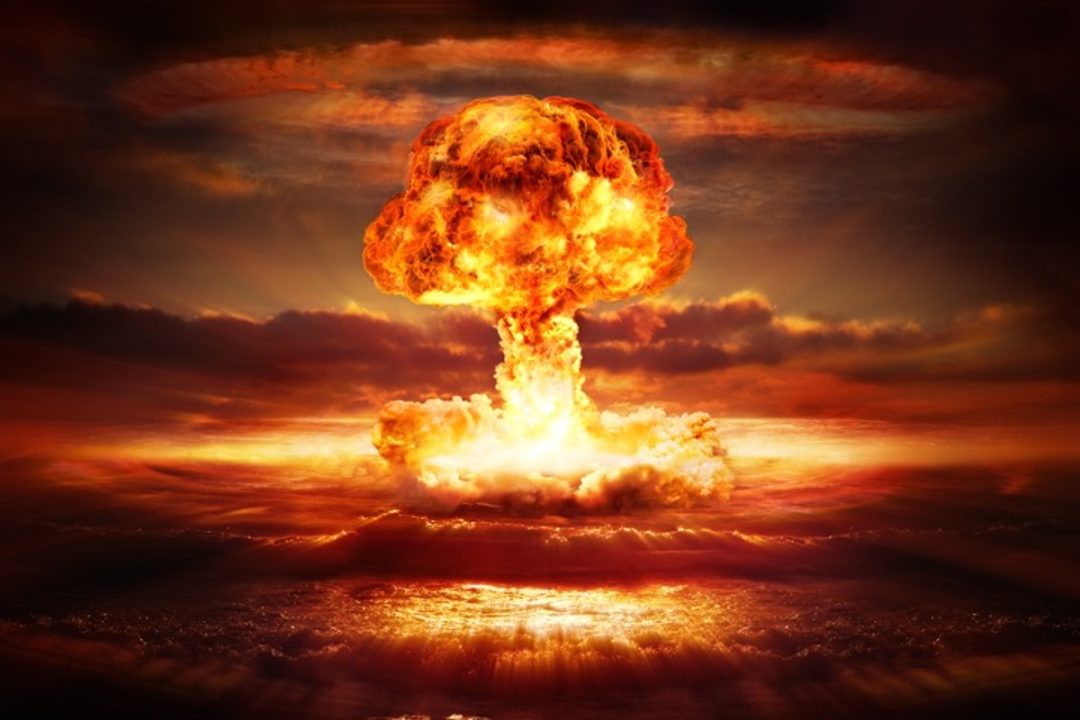
Coalition Urges Congress to Stop Trump From Nuking Iran
More than 200 civil-society organizations across the United States and abroad are urging Congress to prevent President Donald Trump from launching a nuclear attack on Iran.
Their appeal comes eight months into a war Congress never authorized. Lawmakers have repeatedly failed to exercise their constitutional authority over the conflict. Now, with renewed American strikes looming, the organizations are calling on Congress to act before the president potentially reaches for nuclear weapons.
The Warning
The joint statement, released October 30, condemns Trump’s escalating threats against Iran and warns of the devastating consequences of nuclear warfare.
The initiative came from the Back from the Brink Coalition, International Physicians for the Prevention of Nuclear War, and Physicians for Social Responsibility.
The signatories represent a broad ideological spectrum, from communist and progressive organizations to Christian churches, medical associations, and nonpartisan arms control groups. Their political agendas differ considerably, but their warning raises a constitutional question that transcends those divisions: Who has the authority to take America into war, particularly one that could turn nuclear?
They warn:
In recent weeks, President Trump has threatened to “hit Iran hard” after the U.S. midterm elections next week.
On October 15, President Trump stated that he would not use nuclear weapons against Iran. But frequent, abrupt changes of policy have become a staple feature of his presidency, and the single statement that he will not use nuclear weapons stands against a string of threats to do just that.
The coalition warns that a nuclear strike on Iran could have devastating consequences, ending more than eight decades in which no country has used atomic weapons in war.
Its appeal concludes:
We call on the United States Congress to act now to assert its constitutional role as the only branch of government empowered to declare war — and to make clear that it does not authorize or condone the use of nuclear weapons in Iran.
Trump’s Record of Threats
The organizations cite Trump’s repeated threats against Iran, warning that they cannot be dismissed as political bluster.
On April 7, the president declared:
A whole civilization will die tonight, never to be brought back again. I don’t want that to happen, but it probably will.
On May 17, Trump posted an AI-generated image depicting himself pressing a giant red button. Nearby monitors showed mushroom clouds and other explosions, alongside the words “TARGET DESTROYED.”
On June 13, Trump warned Iran that failure to reach a peace agreement would leave Washington with “the ultimate alternative, hopefully never to be used again!”
In September, addressing the United Nations, he asked whether he should “annihilate the Islamic Republic” and “drive them into hell with no chance of survival.”
In other words, Trump’s escalating threats of annihilation and overwhelming destruction have fueled fears that nuclear weapons could become the next step in his unsuccessful war against Iran.
Escalation
Trump has denied any intention of using nuclear weapons against the country. In an October 15 Newsmax interview, he stated:
I wouldn’t use nuclear. We don’t have to. We’re the greatest nuclear power in the world.
Yet Washington is reportedly preparing another major offensive, raising fears of further escalation.
The preparations expose more than an embarrassing contradiction in Trump’s repeated declarations of victory.
Eight months into the conflict, Tehran has demonstrated the effectiveness of asymmetric warfare. Its missiles, drones, and disruption of vital energy routes have imposed enormous military and economic costs on its adversaries. Despite overwhelming American and Israeli firepower, Iran remains defiant, complicating Washington’s prospects for a decisive conventional victory.
Senator Chris Murphy (D-Conn.), briefed on the latest military plans, warned:
I will just say this: Their plan is insane. It will lead to devastating escalation and the likely destruction of our commitment to the rule of law.
The fear is that Washington, unable to achieve its declared objectives through conventional warfare, could resort to increasingly destructive measures rather than acknowledge the limits of military force.
Israeli Pressure
Israel is reportedly pressing for renewed attacks, although the documented proposals involve conventional strikes, not nuclear weapons.
Axios reported Sunday that Israeli Prime Minister Benjamin Netanyahu urged Trump during a Saturday phone call to resume strikes immediately after the November 3 midterm elections. Trump reportedly prefers to give diplomacy more time.
Earlier, the Financial Times reported that Netanyahu had prepared an October 10 offensive targeting Iranian nuclear facilities, government sites, and energy infrastructure. Trump reportedly opposed the operation before the elections.
Israel has a clear strategic interest in further weakening Iran. Despite months of bombardment, Tehran retains military capabilities that threaten Israeli territory and regional interests.
A nuclear strike could destroy infrastructure that conventional attacks have failed to eliminate. But it could also provoke catastrophic retaliation and destabilize the entire region.
Israeli pressure for renewed hostilities, combined with its considerable influence in Washington, adds urgency to the coalition’s warning about unchecked escalation.
Congress, the Constitution, and the Nuclear Button
The Constitution gives Congress the power to declare war, not the president. Article II makes the president commander in chief, not an emperor free to wage wars at will.
As James Madison explained:
The Constitution supposes, what the History of all governments demonstrates, that the Executive is the branch of power most interested in war, and most prone to it. It has, accordingly, with studied care, vested the question of war in the Legislature.
Trump nevertheless launched Operation Epic Fury against Iran on February 28 without congressional authorization.
Since then, Congress has largely stood aside.
The nuclear dimension makes this abdication particularly dangerous.
Under existing procedures, the president can authorize a nuclear strike without congressional approval. The Congressional Research Service confirms that military commanders have no authority to veto a lawful launch order.
Thus, Congress holds the constitutional power to declare war, yet one man can order the destruction of entire cities without its consent.
The coalition’s warning exposes a danger larger than Trump. Decades of congressional deference have concentrated extraordinary destructive power in the presidency.
Congress can restrict military operations, withhold funding, and impose enforceable limits. Instead, more than 200 organizations must now remind lawmakers to exercise powers the Constitution already grants them.
Related Articles:
Report: Attack on Iran Set for Nov. 4. Iran Threatens Region-wide Retaliation. Kent: Get Out Now
Reports: Trump Plans Major Attack on Iran After Midterms. Senator Calls Plan “Insane.”