
Pentagon Authorizes DHS to Use Military “Heat Ray” for Border Enforcement
The militarization of federal law enforcement is taking another extraordinary step. The Pentagon has authorized the temporary transfer of a military weapon known as a “heat ray” to the Department of Homeland Security (DHS) for border enforcement operations.
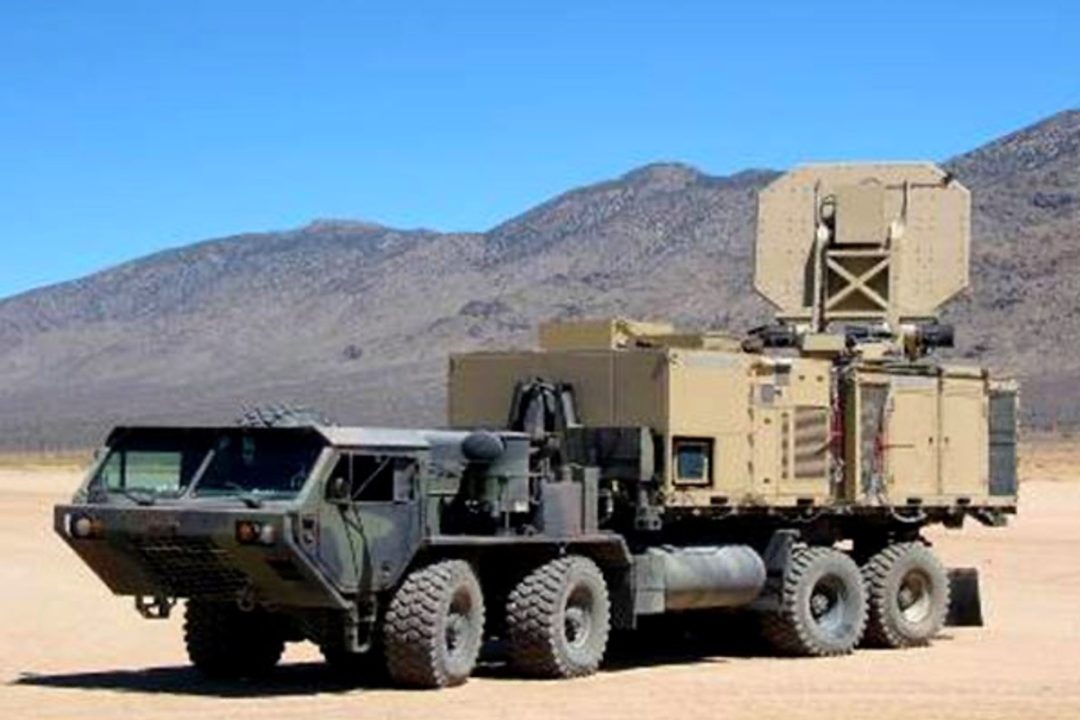
The device, called the Active Denial System (ADS), was developed for military crowd control. It uses an invisible energy beam to inflict intense, burning pain. Under the agreement, DHS will receive the weapon, along with military training, technical support, and access to Pentagon research.
The decision comes as illegal border crossings have fallen to their lowest level in nearly six decades. Why does an already heavily armed civilian agency need a weapon designed to make human skin feel as though it is on fire? And what does this latest expansion of federal firepower reveal about the increasingly blurred line between civilian law enforcement and the military?
The Memo
Defense Secretary Pete Hegseth authorized the temporary transfer of the weapon to DHS, according to a Pentagon memorandum first reported by journalist Jim Acosta and subsequently covered by CNN.
According to the memorandum published by Acosta, DHS requested Pentagon assistance for Customs and Border Protection (CBP) operations on July 22. On September 2, the Pentagon approved a seven-month loan of one ADS system.
The agreement goes considerably further than merely authorizing “testing,” as suggested by CNN’s headline (“Pentagon Grants DHS Permission to Test Heat Ray Weapon for Potential Use at Border”).
The memo specifies that the Defense Department (referred to as the Department of War, or DoW) will provide DHS and CBP with the “requested equipment, initial and continuing training, maintenance support,” and access to military research on the ADS. The arrangement operates on a reimbursable basis, meaning DHS must cover applicable costs.
The memorandum also directs the Pentagon’s Joint Intermediate Force Capabilities Office (JIFCO) to “compile historical restrictions on human testing and provide them to CBP for inclusion in the final loan agreement.”
That provision addresses testing safeguards. It does not, by itself, restrict DHS to experimental use.
More importantly, the memorandum specifies that the weapon “shall not be operated by DoW personnel.”
Instead, DHS assumes sole responsibility for “system employment, use and development of tactics, techniques and procedures.”
DHS can also request continued access after the initial seven-month period.
Asked about the arrangement, a CBP spokesperson told CNN:
CBP is continually evaluating new technologies, especially those that enhance operational effectiveness and strengthen mission capabilities.
The Pentagon referred questions to DHS.
Designed to Inflict Pain
The Active Denial System uses concentrated electromagnetic energy rather than bullets, chemicals, or conventional projectiles.
The Government Accountability Office (GAO) describes it:
ADS is a nonlethal counter-personnel, directed-energy weapon that causes an intense, temporary burning sensation on the skin. ADS can purportedly provide troops with the ability to compel potential adversaries to either cease threatening behavior or leave, from distances well beyond small arms range and in a safe, effective, and nonlethal manner.
According to the U.S. Air Force, the system emits invisible 95-gigahertz millimeter waves that penetrate approximately 1/64 of an inch into human skin, stimulating pain receptors.
Staff Sgt. Jason Delacruz, an ADS operator who experienced the weapon firsthand, described the sensation:
The pain is comparable to an intensified version of opening an oven and feeling the initial blast of hot air…. The effects are extremely sudden, and natural instincts automatically force you to quickly exit the target area.
The beam can reach targets more than half a mile away.
The Pentagon classifies the weapon as nonlethal. But nonlethal does not mean harmless.
Military testing has already produced injuries. Documented incidents include second-degree burns during a 1999 laboratory accident and a 2007 training mishap.
Crowded border crossings present additional hazards. Children, elderly people, and others may struggle to escape the beam. Panic could also trigger stampedes or force people into dangerous terrain.
Water crossings pose particular risks. A former CBP official told CNN:
Even if they’re chasing people back to the river, you don’t want them to go in and drown.
Previous border discussions also considered whether incapacitated migrants might require emergency rescues.
The distinction between preventing violence and inflicting pain to punish noncompliance becomes crucial.
From Battlefields to American Streets?
The military’s own history with the weapon raises questions.
The Pentagon sent an ADS to Afghanistan in 2010 but withdrew it without ever using it. Earlier proposals to deploy the technology at overseas detention facilities also went nowhere.
A 2010 GAO report documented practical obstacles. Marine Corps officials considered the equipment too large and technically complex for battlefield maintenance.
Yet the weapon soon attracted interest from civilian authorities.
During President Donald Trump’s first administration, border officials proposed using it against migrants. Then-Homeland Security Secretary Kirstjen Nielsen rejected the idea in 2018.
A former DHS official explained to CNN:
The issue was treating immigrants and citizens like enemy combatants.
The technology resurfaced during the 2020 protests following George Floyd’s killing. D.C. National Guard Major Adam DeMarco testified that federal officials considered obtaining the ADS for crowd control near the White House. They never deployed it.
Reacting to the newly disclosed Pentagon memorandum, Olivia Troye, a former national security adviser to Vice President Mike Pence, told Acosta:
This raises serious red flags for me…. We’re talking about putting a military weapon designed to inflict intense pain in the hands of federal law enforcement on U.S. soil. What are we doing here guys?
Her warning comes amid the Trump administration’s expanding use of military forces in domestic law enforcement, including preparations to deploy troops to quell civil unrest.
In September 2025, Trump even suggested using American cities as “training grounds for our military.” Addressing senior military commanders, he portrayed domestic crime and disorder as a “war from within.”
Against that backdrop, the ADS transfer raises concerns extending far beyond border enforcement. While there is no evidence that DHS intends to use the weapon against protesters, the publicly disclosed terms leave its geographic and operational limits unclear.
How Much Firepower Does DHS Need?
The question becomes even more pressing when considering the vast resources and enforcement powers DHS already commands.
Congress created DHS in 2002, following the September 11 terrorist attacks. The reorganization consolidated 22 federal agencies and offices under one Cabinet department.
Since then, its reach has expanded far beyond counterterrorism.
Today, DHS oversees CBP, Immigration and Customs Enforcement (ICE), the Secret Service, the Coast Guard, and numerous other operations.
A June 2026 GAO report counted 77,461 DHS law-enforcement officers as of September 2025, excluding certain Transportation Security Administration (TSA) personnel. The department’s total workforce exceeded 260,000.
Washington is pouring extraordinary sums into expanding this vast enforcement apparatus.
Trump’s One Big Beautiful Bill Act, signed in July 2025, provided $191 billion in additional multiyear DHS funding, including nearly $75 billion for ICE and $65 billion for CBP. The money supports additional personnel, detention facilities, border barriers, surveillance, and enforcement operations.
DHS agencies already possess heavily armed tactical teams, armored vehicles, sophisticated surveillance systems, and extensive detention powers.
Now the Pentagon has authorized a seven-month transfer of a military heat ray, with the possibility of extending the arrangement.
Border security is a legitimate federal responsibility. Authorities must confront trafficking, violence, and unlawful entry. But those duties do not grant Washington unlimited authority to expand its coercive powers.
Nor should immigration enforcement justify concentrating ordinary policing powers in Washington at the expense of states and local communities.
The constitutional stakes extend beyond immigration. Federal authorities must respect protections against unreasonable seizures and excessive force, as well as the right to peaceful assembly.
What specific threat requires a heat ray, especially amid historically low illegal border crossings? Why are existing capabilities insufficient? And who gets to decide when inflicting pain becomes an acceptable instrument of federal law enforcement?
The administration has yet to provide detailed public answers.