
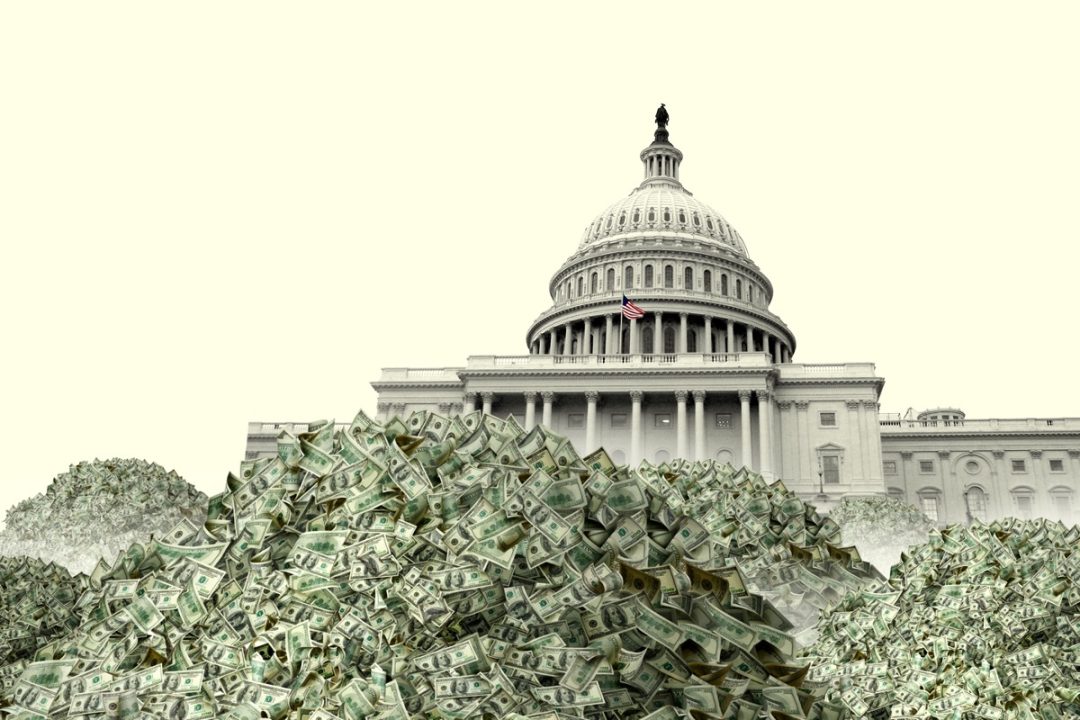
The Debt Problem Is a Spending Problem
The federal budget deficit for the fiscal year that ended September 30, 2026 (fiscal year 2026) weighed in at $1.993 trillion. The deficit spending is added to the national debt, which as of the end of the fiscal year was almost $40.2 trillion.
JBS Ahead of the Game
This writer remembers when The John Birch Society (the parent company of The New American and Insider Report) launched its “No Trillion Dollar National Debt!” campaign back in 1981, shortly after Ronald Reagan became president. The national debt surpassed $1 trillion in October of that year. It is now more than 40 times that amount today, just 45 years later.
In 1981, the JBS warned that the U.S. government’s growing indebtedness was a consequence of spending too much money, not collecting too little in taxes. We also said that the U.S. government would be able to balance its budget by restricting spending to only those powers the federal government is authorized to exercise under the Constitution. Forty-five years later, we continue to sound this same alarm. Of course, the debt problem is much worse today.
Deficit Spending
Politicians have a powerful incentive to spend more money than the government collects in taxes (acknowledged taxes, anyway); that creates the illusion that the cost of government is less than it actually is. But in reality the amount of money that government spends is a better indicator of what the government is taking out of the economy.
Deficit spending matters because there is no such thing as a free lunch. The piper will be paid one way or another. One way the piper is paid is when the Federal Reserve monetizes the debt by creating new money out of thin air, putting upward pressure on the prices of goods and services. This increase of the money supply (inflation) may properly be called an “inflation tax,” though it is not recognized as such by most people.
Returning to the Constitution
To restore fiscal sanity, the U.S. government must be put back into its constitutional cage. Simply eliminating waste and abuse in unconstitutional federal agencies and programs will not solve the underlying spending problem, because the underlying problem is that most of the spending is unconstitutional. The solution is not to make American socialism more efficient; it is to rid the body politic of the socialism.
Fiscal sanity can still be restored in Washington, D.C. — but the longer we wait the worse the economic pain will be.
This article is part of The New American’s weekly online newsletter Insider Report, which is emailed to TNA subscribers each week. Click here to subscribe to The New American to receive the Insider Report and access exclusive content.