

First “Trans” Man in Women’s Sports Backtracks: “I Was Selfish”
“I was selfish. I was looking out for myself. I was trying to do, first of all, what was good for me and making me happy, and only secondly, what was fair for the world.”
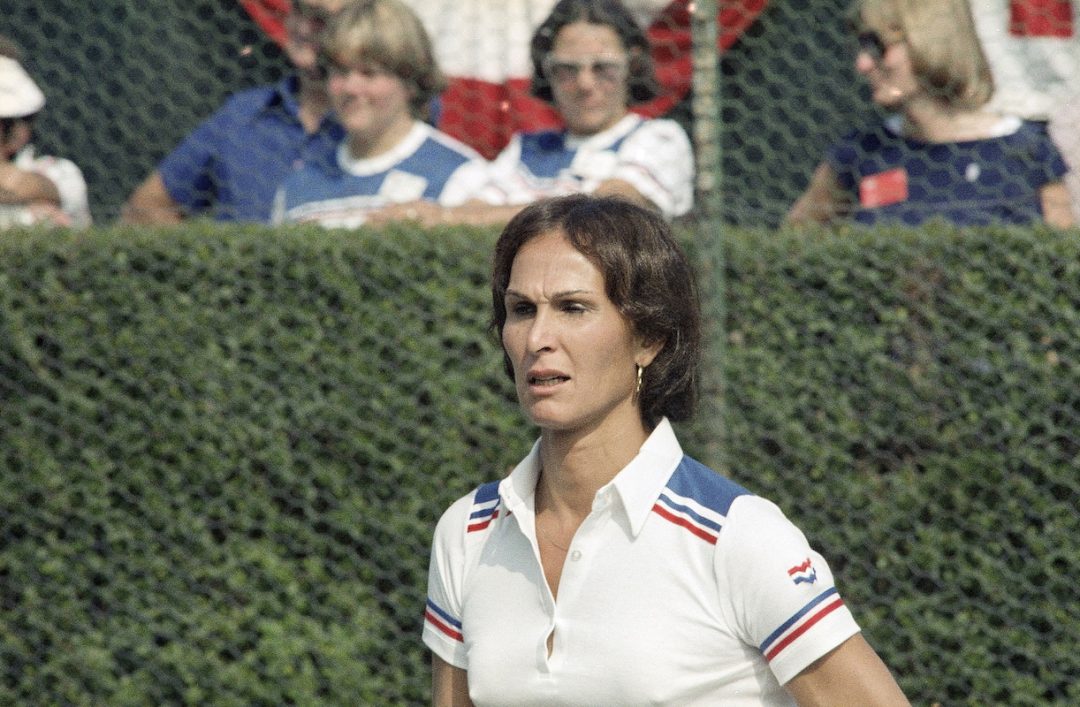
Before there was a “trans” agenda — before there even was a debate over men in women’s sports — there was “Renée” Richards. Oh, Richards is hardly a household name today. But he made big news in the ’70s as the first man, claiming “transsexual” status, to play women’s sports. Later, though, Richards would change his position.
In fact, he made the admirable admission quoted above in a recent CNN interview, confessing his younger-days selfishness. He now believes he had “an unfair advantage” over his female “tennis opponents,” relates CNN.
This said, Richards’ change of heart is not new, but dates back to at least 2012. As website Slate related at the time, quoting Richards:
Having lived for the past 30 years, I know if I’d had surgery at the age of 22, and then at 24 went on the tour, no genetic woman in the world would have been able to come close to me. And so I’ve reconsidered my opinion.
In fact, as the title of CNN’s Richards-interview piece states (using the woke but wrong pronoun), “Richards faults herself.” This references how he helped open the door to MUSS (Made-up Sexual Status, aka, “transgender”) men in women’s sports. He had plenty of company, however. Retired tennis pro Martina Navratilova has gotten much praise recently for opposing MUSS men’s entry into females’ athletics. Yet back in the ’70s, she supported Richards’ “right to play” women’s tennis. So did iconic fellow player Billie Jean King.
(Navratilova’s response to this contradiction? It was to block me on X when I pointed out feminism’s complicity in the MUSS agenda’s rise.)
A Tangled Web
Though I was a child in the ’70s, I recall the Richards story well; you couldn’t miss it. I would much later meet Richards — this was approximately 25 years ago — at a golf driving range in my area. I was the only one there who recognized him (I’m a retired tennis pro myself and knew all the faces). We had a 10-minute conversation, just small talk, and he seemed like a nice person.
He also appears to be a sincere person, though a tormented one. Most MUSS men today are autogynephiliacs; these individuals derive excitement from dressing in women’s attire and engaging in their activities. Richards, however, does apparently have sexual-identity disorder (aka “gender dysphoria”). Such people have an overwhelming feeling that they’re stuck in the body of the wrong sex.
It was this problem that led Richards, born Richard Raskind, to have sexual-distortion (aka “sex change”) surgery in 1975. An ophthalmologist by trade who’d also played amateur men’s tennis, Richards began competing in women’s events soon afterwards. Yet as Slate wrote (again playing the pronoun game):
Her friends warned Richards that she’d be found out: A great 40-year-old tennis player doesn’t drop from nowhere. And indeed, when she won the La Jolla championship in 1976, a reporter started digging. The story broke nationally: Women’s winner was a man.
The main governing U.S. tennis authorities soon took steps to prevent Richards’ participation. He then sued the United States Tennis Association in 1977, desiring entry into our national championship, the U.S. Open. The outcome: The “New York Supreme Court ruled in 1977 that Richards was a female,” Slate informs. Apparently, a judge pounding a gavel can change human biology.
Regrets
Richards did not dominate the women’s tour — he didn’t expect to. He, again, had played amateur men’s tennis; he’d never had any professional men’s ranking. He also was in his 40s. Moreover, the sexual-distortion treatments resulted in his losing 30 percent of his muscle mass and 40 pounds. All this enabled him to rationalize that he had no advantage over his female competitors. Sexual devolutionaries would still concur, too.
The reality: Richards did win the aforementioned women’s tournament. He did reach the U.S. Open doubles final in 1977. And this man, who couldn’t at the time have even qualified for the men’s tour, did attain a women’s ranking of 19 in the world in 1979 — at age 45. So he captured a title, rankings, and money that otherwise would have gone to women.
Yet it wasn’t the above that changed Richards’ mind. Rather, the seminal point occurred, he told CNN, when
I played in the women’s 35-and-over championship at Flushing Meadow, and I beat Nancy Richey, a Hall of Fame player. She won the French Open and a few other big tournaments. I beat her in the finals, and I was only 10 years older than she was.
And after I beat her in the finals, I said to myself, “I don’t think it’s fair. It’s not enough of an age difference.”
In truth, though, age is irrelevant to the question. And this can be analogized to combat sports’ weight classes. We don’t let a 205-pounder wrestle in the 125-pound category simply because he strongly identifies as being 123. And would we allow it were he far older than his competition? Would we say, “Well, his opponents are 25 and he’s 55, so it’s fair”? It’s silly.
If a distinction in sports — such as the sexual one — is irrelevant, then eliminate it. We could have men and women compete together and let the cream rise to the top. (It would all end up being male cream, mind you.) But if the distinction really does matter, it must be enforced — strictly. That’s the only rational position.
Other Stumbles
Now, Richards deserves praise for the stand he’s taking, which can bring MUSS activist ire. He nonetheless makes a few other fashionable mistakes.
First, he states that a male should be disallowed from female competition if he’s gone through puberty. This reflects a common misconception.
In reality, boys’ bodies produce massive amounts of testosterone during the first few months in the womb already. This also occurs during, approximately, the first six to nine months after birth. Known as “mini-puberty,” testosterone levels during this stage are comparable to those of puberty or early adulthood.
This would at least partially explain why even at the youngest ages, boys’ individual running and swimming records surpass girls’ in virtually every case. In other words, adolescent changes don’t create the intersex sports-performance gap; they just widen it profoundly.
Second, Richards claims he was “born a transgender.” But what he revealed in his autobiographies suggests another factor. When Richards was little, his sister and psychiatrist mother would sometimes dress him in girls’ clothing (panties, slips, etc.). The pair would then praise his appearance.
Now, it’s logical to conclude that this started before an age he can remember, during formative years. Could he possibly have gotten the sense that he’d get more maternal love were he a girl? This certainly is plausible. So is the idea that this could cause feelings of cross-sex identification to emerge in a child.
The Real Issue
Third and most significantly, however, Richards still supports most of the MUSS agenda. The problem?
The sports issue is low-hanging fruit; most Americans agree that men should be barred from women’s athletics. Besides, sport is frivolity. What’s more significant: that a girl loses a race and trophy to a boy?
Or that a girl (or boy), falling victim to MUSS propaganda, undergoes body mutilation, only to learn too late it was a grave and irreversible mistake? (This has happened — numerous times.)
What’s more significant: that a girl gets dunked on by a boy in basketball?
Or that tens of millions of girls and boys countrywide have their sense of reality dunked on and are deceived about a basic division in nature: The male-female binary?
The truth is that “transgender” people don’t exist. For man has the quality known as “sex” (not gender) — and you “fundamentally can’t change sex.”
And that quotation, my friends, is from another regretful man, ex-MUSS individual Alan Finch. “You fundamentally can’t change sex,” he stated. “Transsexualism was invented by psychiatrists.”
It’s up to us to un-invent it, too — before it helps transition the West into a failed civilization.