

500 Troops Sent to Border After Cartel Terrorists Attack Coast Guardsmen
President Donald Trump’s administration has finally decided that keeping its promise to fight the drug cartels at the southwest border might be as important as bombing a country 7,200 miles away.
Five-hundred troops are heading to the Rio Grande Valley in Texas in response to a cartel attack on Coast Guard personnel.
But the administration’s response to the attack won’t do much to keep the promise border czar Tom Homan made at the 2024 Republican National Convention. Homan said Trump would wipe out the drug cartels. That hasn’t happened.
Another 10,000 troops in a third aircraft carrier group left for the Middle East.
The Deployment
NewsNation’s Ali Bradley delivered the scoop on the troop deployment.
“Video obtained by NewsNation shows troops being dropped onto islands in the sector from Chinook helicopters,” Bradley reported:
The deployment comes days after Coast Guard personnel came under gunfire from suspected cartel members on the Rio Grande.
The Coast Guard said Coast Guard Forces Rio Grande personnel encountered gunfire from the Mexican border near Garceno, Texas, on Saturday while conducting joint interdiction operations with federal partners. Personnel returned fire.
No one was hurt and no Coast Guard assets were damaged, she reported.
The Coast Guard “works closely” with multiple agencies to secure the border: U.S. Border Patrol, the Department of Defense, and the Texas Military Department.
“U.S. forces are also confronting cartel-linked drones along this stretch of the border,” Bradley continued:
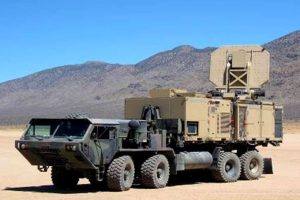
From August to September, the military used a high-energy laser in the Rio Grande Valley to take down at least 11 cartel-linked drones, officials said. They said the effort supported activities that posed a physical threat to troops and Customs and Border Protection personnel.
The Rio Grande Valley Border Patrol Sector spans more than 320 river miles, 250 coastal miles and 19 counties. Threats there include cartels watching the movements of agents and troops, using drones to guide groups and smuggling drugs.
The Army says it is using all available resources to combat the threats.
President Donald Trump has continued to pressure Mexico to do more, saying cartels are the “ISIS of the Western Hemisphere” and they control the border.
Promises, Promises
While Trump and Homan loudly promised to wage war on the cartels, little has been done about them, at least as far as the public knows.
At the GOP convention in 2024, Homan not only told illegal aliens to “start packing now … because you’re going home,” but told the cartels they were doomed.
“You smuggled enough fentanyl across this country to kill 148,000 young Americans,” he said:
You have killed more Americans than every terrorist organization in the world combined. And that’s [why] when President Trump gets back in office, he’s going to designate you a terrorist organization, and he’s going to wipe you off the face of the earth. You’re done. You’re done.
Trump designated the cartels as terrorist organizations on his first day in office in 2025. Three days later, an American and a Canadian were hiking in the Jacumba Wilderness on the border with Mexico. Two gunmen approached and ordered the two to come to them. The hikers refused; the terrorists fired at them and hit the American in the leg. The terrorists then stole the hikers’ cellphones and backpacks. A week after Trump declared the cartels to be terrorists, cartel terrorists fired gunshots at border agents near Fronton, Texas.
The attack on the border agents invited Homan to repeat his vow to destroy the cartels.
“The whole of government is going to dismantle these people and wipe them off the face of the earth. They are not going to go lightly,” he told Fox talker Sean Hannity:
We are taking them on in the trafficking business, we’re taking them on in the smuggling business and we’re taking them on in the dope business.
There’s going to be more violence on the southwest border. … That’s why the entire United States government is going to take care of those people and abolish them.
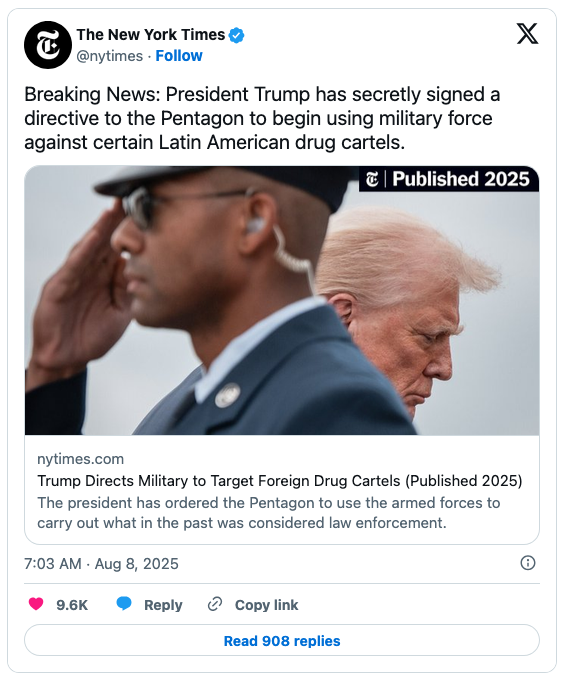
In August last year, The New York Times reported, Trump authorized military action against the cartels. The “order provides an official basis for the possibility of direct military operations at sea and on foreign soil against cartels,” the Times reported:
U.S. military officials have started drawing up options for how the military could go after the groups … people familiar with the conversations said, speaking on the condition of anonymity to discuss the sensitive internal deliberations.
But directing the military to crack down on the illicit trade also raises legal issues, including whether it would count as “murder” if U.S. forces acting outside of a congressionally authorized armed conflict were to kill civilians — even criminal suspects — who pose no imminent threat.
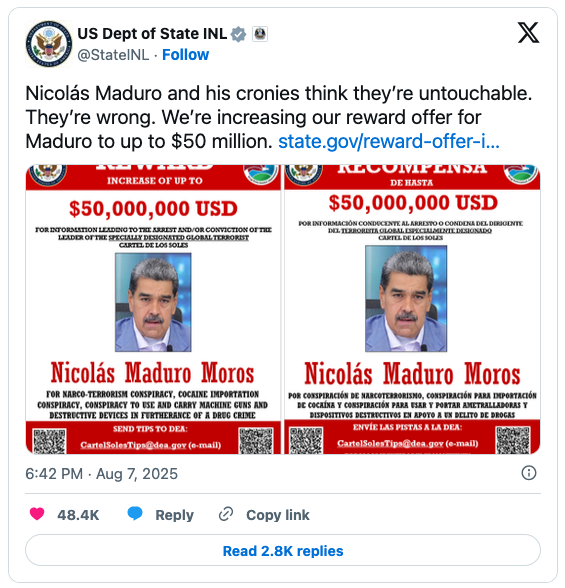
About the same time, then-U.S. Attorney General Pam Bondi announced a $50 million bounty for information leading to the capture of Venezuelan strongman Nicolás Maduro, whom the Treasury Department fingered as head of the Cartel de los Soles.
In November 2025, NBC News divulged that Trump planned to wage war against the cartels inside Mexico, and in January this year, U.S. forces raided Maduro’s compound in Caracas and captured him.
War With Iran
Trump repeatedly vowed to destroy the cartels, and not to start a foreign war. But the cartels have not, apparently, suffered the wrath of the U.S. military, which is instead waging war on behalf of Israel against Iran.
The Wall Street Journal disclosed yesterday that another 10,000 troops will land in the Middle East by the end of November.
Apparently, dealing with the cartels that are killing Americans with drugs must wait.