

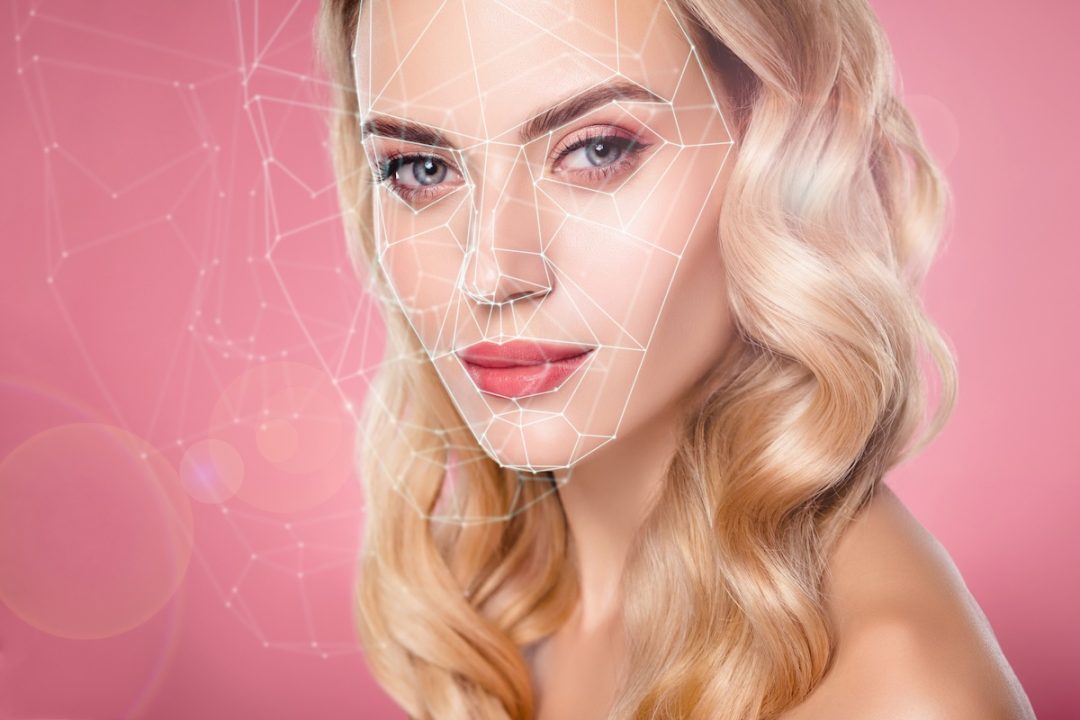
Digital Stepford Wives? Men Are Falling in Love With AI-generated Female Influencers
In the “old” days of the internet, you perhaps had to be wary of some creep in a chat masquerading as an appealing romantic interest. But that was small ball. Today some men are falling for gorgeous female “influencers” — who happen to be generated via artificial intelligence (AI). The kicker:
Some people are trying to forge relationships with these digital fictions even when knowing they’re AI-generated.
The appeal is that with current technology, these “digi-entities” appear, behave, and interact just as real women do. (But without the moodiness?) What’s more, you ain’t seen nothin’ yet.
When this AI is ultimately combined with ultra-sophisticated robotics, we could have real-life “Stepford Wives.” (This references the eponymous 1970s story about a town whose married women are gradually replaced with identical-looking, subservient, domesticity-oriented androids.) Moreover, this phenomenon’s acceptance is wholly congruent with today’s prevailing secular mindset.
After all, a corollary of atheism is that we’re just material beings — some pounds of chemicals and water. Another way of putting it:
We’re mere organic robots.
And what would be wrong with replacing sub-optimal robots with more pleasing ones?
“Domo Arigato, Mr. Roboto”
For now, however, that kind of real-woman realism (not to mention the affordability factor) is only found in the digi-entities. Reporting on the story Sunday, ZeroHedge cites the New York Post and, providing digi-entity examples, writes:
One widely followed pro-MAGA persona, for example, was ultimately exposed as “nothing more than an algorithm run by a guy in India,” revealing just how convincingly these accounts can mimic authenticity.
Despite that, audiences continue to engage — often deeply. Many followers, particularly older men, are “falling for them left, right and center.” Experts suggest this isn’t just about deception, but about a deeper emotional gap. Some describe the phenomenon as a “pandemic of loneliness,” even pointing to a broader “societal loss of humanity” as people increasingly form attachments to digital illusions instead of real relationships.
What’s striking is that these accounts don’t always hide the truth. Some openly identify as AI and still attract admiration. Take Ana Zelu, a fictional influencer who clearly labels herself an “ai-influencer,” yet maintains a highly curated feed filled with aspirational imagery — luxury travel, fashionable outfits, and picturesque city scenes. Her posts draw enthusiastic responses, with followers commenting things like “Number one is my favourite…May God bless you,” and “You are genuinely in a class of your own.” The awareness that she isn’t real doesn’t seem to diminish the appeal.
The Post writes that a similar pattern appears with Milla Sofia, another digital creation presented as a pop singer. Her content includes stylized videos and performances, and although her profile identifies her as virtual, fans respond as if she were a real celebrity. Comments such as “my sweet love,” “Listening to the music of this woman I love,” and “I love you” reflect genuine emotional investment.
Below is a short video on the aforementioned “pro-MAGA persona,” who went by “Emily Hart.”
And below you can behold “Ana Zelu.”
And, finally, “Milla Sofia”:
The number of commenters under the last video (i.e., every one I saw) swooning over Sofia was staggering. Their treating her as if she were real was, too, actually a bit creepy. (Note: she has almost 600,000 followers on Instagram.)
And “experts” have weighed in on this phenomenon. As the New York Post relates:
“It’s clear that people don’t actually need something to be real in order to feel connected to it. They just need it to feel responsive,” [Manhattan psychotherapist Jonathan] Alpert told The Post.
“If an account is engaging, consistent, and seems to ‘get’ them, the brain starts to treat that interaction as meaningful.”
The glamorous robots’ popularity is fueled by what forensic psychologist Carole Lieberman calls “a pandemic of loneliness.”
“Even when we know or suspect that a social media user’s persona and content is all AI-generated, we engage with them because it seems better than nothing,” she explained. “Sometimes we go into denial and convince ourselves that it is — or could be — a real person.”
To add further perspective, consider that people typically indulge fantasies, ranging from sinless to silly to salacious. In fact, they may be addicted to doing so despite knowing that what’s imagined isn’t “real.” Well, the digi-entities do facilitate fantasies. So from this perspective, their embrace is not surprising.
Choosing Fantasy
Still, though, a question arises. Would a lot of these digi-entity fans be like the Cypher character from the 1999 film The Matrix? He was the one who betrayed his comrades in return for being reinserted into the “Matrix” (a faux-reality digital world). He found that imaginary realm more pleasing than reality (short video below).
And as our now-common Matrix-born term “being red-pilled” (i.e., waking up to and accepting reality) reflects, the above relates to our lives. For whether a “matrix” or typical human fantasizing, what’s conceived of does exist in one sense and place: as the “television” in our imagination.
Now, the Bible informs that the “Truth will set you free.” But not everyone wants to know Truth. What of those who find reality painful, uncomfortable, or simply incongruent with their desires? (Beyond the personal, this can include political desires, too.) They might rather remain “blue-pilled.” They may prefer living a lie — romantic, relational, social, or political. And, of course, perhaps nothing can facilitate living an illusion like AI (and a certain major political party).
Coming Stepford Wives?
And what of (perhaps) on-the-horizon, fantasy-fulfilling AI androids? (My fantasy is having one that could do my housework.) Some ZeroHedge commenters didn’t mind the idea, and they expressed some lamentably common sentiments.
“Better to have digital [womanhood] than [womanhood] that hogs up all the counter space in the bathroom,” wrote one.
“AI women [are] usually warmer than their American counterparts,” insisted another.
“The AI broads don’t talk back, don’t nag, and cost way less than a real wife,” added a third. “If they ever teach ’em to make a sandwich, real women are s[*****]d.”
Of course, none of this is surprising. In these confused, low-virtue times with mixed-up sex roles, men and women don’t quite “fit” together as they once did. More significant is what’s part of this: today’s godlessness. Failure to see others as sacred, divinely created beings leads to a lack of love. And male-female relations are doomed without it — and the virtues generally, the cultivation of which make people more lovable.
But all such talk is irrelevant, anyway, if the secularist organic-robot thesis is true. For then it’s “eat, drink, and be merry” — and create a better robot companion if desired — “for tomorrow we die.”