

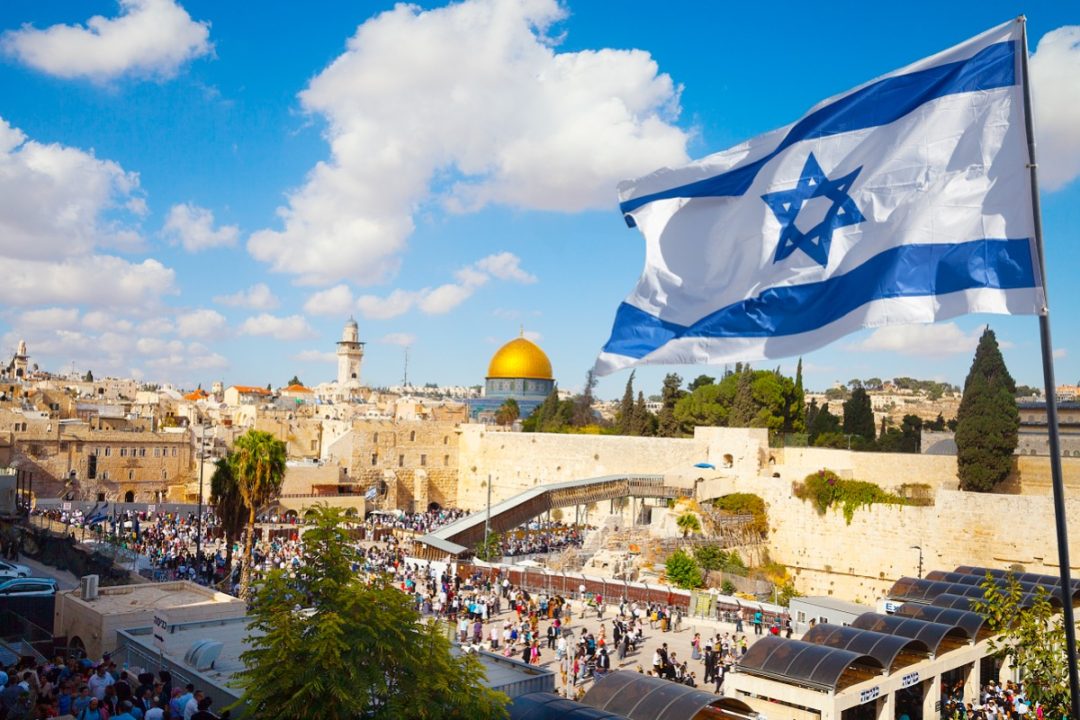
Christians Face Rising Harassment and Violence in Israel as U.S. Backlash Builds
Christians are facing a growing wave of hostility in Israel and the West Bank — the very lands they revere as the birthplace of their faith. The incidents include assaults, spitting, vandalism, settler violence, and attacks on Christian property.
On Sunday, The Washington Post published a report titled, “As Christians are attacked in Israel, government shows little concern.” It documents the latest incidents and suggests the attackers have grown more brazen under Prime Minister Benjamin Netanyahu’s government.
The data from religious watchdogs confirm the troubling pattern.
The developments land in a politically sensitive moment. For decades, United States leaders have described America and Israel as partners bound by shared biblical inheritance and common “Judeo-Christian” moral values. Washington has backed that language with enormous support. Israel has received more than $300 billion in inflation-adjusted U.S. aid since its founding, and the current aid framework provides $3.8 billion per year through 2028.
For many reasons, however, public support for that “alliance” is rapidly souring. With outlets such as the Post now reporting on the sharply rising anti-Christian hostility in Israel, what remains of that support may erode even faster.
Patriots, as always, must stay vigilant — not only about the facts themselves, but about where the backlash comes from, who amplifies it, and who tries to control it.
From Mount Zion to Taybeh
The Post opens on Jerusalem’s Mount Zion, near King David’s tomb, the traditional site of the Last Supper and Dormition Abbey.
In April, that sacred geography became the scene of an attack. According to Israeli police, a Jewish Israeli man from the occupied West Bank shoved a French Catholic nun to the ground and kicked her out of “religious hostility.”
Nikodemus Schnabel, abbot of Dormition Abbey, said the assault did not surprise him. Christians today are “hit, spit at, beaten,” he told the Post. “There was a video in this case, but you can be sure there are so, so many undocumented things.”
The outlet notes that Christian monastics and pilgrims have faced harassment in Jerusalem “for decades.” The difference now is scale and brazenness. Citing the Rossing Center, a Jerusalem-based interreligious organization, the report says harassment incidents “nearly doubled” from 2023 to 2025 and are on track to reach a new high this year (more on that later).
Meanwhile, In Taybeh, the only predominantly Christian town in the West Bank, the pressure looks more like a slow siege. Armed settlers have pushed into the surrounding area. Mayor Suleiman Khouriyeh was blocked from harvesting his olive grove after settlers seized land and built a fence. A hotel project stopped because of settler attacks. At Roland Bassir’s cement factory, settlers allegedly brought cattle onto the grounds, vandalized cars, and smashed equipment. Bassir has laid off nearly all of his workers, and has applied for a U.S. visa. “There is no future,” he said.
Khouriyeh said 10 extended families have left in the past decade — a considerable loss for a city of just 1,500 people.
Francesco Ielpo, the Vatican’s senior official in Jerusalem, put it plainly: “You need hope to remain.”
The Numbers Show a Pattern
Christian Today, quoting the Religious Freedom Data Centre (RFDC), reported that anti-Christian incidents in Israel “have nearly doubled in the last three months.”
The data show that from April to June this year there were 83 incidents of harassment against Christians in Israel, up from the 44 reported between January and March.
Most incidents involved spitting at or on Christians, clergy, and holy places. In the most recent quarter, there were 47 such incidents, compared with 22 in the previous quarter.
The Rossing Center’s 2025 annual report shows the problem is larger than one bad quarter:
Out of 155 documented incidents in 2025, physical attacks remained the most prevalent category, with 61 recorded cases, followed closely by attacks on church properties (52 cases). The remaining incidents consisted of harassment (28 cases) and the defacement of public signs with Christian content (14 cases).
All of that took place in Israel and East Jerusalem. The report warned that even those numbers represent only the “tip of the iceberg.”
The pattern is not random. Like the RFDC, the Rossing Center found that “spitting continued to be the most common expression of hostility.” It said the practice has moved from covert acts to open displays “in broad daylight,” sometimes in front of crowds and police officers. Clergy remain the main targets because monks, nuns, friars, and priests are easy to identify by their clothing and Christian symbols.
The report also described a more corrosive effect. Even “small” acts of hostility are “humiliating and exhausting,” and leave Christians feeling “increasingly unwelcome.”
Its conclusion was blunt: The challenge is not only the number of incidents, but the message they send — that the “Christian presence is contested, conditional, and vulnerable to erosion.”
The Churches
The crisis does not stop at street harassment. It has reached churches, shrines, and Christian holy sites in Gaza, the West Bank, and Lebanon.
In Gaza, Israel hit two of the enclave’s most important Christian churches. In October 2023, Israel’s air strike destroyed part of the compound of the Church of Saint Porphyrius, one of the oldest churches in the world, where displaced civilians had taken shelter. Amnesty International said 18 civilians were killed and called for the strike to be investigated as a possible war crime.
Gaza’s only Catholic church was hit in July 2025. Vatican News reported that the Holy Family Church was struck in an Israeli raid that killed three people and wounded several others, including parish priest Gabriel Romanelli. The church had been sheltering displaced civilians.
In the West Bank, the aforementioned Taybeh has become another symbol of pressure on Christian life. The Rossing Center reported repeated attacks on the town, including fires set near the ancient Church of Saint George. Following the attack,
the priests of Taybeh’s three churches — Latin, Melkite Greek Catholic, and Greek Orthodox — issued a joint statement drawing attention to the repeated attacks on the town’s land, holy sites, and properties, describing them as “a series of dangerous, systematic attacks.”
Lebanon presents a stark image. This April, in Debel, a Christian village in southern Lebanon, an Israeli soldier used a sledgehammer to smash a fallen sculpture of Jesus. The crucifix had stood in a family shrine, according to a local priest. Israel later removed two soldiers from combat duty for the attack, and placed them in military detention for 30 days.
The symbolism is hard to miss. Churches are not only buildings. They are the visible proof of a Christian presence that long predates every modern state in the region.
The Politics of Silence
The Post report points to a deeper political problem. Israel’s chief rabbis, foreign ministry, and prime minister’s office have all condemned the violence, with Netanyahu’s office telling the Post it would not be tolerated.
Yet Christian leaders say silence from political leaders has carried its own message. The Post noted the role of Israel’s national security minister Itamar Ben Gvir:
When an earlier wave of harassment targeting Christians made headlines in 2017, Itamar Ben Gvir, then a settler activist and lawyer, gave a radio interview to defend spitting at Christian monks and churches as “an ancient Jewish tradition.”
“I don’t think this represents any violation,” said Ben Gvir.
That matters because Ben Gvir now oversees law enforcement and signifies a larger shift in Israeli politics.
Ielpo explicitly quoted the “growing influence of Israel’s far right” as an intimidating factor for Christians.
Yisca Harani, founder of the RFDC, told the Post that anti-Christian sentiment has grown especially fast among Israeli youth.
Schnabel gave the Post the bluntest explanation. He remembered arriving in Israel in 2003, when the state still marketed itself proudly as home to Christian holy sites. Now he sees open confrontation in daylight. The difference, he said, is “the government.”
Deep State Games?
The political risk now reaches Washington. American conservatives, including evangelicals, have long formed one of Israel’s strongest support blocs. But reports of Christians being spat on, assaulted, displaced, or driven from ancient towns are harder to reconcile with the familiar narrative of shared faith.
That may be the point. The Post warns that these attacks could draw the “ire” of American Christians. Coming from a paper long viewed as a CIA mouthpiece, the warning reads less like neutral observation than political signaling.
The most effective propaganda is often built on truth. The attacks are real. The anger is real. The collapse of public support for the U.S. alliance with Israel is also real. The question is who gets to shape that anger once it becomes politically unavoidable.
A story like this does not have to invent anything. It only has to organize the facts into a usable political frame. It can acknowledge Israel’s treatment of Christians while steering popular outrage into safer channels. And it can validate the frustration of voters who feel betrayed by the old pro-Israel consensus, then direct that frustration toward a new controlled vehicle.
That is where the timing becomes interesting. Tucker Carlson, Marjorie Taylor Greene, and other recently “enlightened” America First figures have begun hinting at a break from the Republican establishment. Their criticism of Israel now speaks to a real and growing audience. However, Carlson himself is suspected of ties to the same Deep State ecosystem he denounces.
So the deeper possibility is not that the facts are fake — it is that the revolt is being managed. The old alliance is losing moral legitimacy. Christian conservatives are noticing. A new political container may be forming around that legitimate backlash — not to empower it, but to control it.