
Trump Erases Corporate Convictions With Unprecedented Pardons
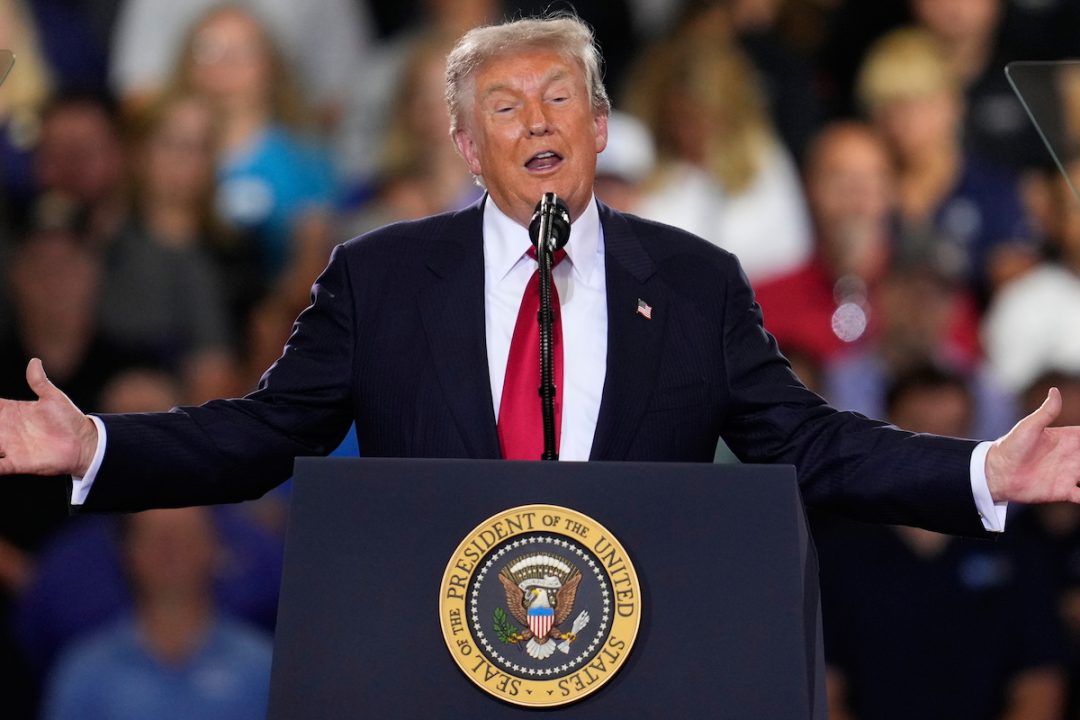
Donald Trump once campaigned as “the law-and-order” champion. He now uses presidential pardons not only to forgive scores of people convicted of serious crimes, but also to erase criminal penalties imposed on corporations.
Recently, Trump has carried the presidential pardon into territory no modern president entered before, granting clemency to nine corporations during his second term. Eight received pardons, and one received a commutation.
The actions erased nearly $200 million in fines, restitution and other penalties, according to Bloomberg. Some of that money had been intended for victims. At the same time, a broader California analysis estimates that Trump’s clemency actions across both terms have eliminated about $2 billion in court-ordered or requested restitution, fines, and forfeitures.
The implications extend far beyond nine companies. Corporate prosecutions rely heavily on fines, restitution, probation, and reputational damage. A corporation cannot go to prison. Therefore, when a president removes those penalties, he can dismantle nearly everything a criminal prosecution achieved.
BitMEX and Ozy Media
Bloomberg reported that the practice began with the cryptocurrency industry and soon expanded.
Trump pardoned HDR Global Trading, the parent company of cryptocurrency exchange called BitMEX, on March 27, 2025. A federal court had fined the company $100 million for willfully failing to maintain an adequate anti-money-laundering program. Trump acted during the same week that the fine came due.
He also pardoned BitMEX founders Arthur Hayes, Benjamin Delo, and Samuel Reed, as well as executive Gregory Dwyer. All four had pleaded guilty to Bank Secrecy Act violations.
Almost coincidentally, BitMEX had introduced trading tied to Trump’s own $TRUMP memecoin weeks before the pardons, according to Bloomberg. The coin is a part of Trump’s newly embraced crypto venture that made him $635-million richer in 2025.
The following day, Trump commuted the sentences of Ozy Media and founder Carlos Watson. A jury had convicted both in a fraud scheme targeting investors and lenders. Watson received nearly 10 years in prison. Ozy received corporate probation.
Prosecutors said Watson directed conspirators to forge documents and impersonate executives from other companies. The Department of Justice’s (DOJ) clemency records listed almost $36.8 million in restitution for Watson and the same amount for Ozy. Bloomberg calculated that the commutations eliminated $97 million in combined penalties.
Environmental Cases
On July 3, Trump pardoned several diesel mechanics and six related businesses convicted of violating the Clean Air Act by disabling vehicle emissions controls. One recipient was Ryan LaLone. His Michigan company, Diesel Freak LLC, had received a $750,000 fine.
These cases differ sharply from the financial-fraud pardons. Critics of the EPA, including this magazine, regard the agency and its regulatory authority as unconstitutional. From that perspective, the pardons corrected prosecutions carried out through an illegitimate administrative structure rather than excusing genuine corporate wrongdoing.
The cases remain significant because Trump pardoned not only the mechanics, but also their companies. LaLone had paid about $80,000 before Trump erased the remaining corporate fine.
“I sit back and think, I wish I did,” LaLone, a longtime Trump supporter who had never donated to him, told Bloomberg.
“Corporations Are People”
The White House argues that the Constitution does not limit pardons to human beings. Bloomberg reported that some officials considered a precedent from King Charles II, who pardoned a company three centuries ago. The White House denied that officials involved in the process discussed that example.
“In any previous era no president would touch this with a barge pole,” University of Missouri law professor Frank Bowman told the outlet.
But as corporations gained more power over public policy, the legal rationale for pardoning them had already taken root.
The Supreme Court developed that doctrine over more than a century. In the 1886 Santa Clara County railroad case, the justices accepted that corporations could receive 14th Amendment equal protection.
In 1909, the Court recognized the other side of that bargain, upholding corporate criminal liability. Prosecutors could attribute employees’ criminal conduct and intent to a corporation when they acted within their authority. Without that rule, the Court warned, crimes committed for corporate benefit could go unpunished.
Later decisions expanded corporate rights. Citizens United treated corporate political spending as protected speech, effectively giving corporations, billionaires, and powerful interest groups far greater influence over election outcomes. Burwell v. Hobby Lobby allowed closely held companies to claim religious protections.
Those rulings paved way for corporate clemency. After all, if a corporation can commit a federal crime, it can arguably receive forgiveness for it. At the same time, Article II authorizes pardons for “Offenses against the United States” and does not expressly limit relief to natural persons.
Still, constitutional text does not settle the issue. For more than two centuries, presidents pardoned people, not businesses. In an era of deepening public-private entanglement and concentrated oligarchic influence over government, Trump has now created a powerful new precedent without any court defining its limits.
Clemency for Corporate Offenders
Trump’s corporate pardons fit a broader pattern. He has repeatedly granted clemency to executives and business figures convicted of fraud, insider trading, money laundering, and other financial crimes.
Trevor Milton, founder of electric truck company Nikola, received a pardon in March 2025. A jury convicted him of securities and wire fraud after prosecutors said he repeatedly misled investors about the company’s technology. A judge sentenced him to four years in prison.
Milton and his wife had donated more than $1.8 million to Trump’s reelection effort before the 2024 election. Trump later said Milton had done nothing wrong and suggested prosecutors targeted him because of his political support.
Trump also pardoned Devon Archer, an infamous partner of Hunter Biden. Archer was convicted in a securities-fraud scheme and ordered to pay more than $43 million in restitution.
In January, Trump pardoned former Ontrak chief executive Terren Peizer. A jury found that Peizer used confidential information to avoid more than $12.5 million in losses. A judge sentenced him to 42 months in prison, ordered him to forfeit more than $12.7 million, and imposed a $5.25 million fine.
Other recipients include former congressman and corporate consultant Stephen Buyer, convicted of insider trading; and Binance founder Changpeng Zhao, who pleaded guilty to failing to maintain an effective anti-money-laundering program.
Trump also pardoned reality television figures Todd and Julie Chrisley, who were convicted of bank fraud and tax crimes. Courts ordered them to pay more than $22 million in restitution.
In November 2025, Trump commuted the seven-year sentence of private-equity executive David Gentile. Prosecutors said his firm misled more than 10,000 investors about funds that had raised $1.6 billion.
Corporate Enforcement Retreats
The clemency decisions have accompanied a wider retreat from corporate and white-collar enforcement.
Trump ordered the DOJ to pause enforcement of the Foreign Corrupt Practices Act, which prohibits bribery of foreign officials.
The Securities and Exchange Commission (SEC) also dropped several cryptocurrency cases inherited from the Biden administration. The defendants included Coinbase, Kraken, Consensys, and Binance.
As federal law enforcement shifted resources toward immigration, a ProPublica analysis found that federal prosecutors declined or closed more than 23,000 cases during Trump’s first six months back in office.
That included, per the outlet, more than 900 cases involving fraud related to federal programs and procurement and 100 cases of healthcare fraud. The DOJ said some closures reflected an effort to remove stale cases and update its records. It also said prosecutors brought slightly more fraud cases in 2025 than during Biden’s final year.
Still, the broader direction is clear. The administration has narrowed some investigations, dismissed enforcement cases, and forgiven prominent offenders after conviction.
A Reuters investigation found that 96 percent of Trump’s second-term clemency grants bypassed the DOJ’s traditional guidelines, relying instead on political allies, paid advocates, and other personal intermediaries.
Related articles:
Trump Wipes Away Corruption and Fraud Cases With New Round of Clemency
Trump Pardons Binance Founder Tied to His Crypto Venture
House Resolution Aims to Add Oversight to Presidential Pardons
Trump Moves to Pardon Convicted Narco-state President, Influence Honduran Election