

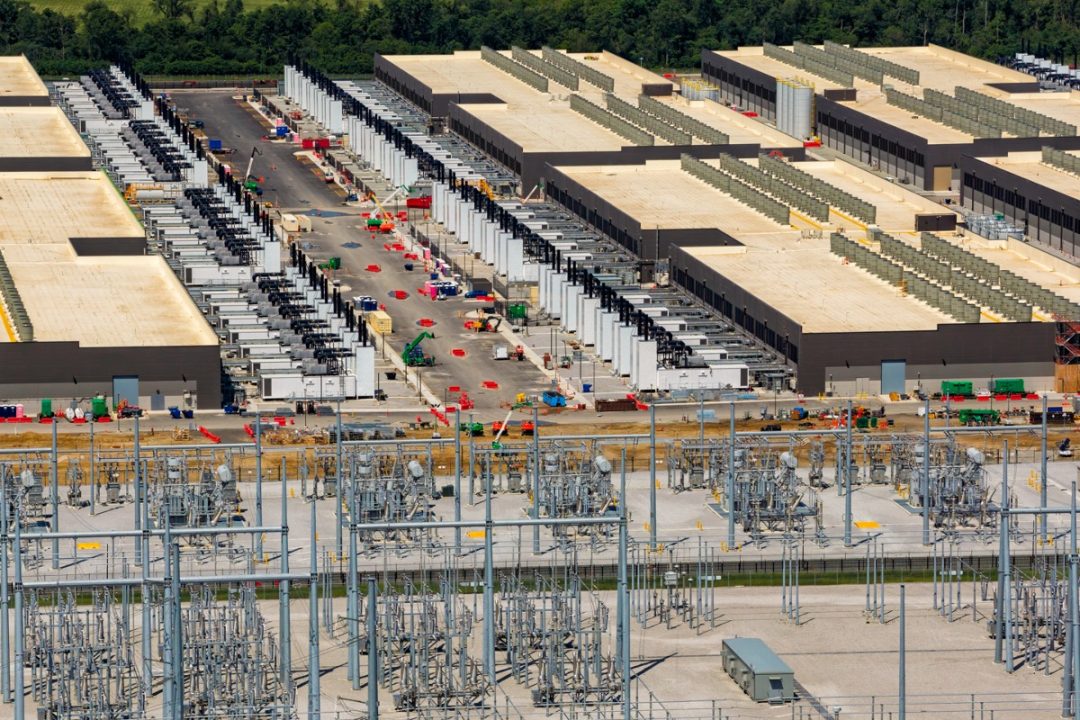
Voters Revolt Against AI Data Centers, Rebuking Trump’s Technocratic Agenda
American voters have delivered a clear message to the artificial intelligence industry and the Trump administration: They have no intention of sacrificing their communities for the promised wonders of AI.
Poll after poll had already documented widespread public opposition to data centers, which consume enormous amounts of electricity, water, and land. But the stakes extend far beyond environmental and economic costs. These facilities also provide the computing backbone of an expanding technocratic state, enabling mass data collection, government surveillance, automated decision-making, and increasingly sophisticated systems of social control.
Washington and Silicon Valley wanted more of them, and quickly.
Tuesday’s midterm elections delivered a sweeping rejection of that expansion.
A Nationwide Rejection
According to Ballotpedia, at least 50 local ballot measures concerning data centers were scheduled across 13 states in 2026. Of those, 41 appeared on the November 3 ballot.
The states were Arkansas, California, Florida, Illinois, Kansas, Maine, Michigan, Nevada, New Hampshire, New Jersey, North Dakota, Ohio, and Wisconsin.
As of Thursday, voters had decided 47 measures. In 46 cases, majorities favored restricting data center development, either by approving new limitations or rejecting proposals that would facilitate construction.
That translates into an extraordinary 98-percent rejection rate for proposals favoring data center expansion.
The sole exception came in Harwood, North Dakota, where voters rejected a proposal requiring additional reviews of industrial developments, including data centers.
The measures varied considerably. Some prohibited new facilities outright. Others imposed temporary construction moratoriums, restricted electricity demand, or required additional oversight. Several were advisory rather than legally binding.
Yet despite these differences, the verdict was remarkably consistent: The localities are increasingly unwilling to accommodate a massive buildout, regardless of how relentlessly federal officials and technology giants promote it.
Ohio Leads the Resistance
Ohio became the epicenter of the backlash, accounting for 21 ballot measures across 18 communities, more than any other state.
Voters delivered decisive victories for restrictions, often by overwhelming margins, despite efforts by technology companies and business groups to defeat them.
In Sunbury, 79 percent of voters approved a ban on data centers requiring more than 25 megawatts of electricity. The measure could derail Amazon’s proposed $2 billion campus, for which city officials had previously approved generous property-tax incentives.
Trey Dockendorf, who helped organize the opposition, told local television station WCMH:
I think it just sends a strong message that we just don’t want this here. It gives us more of a say in the outcome of what happens in our community.
The resistance spread across Ohio. In Granville, 82 percent supported a ban on data center construction. Hubbard and Urbana approved similar restrictions with 77 percent support.
In Upper Sandusky, 77 percent voted to prohibit new data centers following a months-long dispute over Smartland Energy’s proposed $900 million data center and natural-gas power plant.
Ohio’s resistance comes after years of rapid data center expansion. According to Scioto Analysis, approximately 178 facilities already operate statewide.
Much of that growth is concentrated around New Albany, near Columbus, where some 40 data centers have opened and another 28 are planned or under construction.
The development has benefited powerful local real-estate interests. That includes billionaire Les Wexner, who was, notably, a longtime financial associate of Jeffrey Epstein.
Other States
The backlash extended well beyond Ohio, with voters from California to Maine rejecting data center expansion.
In Alhambra, California, 82 percent approved a citywide ban. In Edgewater, Florida, 77 percent supported a prohibition on new facilities and the expansion of existing ones.
Illinois delivered particularly telling results. In Bloomington, 78 percent backed an advisory measure calling for a moratorium on large data centers. In Joliet, nearly 79 percent rejected a proposal encouraging AI data center construction. Meanwhile, 88 percent of Morgan County voters supported additional restrictions.
Communities in Kansas and Maine also voted to curb development, reinforcing a pattern that stretched across the country.
Not every measure carried the force of law. Some expressed public preferences rather than imposing binding restrictions. Yet the consistency of the results was striking.
What began as scattered local disputes over land use, utilities, and zoning has emerged as a national backlash against the data center boom, transcending geographic and partisan boundaries.
Trump’s AI Push
The election results present a direct challenge to President Donald Trump’s aggressive AI agenda.
Just days into his second term, Trump unveiled the $500 billion Stargate project, a massive investment initiative — backed by some of the biggest tech companies tied to globalist agendas — to build AI data centers and computing infrastructure across the United States.
In July 2025, the White House released America’s AI Action Plan, making AI dominance a national priority. Trump also signed an executive order to fast-track data center construction, ease environmental reviews, and facilitate federal financial support.
Trump later assembled a technology advisory board packed with some of the most notorious Big Tech elites, giving them a direct role in shaping policies on AI and other emerging technologies. At the same time, his allies in Congress pushed to centralize federal control over AI regulation at the expense of state authority.
Yet as public opposition mounted, Trump grew increasingly dismissive of those resisting the projects.
This July, he insisted that there was no choice but to accept the expansion:
You have to convince your communities how great these things [are]. You can’t fight it. You have to go with it.
In an August 31 Truth Social post, he went further:
The only reason that communities throughout the U.S.A. should not want Data Centers is if they want to end up being backwards and poor. If they want to be successful and rich, with far lower taxes and jobs all over the place, let Data Reign.
Meanwhile, federal law enforcement began targeting alleged “anti-tech extremists,” raising concerns that peaceful, lawful opposition to data center development could come under federal scrutiny.
Voters Say No
The political disconnect was evident well before Election Day. As The New American reported in August, a private National Republican Senatorial Committee memo warned that opposition to data centers could cost Republicans a Senate seat in Ohio. It called the controversy “a sleeper issue for the entire election cycle.”
Democrats capitalized on the backlash, criticizing Republican opponents over rising electricity costs, generous corporate subsidies, and unchecked development. Some Republicans also broke with Trump’s position, embracing construction moratoriums, tighter permitting requirements, and restrictions on tax incentives.
Tuesday’s votes exposed the gulf between Washington’s technological ambitions and the will of ordinary Americans.
Trump berated communities resisting data centers as choosing to become “backwards and poor.” On Election Day, voters across the country said loud and clear that they would rather reject his vision of progress than surrender control over their own backyards.