
Underwater AI Data Centers: New Frontier, Same Concerns
Facing growing resistance to massive artificial intelligence data centers on land, the technology industry is searching for ways around the opposition. One potential solution: Put them under water, where the neighbors can’t complain.
Developers are now pursuing underwater data centers off the coasts of Maine and Alaska, with proposals undergoing federal review. Meanwhile, critics warn of threats to aquatic ecosystems and fisheries, potential chemical contamination, and risks to drinking water supplies if the technology expands into freshwater systems.
Taking the AI Boom Under Water
According to The Guardian, citing an October 27 Scientific American investigation, the Trump administration is considering plans for four underwater data centers off the coasts of Maine and Alaska.
Two proposed projects are documented in Federal Energy Regulatory Commission (FERC) notices published on August 25 and September 4. Both remain in the preliminary review stage.
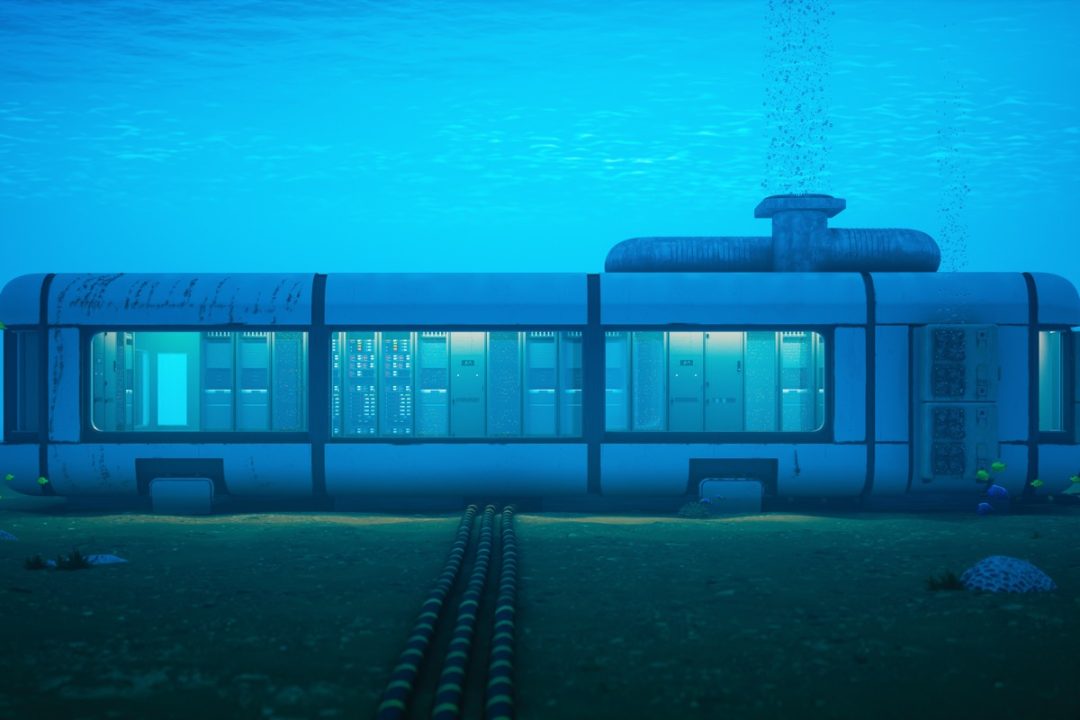
The concept is straightforward. Computer servers operate inside sealed underwater modules, using the surrounding water to dissipate the enormous heat they generate.
In a June analysis, real estate investor Zach Aarons identified rising land costs, soaring electricity demand, permitting delays, and local resistance as factors making underwater computing increasingly attractive.
And the technology is more than a theoretical proposition.
In 2018, Microsoft submerged 864 servers off Scotland’s Orkney Islands. After two years, researchers found that the underwater equipment experienced roughly one-eighth the failure rate of comparable servers on land.
China has since moved toward commercial deployment, including a wind-powered underwater data center off Shanghai.
But technical feasibility is only part of the equation. The American proposals are already encountering resistance from communities whose waters developers hope to use.
Maine Residents Fight Back
That resistance is particularly evident in Eastport, Maine, a small coastal community near the Canadian border.
In February, DeepGreen Western Passage SPV sought federal permission to study a submerged computing facility in the Western Passage of the Bay of Fundy.
The proposed facility would combine 34 underwater computing modules with up to 16 tidal turbines capable of generating 4.8 megawatts of electricity. It would operate independently of the electrical grid.
Residents fear the project could damage fisheries, marine habitats, and the local economy. Members of the Passamaquoddy Tribe have also raised objections.
In August, Eastport officials adopted a 180-day moratorium on data center development. On September 9, the City Council unanimously enacted an ordinance prohibiting large-scale data centers, both on land and under water, within its jurisdiction.
In October, councilors formally opposed DeepGreen’s federal application, citing environmental risks and doubts about the project’s technical feasibility.
The Alaska Project
DeepGreen is pursuing another, considerably larger project in Alaska’s Cook Inlet.
According to a federal notice, the proposal calls for 66 underwater computing modules powered by approximately 330 to 350 tidal turbines.
The system could generate roughly 100 megawatts of electricity.
Yet the developer’s approach has already drawn criticism from local officials.
Kenai Peninsula Borough Mayor Peter Micciche told Alaska’s News Source that DeepGreen had not even contacted his office.
Local governments are also asserting their right to participate in federal proceedings.
On October 7, the Kenai City Council voted unanimously to intervene in FERC’s review of the project. The city formally filed its motion six days later.
The Kenai Peninsula Borough and the Alaska Commercial Fisheries Conservation Alliance have also sought to intervene. Unlike Eastport, Maine, though, Kenai has not formally opposed the project.
Environmental concerns add to the controversy. Cook Inlet supports endangered beluga whales and commercial fisheries. Construction, underwater noise, and turbine operations could disrupt marine habitats.
Like the Maine project, the Alaska proposal remains preliminary.
DeepGreen Looks Murky
Behind these ambitious projects stands a newly established company with uncertain financial backing and limited experience in the technologies it proposes to deploy.
DeepGreen Holdings LLC was formed in January 2026, just weeks before its subsidiaries submitted the Maine and Alaska applications. The company has no publicly identified website or project information portal.
Its managing member, Louis Wolfson, runs Golden Development Corporation, a Massachusetts business specializing in luxury homes and residential construction. His professional background does not include underwater computing or tidal power generation.
DeepGreen’s original Maine proposal estimated $415 million in construction costs and another $9 million for preliminary studies. The company subsequently scaled back the project.
But who would finance even the revised venture remains unclear.
In May, Wolfson acknowledged:
We are currently in the private exploratory phase regarding funding and partners.
DeepGreen has discussed private equity and institutional investment, but has not publicly identified any committed major investors.
Its proposed technology partnerships raise further questions.
DeepGreen’s Maine application referenced tidal technology developed by Ocean Renewable Power Company (ORPC). But ORPC chief executive Stuart Davies formally clarified to federal regulators:
ORPC has no involvement in DeepGreen’s project and … no conversations have occurred between ORPC and DeepGreen regarding the integration of ORPC turbines with DeepGreen’s proposed data center.
A similar discrepancy emerged in Alaska.
DeepGreen’s application referenced a potential connection to the Alaska Energy Authority’s $400 million Cook Inlet PowerLink project. Yet, as the Anchorage Daily News reported,
Alaska Energy Authority CEO Curtis Thayer said the organization had never heard of DeepGreen nor received any contact from the company. Thayer said DeepGreen’s letter to FERC also has some of the project’s facts “dead wrong.”
Federal regulators also identified deficiencies in DeepGreen’s initial Alaska application, requiring corrections before proceeding.
None of these discrepancies establishes wrongdoing. They do, however, raise questions about the company’s financing, technical readiness, and ability to deliver projects of such scale.
The Great Lakes
The controversy could eventually extend far beyond the Atlantic and Pacific coasts.
Although no underwater data centers have been formally proposed for the Great Lakes, the Ohio-based Lake Erie Foundation wants safeguards in place before developers arrive.
The stakes are particularly high. The Great Lakes hold roughly one-fifth of the world’s surface fresh water, and supply drinking water to more than 40 million Americans and Canadians. Chemical leaks or other contamination could threaten a resource on which entire communities depend.
The Lake Erie Foundation’s October policy paper identifies 20 publicly reported offshore data center projects or concepts worldwide over the preceding two years.
The foundation explicitly states that it does not oppose data centers. Instead, it calls for transparency, independent testing, and stronger protections for public water supplies. Its recommendations include mandatory disclosure of water consumption, wastewater discharges, cooling chemicals, and potential contaminants, including PFAS.
The group also advocates closed-loop cooling systems and independent water testing, and argues that developers, not residents and utility customers, should bear the costs of infrastructure expansion.
Further, it seeks regulations addressing thermal pollution, chemical spills, aquatic habitats, emergency response, and the eventual removal of underwater equipment.
The foundation has contacted lawmakers in Ohio, Michigan, and New York, urging them to establish preventive regulations.
Familiar Concerns
For now, underwater data centers remain an emerging technology, and their environmental and health impacts will depend heavily on their design, scale, and location.
But the underlying dispute is familiar. Developers see opportunities for expansion, while local communities face the costs, risks, and potential loss of control over their resources.
The controversy also raises a fundamental constitutional issue: Washington has no explicit mandate to approve industrial development affecting local communities. Federal law, shaped by expansive interpretations of federal powers, may grant regulators jurisdiction over certain projects in navigable waters. But federal approval should not automatically override the legitimate interests of states, municipalities, and the people who depend on those waters.
Moving data centers offshore may put them out of sight. But it does not put their consequences beyond public scrutiny or make Washington the rightful arbiter of every local concern.
Related Articles:
Voters Revolt Against AI Data Centers, Rebuking Trump’s Technocratic Agenda
Data Centers in Space: NASA Backs Big Tech’s Orbital AI Push