
Trump Signs Border-security Reconciliation Bill. What’s in It?
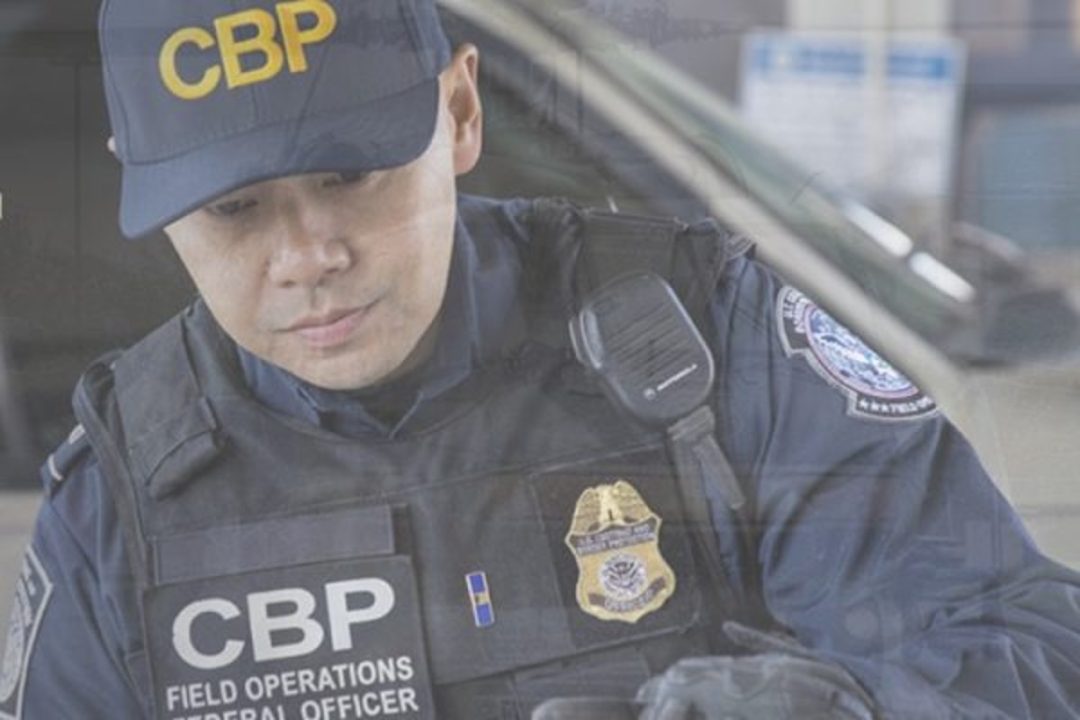
On June 10, President Donald Trump signed legislation ensuring that U.S. Customs and Border Protection (CBP) and U.S. Immigration and Customs Enforcement (ICE) will remain fully funded through fiscal 2029, ending a standoff with Democrats, who refused to support funding for either agency.
S. 2, titled the Secure America Act, was introduced in May as a reconciliation bill, meaning its provisions are designed to bypass the U.S. Senate’s filibuster rules. The Senate passed the bill on June 5 by a near-party-line 52-47 vote, with Senator Lisa Murkowski (R-Alaska) being the only Republican to join all Democrats in voting against the bill. The House of Representatives passed S. 2 on June 9 by a party-line 214-212 vote.
At the signing ceremony, Trump declared that S. 2 “will give the heroes of ICE and Border Patrol … the support and resources they need to defend our borders, protect our homeland, and keep America safe.” In a June 10 interview on Fox News, Secretary of Homeland Security Markwayne Mullin said that “we have employees at ICE and CBP … [who] haven’t been paid since February,” and because S. 2 funds those agencies through the end of Trump’s presidency, “we won’t have the Democrats threatening to shut [them] down.”
Appropriations
The Secure America Act appropriates $69.5 billion through September 30, 2029. Of that amount, the bill appropriates $26 billion to CBP, including $9.55 billion “to hire, pay, train, and equip Border Patrol agents and … support personnel”; $13.02 billion “for hiring, paying, training, and equipping [CBP] agents, and the necessary support staff, and … mission support and operations and maintenance”; and $3.45 billion for various border-security operations and technology.
S. 2 appropriates another $38.5 billion to ICE, including $31.075 billion for ICE personnel, technology, and operations. Of that amount, the bill specifies that at least $350 million must be used for immigration-enforcement operations in states or localities that do not cooperate with ICE. S. 2 appropriates an additional $7.45 billion “to hire, pay, train, and equip Homeland Security Investigations [HSI] agents and support personnel,” as well as “mission support and operations and maintenance.” Of that amount, the bill requires that $108.5 million be used “to train [HSI] personnel and State and local law enforcement regarding identifying victims of child sexual exploitation and abuse.”
Additionally, S. 2 appropriates $2.5 billion to the Department of Homeland Security (DHS) to support federal cooperation with state and local governments on immigration enforcement — including the 287(g) program — and an additional $2.5 billion is appropriated to DHS without a specified purpose.
Getting a Boost
The Secure America Act gives CBP and ICE a massive boost. In addition to the fact that these agencies will not need to worry about renewed congressional funding until late 2029, they are also receiving major funding increases. The $38.5 billion for ICE, for example, dwarfs the agency’s $9.8 billion budget in fiscal 2024 — and this is on top of the $170.7 billion that the One Big Beautiful Bill Act already appropriated for immigration enforcement and border security through fiscal 2029.
In a Fox News interview on June 8, border czar Tom Homan asserted that with the bill’s funding, “You’re going to see targeting increase, you’re going to see arrests increase, [and] we’re also going to be able to pay our vendors, our detention facilities, our medical contractors. So that means that we’re going to do a lot more.”
Bypassing the Regular Appropriations Process
S. 2 is an unprecedented funding bill, since it used the reconciliation process — thus bypassing the Senate’s filibuster rules — to enact non-supplemental funding for federal agencies. This is yet another step toward weakening — and ultimately abolishing — the filibuster and breaking down the “regular order” process for appropriations bills. Both the Republican and Democratic parties will likely enact appropriations in the same manner in the coming years.
Expanding Federal Law Enforcement
Although S. 2’s funding will help deter mass migration to the United States — helping protect American sovereignty — the bill represents another step toward expanding federal law enforcement. Globalist-induced mass migration, combined with the broader breakdown in law and order, has been used as an excuse to transfer police powers from the states and their local governments to Washington, D.C., and S. 2 intensifies this trend.
Under the U.S. Constitution, the federal government has no authority to conduct interior law-enforcement activities, and nowhere does the Constitution grant the federal government authority over immigration — only naturalization. Constitutionally, both immigration and law enforcement are reserved to the states — authority that they must reclaim. Additionally, S. 2’s funding for interior immigration enforcement could potentially be used against American citizens in the form of domestic surveillance.
Regardless, S. 2 is now law. Its impact — both good and bad — will become clear in the coming years.
This article is part of The New American’s weekly online newsletter Insider Report, which is emailed to TNA subscribers each week. Click here to subscribe to The New American to receive the Insider Report and access exclusive content.