

Symbolic Rebuke: Senate Tells Trump to Stand Down on Iran
Four Senate Republicans joined most Democrats on Tuesday to pass a symbolic resolution reining in the president’s ability to make war against Iran. The House already passed the resolution earlier this month, June 3, also with four Republicans in that chamber joining the Democrats.
A takeaway here is that the politicians are getting ready for the midterms, and their constituents would prefer to be represented by someone who opposed this war.
The four Republicans who took part in the 50-48 vote for it are Senators Bill Cassidy of Louisiana, Susan Collins of Maine, Lisa Murkowski of Alaska, and Rand Paul of Kentucky (Cassidy was recently primaried out). Of the four, Paul has been consistent in his criticism of unconstitutional wars.
The War Powers Resolution is nonbinding. It’s a concurrent resolution, and will not be sent to be signed by the president.
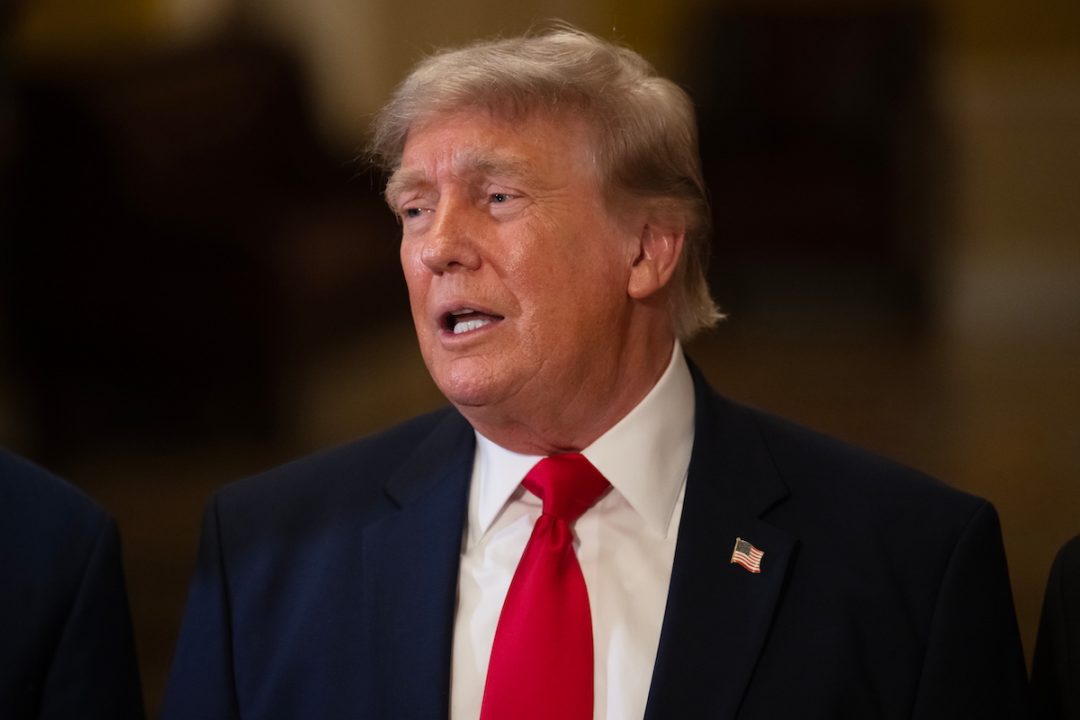
As expected, Trump didn’t take kindly to the vote. He rattled off a Truth Social post just before 10:00 p.m. Tuesday night, saying it only makes it harder for him to negotiate with Iran. Trump said:
So, I have Iran on the “ropes,” ready to go down for the fall, willing to give us practically anything, and for the first time in decades, respecting the hell out of the United States and its President, ME, and the U.S. Senate decides to have a poorly timed and meaningless War Powers Act Vote, telling the Number One Sponser [sic] of Terror in the World that the United States doesn’t like what I am doing to them, and I must stop, and by so doing has provided aid and comfort the Enemy. Four Republican Losers voted with the Dumocrats, and Iran asked my people, “what does that all mean?” These Senators have just made my job more difficult, but I will get it done, one way or the other, because I always get it done!
Iran not Backing Down
It does appear the president and his team are very much engaged in tough negotiations. Moreover, there are indications that the Iranians aren’t necessarily willing to do anything to end hostilities, as he says. They have re-closed the Strait of Hormuz numerous times over the last month or so, in protest of Israeli attacks in Lebanon. They have lobbed missiles at ships and even some U.S. assets during calm times, and, as we reported on Tuesday, they’re saying that, contrary to claims by Vice President JD Vance, they haven’t agreed to nuclear inspections by the International Atomic Energy Agency.
Senator Jim Risch (R-Idaho) is among those who agree with Trump. According to reports, he told his colleagues to vote against the resolution, arguing that Trump “would pay no attention to it but the Iranians would.”
Foreign-policy Failure
For the first time in a long time, Senate Minority Leader Chuck Schumer (D-N.Y.) said something accurate. The Iran war, he said, “will go down in the history books as one of the worst foreign policies America has ever made or any country has ever made.” Schumer’s opposition to this war is almost certainly political and not principled. He doesn’t have a problem with involving America in senseless wars. He voted in 2002 to authorize a war against Iraq, and he has consistently voted to fund America’s proxy war against Russia in Ukraine.
As far as this latest military boondoggle, the war in Iran has netted hundreds of American injuries (we don’t have updated numbers on deaths), depleted years of munitions in just months, and added at least $80 billion to our already-unsustainable national debt. To top it off, the return seems to have been minimal, if anything. There will be no regime change in Iran, and the people in charge there have discovered just how effective their Strait of Hormuz card is.
As for the entire supposed reason for the war, the Iranian nuclear program was already set back after last summer’s bombing raid. Moreover, the current memorandum of understanding says they can keep their civilian nuclear program (as it was before), and, as of now, there doesn’t even appear to be agreement by Iran to let in nuclear inspectors (also as it was before the war).
Real War Powers
As for reining in the president’s war powers, what’s lost in this conversation is the fact that the president never had constitutional permission to single-handedly launch the war in the first place. As we reminded readers in the June print issue of The New American, the Founding Fathers did not want one man to decide when to take the country to war. We pointed out:
Under the Constitution, the president is “Commander in Chief of the Army and Navy of the United States, and of the Militia of the several States, when called into the actual Service of the United States.” But his powers as commander in chief are restricted by the following congressional powers: “To declare war”; “To raise and support Armies”; “To provide and maintain a Navy”; “To Make Rules for the Government and Regulation of the land and naval Forces”; “To provide for calling forth the Militia to execute the Laws of the Union, suppress Insurrections and repel Invasions”; and “To provide for organizing, arming, and disciplining the Militia.”
The support for the argument that Trump had no constitutional authority to launch the war is in Article I, Section 8 of the U.S. Constitution, which makes clear that Congress is in charge of raising armies and deciding when war is necessary. Alexander Hamilton bolstered this interpretation in The Federalist, No. 69, where he said the U.S. president is not a king. Hamilton:
The President is to be commander-in-chief of the army and navy of the United States. In this respect, his authority would be nominally the same with that of the king of Great Britain, but in substance much inferior to it. It would amount to nothing more than the supreme command and direction of the military and naval forces, as first general and admiral … while that of the British king extends to the declaring of war and to the raising and regulating of fleets and armies — all which, by the Constitution under consideration, would appertain to the legislature.
And if there is any lingering doubt, here is what the Father of the Constitution, James Madison, had to say on the matter:
The Constitution supposes, what the History of all governments demonstrates, that the Executive is the branch of power most interested in war, and most prone to it. It has, accordingly, with studied care, vested the question of war in the Legislature.
The U.S. government needs to get back to obedience to the Constitution, not because it’s quaint and cliché, but because it’s the most effective way for the people to regain decision-making powers over when their children are sent to war and every other major policy that affects their everyday lives.