

Pennsylvania Supreme Court Upholds Private-property Rights
The Pennsylvania Supreme Court delivered a victory for private-property rights on July 21, ruling unanimously that government officials generally may not enter private land without a warrant, probable cause, or a recognized exception to the warrant requirement.
Warrantless Entries Since 2013
The decision in Punxsutawney Hunting Club v. Pennsylvania Game Commission arose after Pennsylvania Game Commission (PGC) officers repeatedly entered land belonging to the Punxsutawney and Pitch Pine hunting clubs without permission, a warrant, or probable cause. The clubs own approximately 4,000 and 1,100 acres, respectively, in Clearfield County. According to the court, PGC Warden Mark Gritzer and other officers entered the properties between 15 and 22 times beginning in 2013 while investigating suspected hunting violations. On one occasion, Gritzer placed a trail camera on Punxsutawney’s property for 78 days in an attempt to gain probable cause for a charge of illegal elk feeding.
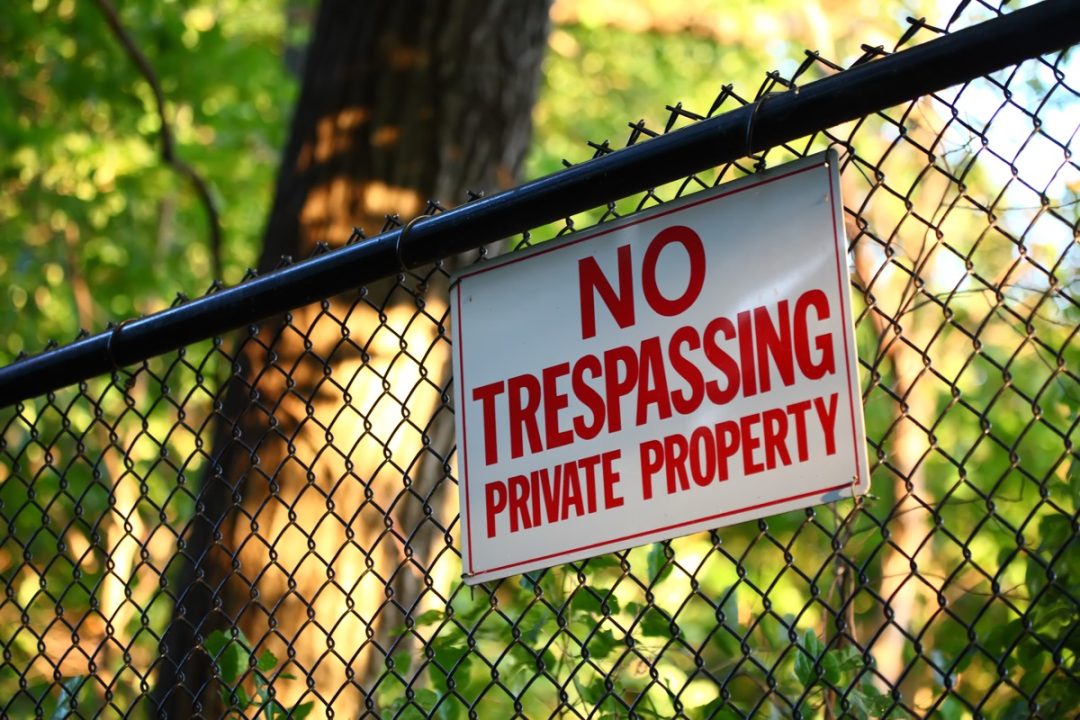
The clubs had clearly demonstrated their desire for privacy. They posted “No Trespassing” signs, marked boundaries with purple paint, installed locked gates, erected fencing, and took other steps to exclude intruders. Nevertheless, state law purported to authorize PGC officials to enter private property, posted or not, while performing their duties. The clubs, represented by the Institute for Justice, sued the PGC, asking the Commonwealth Court to declare the practice unconstitutional. The Commonwealth Court ruled against the clubs in 2023, and they appealed to the state’s highest court.
Court Overturns 2007 Precedent
The Pennsylvania Supreme Court rejected the PGC’s sweeping claim of authority. Writing for the court, Justice Kevin Brobson overruled the court’s 2007 decision in Commonwealth v. Russo, and held that Sections 303(c) and 901(a)(2) of Pennsylvania’s Game and Wildlife Code violate Article I, Section 8 of the Pennsylvania Constitution. Government officials must now obtain a warrant based on probable cause, receive consent, or satisfy a recognized exception before entering private land whose owner has taken sufficient steps to exclude intruders.
The ruling provides greater protection than the federal open-fields doctrine, which the U.S. Supreme Court first adopted in Hester v. United States in 1924 and reaffirmed in Oliver v. United States in 1984. This doctrine holds that the Fourth Amendment generally does not protect land outside the immediate area surrounding a home, even when the property is privately owned, fenced, or marked with no-trespassing signs.
U.S. Constitution Protects Property Rights
Yet the Fourth Amendment was adopted to restrain arbitrary government intrusion. It declares:
The right of the people to be secure in their persons, houses, papers, and effects, against unreasonable searches and seizures, shall not be violated, and no Warrants shall issue, but upon probable cause.
The Fourth Amendment protects both privacy and property by requiring government officials to justify searches before a neutral judge. A badge does not transform private land into public property, nor should enforcing hunting regulations place government agents above the Constitution.
Property rights receive additional protection under the Third and Fifth Amendments, the latter of which prohibits government from depriving any person of “life, liberty, or property, without due process of law.” The Fifth Amendment also requires that private property may not be taken for public use without just compensation. Together, the Third, Fourth, and Fifth Amendments set a precedent and protect property against unlawful searches, arbitrary deprivation, and uncompensated government seizure.
The Ninth Amendment recognizes that the people retain God-given rights beyond those specifically enumerated in the Constitution, including the right to hunt and fish for food and sustenance. Warrantless government intrusions onto private land burden that right by subjecting hunters, anglers, and landowners to unconstitutional surveillance and interference.
“Possessions” Versus “Effects”
The Pennsylvania Constitution goes even further. Article I, Section 8 of that document protects the people in their “persons, houses, papers and possessions,” and requires probable cause before a warrant may authorize the search of “any place.” The court found that distinction significant: Unlike the Fourth Amendment’s term “effects,” the word “possessions” has long been understood to include real property such as land, and the justices concluded that Article I, Section 8 therefore provides Pennsylvanians broader protection than its federal counterpart.
The ruling expressly protects property whose owners have taken sufficient steps to exclude intruders. The court declined to decide whether the same protections apply when landowners have taken fewer or no steps to post signs on or secure their land. Pennsylvania landowners therefore have good reason to mark boundaries clearly and post notice that entry is prohibited.
“This is a victory for all landowners in Pennsylvania,” Frank Stockdale, president of the Punxsutawney Hunting Club, said in a statement released by the Institute for Justice.
Supporting law enforcement does not require surrendering constitutionally protected property rights. Good officers enforce the law while remaining bound by it. Pennsylvania lawmakers and agencies should respect this decision rather than search for another means to revive warrantless intrusions. Private property is a cornerstone of liberty, and government must never be permitted to treat it as its own.