Kennedy’s Hantavirus PREP Act Declaration Reopens Emergency Powers Debate
No matter the administration, Washington loves emergency powers.
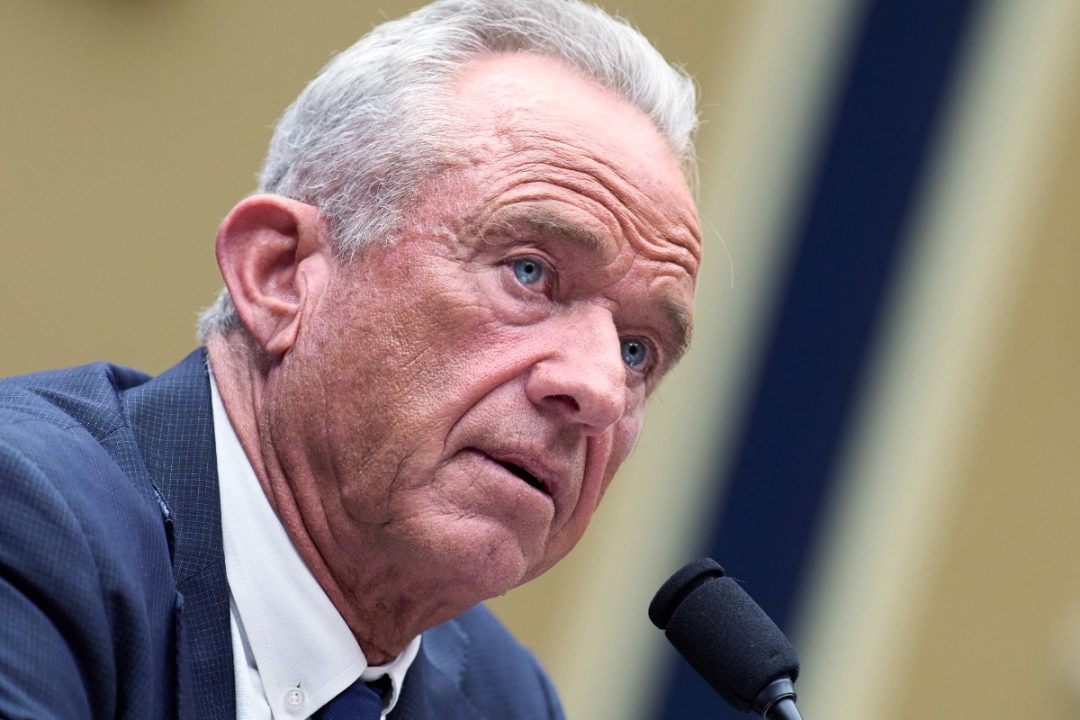
Last Friday, Health and Human Services Secretary Robert F. Kennedy Jr. signed a PREP Act declaration for Andes virus, a rare hantavirus strain linked to a small cruise-ship outbreak. (The Public Readiness and Emergency Preparedness, or PREP, Act allows the HHS secretary to grant legal immunity to manufacturers of drugs and other medical products during a declared public health emergency.)
HHS calls the move “targeted.” Indeed, the declaration is narrow. It is limited to favipiravir, an antiviral drug not currently approved for use in the United States; voluntary administration; possible exposure to Andes virus; and a short window, ending July 18, 2026.
But the core fact remains: The declaration creates legal immunity. Covered manufacturers, distributors, program planners, medical personnel, and the federal government receive protection from lawsuits tied to the covered “countermeasure,” except in cases of willful misconduct. Kennedy’s notice also says the declaration “may be amended as circumstances warrant.”
A Small Outbreak, a Big Legal Shield
The declaration grew out of an outbreak aboard the MV Hondius, a Dutch cruise ship that left Ushuaia, Argentina, on April 1 and traveled through the South Atlantic.
According to the Federal Register notice, the World Health Organization (WHO) was notified on May 2 of a cluster of severe acute respiratory illness among passengers and crew. On May 6, WHO confirmed Andes virus as the cause. As of May 8, WHO had reported eight cases, six confirmed and two suspected, including three deaths. The ship carried 147 people from 23 countries. The United States repatriated 18 passengers on May 10 and 11.
The notice describes Andes virus as “a type of hantavirus spread by rodents in South America and, less commonly, by other infected people.” It can cause hantavirus pulmonary syndrome (HPS), a serious respiratory illness. Among patients with severe respiratory symptoms, the notice estimates the fatality rate at about 38 percent.
But this was not a national wave. It was a small outbreak on a specific cruise ship. The rodents that carry Andes virus, the notice says, “have not been found in the United States.” Person-to-person spread is possible, but usually requires close contact with a sick person. And so far, no American cases have been confirmed.
Kennedy’s Case
Kennedy announced the declaration in careful language, writing on X:
Today, I signed a targeted PREP Act declaration to support the development and deployment of medical countermeasures related to Andes virus, which can cause the deadly respiratory illness Hantavirus Pulmonary Syndrome.
The secretary said the action “helps remove barriers to research and response efforts” — as if research itself somehow requires a federal liability shield — while HHS monitors “the recent outbreak linked to the South Atlantic cruise ship.” He added,
HHS is taking this situation seriously and will continue working to protect public health and support the safe development of potential treatments and countermeasures.
The backlash came quickly. Kennedy later issued a clarification, warning people not to believe “Internet fearmongers.” He stressed that his declaration created no mandates, applied to no other products, and did not apply to vaccines. It did not, he said, “pave the way for a new mRNA vaccine” or “provide Big Pharma with new, limitless protections from liability.”
But that framing missed the substance of the criticism. No serious critic treated the declaration as a vaccine mandate or a blank check for Big Pharma. The main objection was narrower and more fundamental: Kennedy had invoked an emergency liability shield that critics viewed as unconstitutional, medically unnecessary, and legally unjustified.
Is This Even Legal?
Many critics, indeed, focused on the core legal aspect of the declaration.
A popular X account, Sense Receptor, accused Kennedy of violating the Constitution. It clipped a recent interview in which Kennedy blasted the government for “dismantling the entire Constitution of the United States” within “a single year” through emergency powers assumed during Covid.
Nicolas Hulscher of the McCullough Foundation initially warned against the U.S. Army’s Andes virus DNA gene-therapy injection. He later acknowledged that the declaration covered only favipiravir for two months, and did not cover vaccines.
But he still reached the same conclusion. “The PREP Act is unconstitutional and should be repealed,” he wrote.
Brad Miller, a former Army officer who resigned over the Covid vaccine mandate, made the same point:
It doesn’t matter how limited in scope this particular PREP Act declaration is. It’s still entirely unconstitutional, totally unnecessary, reinforces a process that has been heavily abused in the past, and opens the door for further institutional abuse.
It Makes No Sense
Attorney Tom Renz pressed the issue through practical questions:
Why would you issue a PREP Act declaration if favipiravir is safe? If you haven’t had time for full approval then how do you know it’s safe? If it is safe why does it need immunity from lawsuits?
He then challenged the scale of the response:
How many people have been confirmed to die from the current Andes Hantavirus outbreak? If I’m not mistaken it’s 3. So you are giving PREP Act immunity to a drug over 3 confirmed deaths and you think people are overreacting?
Dr. Sherri Tenpenny agreed. In her view, doctors could have used the drug off-label without invoking the PREP Act.
Her warning went further:
It’s an easy, slippery slope to add other countermeasures and declare another “emergency” now that it is covered by the PREP Act.
Toby Rogers of the Brownstone Institute made the same argument, also suggesting that the potentially exposed could be treated with the blockbuster antiviral drug ivermectin:
There were only 25 Americans on the MV Hondius cruise ship. You don’t need to invoke the PREP Act to write off-label prescriptions for ivermectin for 25 Americans.
Sasha Latypova, a former pharmaceutical executive and critic of Covid-era policies, put the objection more sharply. The declaration, she argued, was not medically necessary. Its real function was legal: move the response into the emergency countermeasure framework and shield the actors involved. “They are developing a hospital murder protocol and PCR tests as we speak to create another fake pandemic by the election time,” she warned.
The Trust Issue
Many critics focused less on legal theory and more on political trust.
Renz, among others, pointed to the broader context. That includes the absence of legal accountability for Covid-era abuses, continued support for mRNA platforms, and executive actions involving glyphosate. Summing it up, Renz wrote that “the whole ‘just trust us’ argument is weak.”
Commentator Shannon Joy called the declaration “a betrayal of the worst kind.”
Popular X account Jikkyleaks asked whether Kennedy could sign a declaration to stop the government from making “Hantaviruses, Ebolaviruses, Coronaviruses, Influenza viruses and basically every other pathogenic organism used to fund the ‘bioweapons’ industry.”
And Mike Adams of Natural News reduced the demand to three points:
No mandates! No legal immunity for Big Pharma. And no PREP Act blanket immunity for any plandemic “medicine.”
That view reflects a broader sentiment inside the MAHA world. The movement did not merely want a different manager of the health bureaucracy. It wanted a confrontation with the bureaucracy itself. It wanted the emergency system challenged at its root.
Del Bigtree, Kennedy’s former campaign manager, put the point in personal terms:
Bobby, I remember so many inspiring strategy discussions during your campaign. Providing liability protection to corporate interests for a virus that killed 3 people out of 7 billion was not one of them.
Dr. Mary Talley Bowden connected the declaration to the unfinished Covid fight. She reminded Kennedy that exemptions for Covid shots remain a live issue.
Dr. Henry Ealy made the same point directly. He challenged Kennedy to prove his commitment by revoking the Covid shots’ emergency use authorization (EUA) and banning them, arguing that Kennedy had the authority to do so.
Some reactions were crude and angry. Others were disciplined. But the theme was unmistakable. Kennedy campaigned against the utterly corrupt emergency health-state. Now, faced with a small and contained outbreak, he invoked one of its most controversial powers.
The Defense
Kennedy’s supporters, including Children’s Health Defense, focused on the narrow scope of the declaration. Breaking down the text in a series of posts, it concluded:
This isn’t so bad, but it may open the door for some bad stuff. 𝗟𝗲𝘁’𝘀 𝘀𝘁𝗮𝘆 𝗼𝗻 𝗵𝗶𝗴𝗵 𝗮𝗹𝗲𝗿𝘁. [Emphasis in original post.]
Dr. Robert Malone made a similar case. He invited his readers to see the “remarkably narrow” declaration as a form of “progress,” at least by Washington’s standards. Malone blamed much of the backlash on poor HHS messaging and called the declaration “far more restrained” and “actually one of the more rational and limited uses” of the PREP Act. He concluded:
Frankly, compared to what Americans lived through in 2020 and 2021, this declaration barely rises above the level of bureaucratic housekeeping with lawyers attached.
That may be true. But the harder question is why HHS used the PREP Act at all.
Constitution Is the Solution
The choice was not between “doing nothing,” as Malone put it, and “[creating] a narrow legal framework for investigational treatment during a contained outbreak.” As this magazine has long argued, the constitutional answer would be to dismantle the federal healthcare machinery and return health powers to the states. But even within the current federal framework, HHS had options that did not require emergency liability immunity.
Malone himself identified the deeper problem. The PREP Act, he noted, is a legal product of the post-9/11 biodefense era. “There is no question that the PREP Act is an abomination that Congress needs either to heavily modify or rescind,” he wrote. Yet he then tried to rescue this particular use by arguing that “not every PREP Act declaration is the same thing as declaring medical martial law.”
But the issue is not whether this declaration equals Covid-era authoritarianism. The issue is whether an “abomination” of a law becomes acceptable when used gently.
Arguably, illegal powers do not become lawful because they are exercised more narrowly. And a liability shield does not become constitutional merely because it is temporary, targeted, or attached to a small outbreak.
Yes, Kennedy’s response to the hantavirus outbreak is far from “Covid 2.0” — for now. But in retrospect, Covid itself was not the kind of “emergency” that justified the sweeping destruction of constitutional limits, bodily autonomy, informed consent, civil liability, and ordinary medical judgment.
That is precisely why the PREP Act is unnecessary here. If the last “emergency” enabled abuses and crimes on a massive scale, the answer is not to reach for the smaller gears of the same machinery whenever a publicized outbreak appears. Kennedy’s supporters did not elevate him to operate unconstitutional “tools” more carefully. They expected him to at least stop using them.