
FORTRESS America: The Pentagon Prepares for War on American Soil
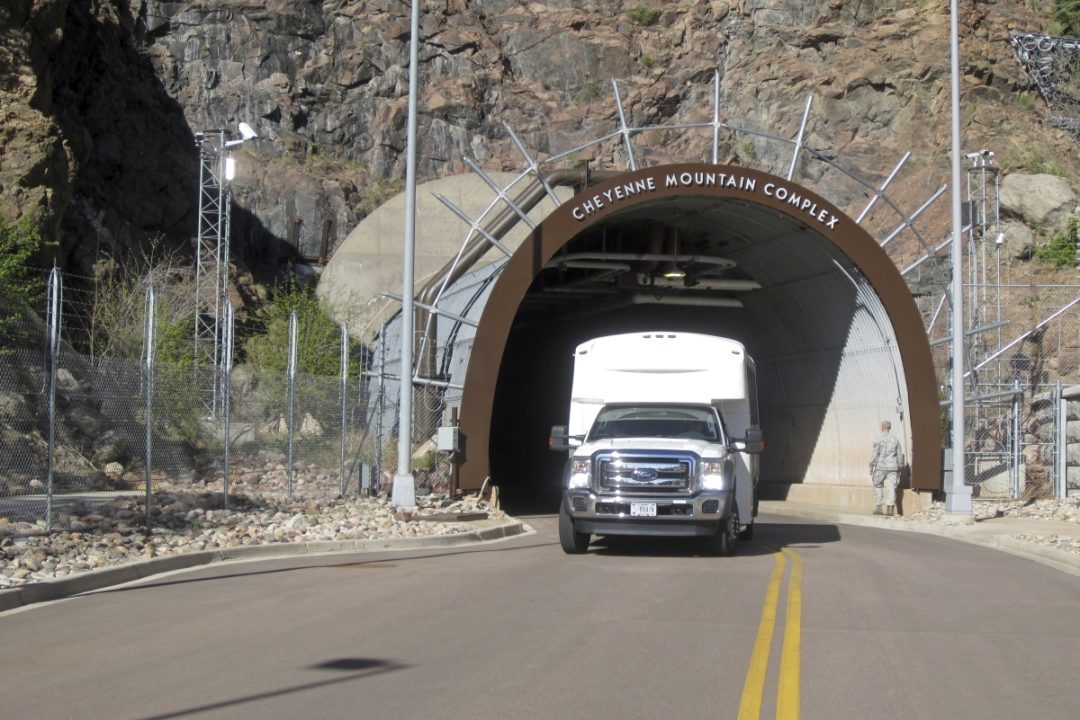
The Pentagon is preparing for a war so destructive that American domestic military bases could lose electricity, water, communications, and essential supplies for months. Under America’s self-proclaimed “peace president,” the solution is FORTRESS America, a nationwide network of self-sufficient military strongholds designed to keep Washington’s war machine running through a national catastrophe.
As Washington’s foreign wars increasingly bring militarization home, the urgent questions arise: What threats justify turning America into a military bastion? Who exactly is being protected, and from whom? And when everyday Americans find themselves outside the fortress walls, what type of order awaits them?
Preparing for the Worst
FORTRESS America would require major military installations across the continental United States to sustain essential operations for at least 90 days without outside support.
According to an investigation published Sunday by Fox News, the Pentagon is preparing for scenarios involving widespread infrastructure failures, disrupted global supply chains, and attacks on American soil.
Defense Secretary Pete Hegseth announced the initiative on September 30 during his State of the Force address at Marine Corps Base Quantico, Virginia.
FORTRESS stands for Federal Operations for Resilience, Troop Resources, Energy, Supply, and Survivability.
Hegseth warned that America’s military had become dangerously dependent on foreign suppliers for rare earths, microchips, and weapons. Another “regrettable” dependency, he said, was civilian infrastructure, particularly the electrical grids serving military bases.
He then outlined the scale of the preparations, offering a stark assessment of what a major war would entail:
We are building long overdue strategic reserves deep enough to fight through disruption. Think munitions. Fuel. Medicine. Blood. Deep enough that if the world’s supply lines break, and in a real war, they are going to break, America keeps fighting anyway.
He also pledged to harden installations against cyberattacks, sabotage, and drones while protecting satellite communications and navigation systems.
Pentagon chief spokesperson Sean Parnell reinforced the warning, telling Fox News:
Power is combat now. Without electricity, you lose communications, water, logistics, assembly lines and just basic military command structures.
The Islands of Survival
At the heart of FORTRESS is a plan to equip military bases with independent power sources, including portable nuclear reactors, large battery systems, and electrical microgrids.
These technologies would allow installations to keep operating during prolonged blackouts without drawing electricity from surrounding communities.
Hegseth pledged:
Every major military installation in America is going to generate its own power. Independent of the civilian grid.
The Pentagon is building on existing projects. The Air Force has already explored nuclear microreactors and advanced microgrids, including at installations in Alaska.
According to an October 20 report by Air & Space Forces Magazine, officials are evaluating installations to identify their energy requirements and suitable technologies.
The program also envisions on-site water treatment and storage, protected communications, and emergency backup systems.
However, much of FORTRESS remains in the planning stages. The Pentagon must determine which technologies to deploy, how quickly installations can adopt them, and how much the transformation will cost. Some projects could take years to complete.
The Pentagon is also planning an entirely new military installation, dubbed the “Next Great American Base.” Announced alongside FORTRESS, the proposed complex would accommodate 15,000 to 25,000 troops across hundreds of thousands of acres, with independent power generation, advanced air defenses, and sophisticated command facilities.
Hegseth described it as a “self-sustaining power projection platform” and invited governors to compete for the project. Its location, cost, and construction timeline remain undetermined.
The intended result is a military infrastructure capable of continuing operations even as civilian communities around it lose essential services.
(Notably, the Pentagon’s concerns about reliance on the civilian power grid come as energy-hungry data centers place growing strain on it, while opposition to their expansion is increasingly framed as “anti-tech extremism.”)
Industry on a War Footing
FORTRESS reaches beyond military installations and into American industry.
The Pentagon wants factories capable of switching from civilian manufacturing to military production during a major conflict.
Under the Civil Reserve Manufacturing Network, officials plan to identify suitable commercial facilities and establish conversion procedures before an emergency.
These preparations include technical specifications, cybersecurity requirements, production capabilities, and contracting arrangements.
The military also wants at least two qualified supply or production pathways for its most critical requirements. One disabled factory or disrupted supplier should not cripple essential operations.
The plan includes strategic reserves of ammunition, fuel, critical minerals, electronics, spare parts, medicine, and blood.
Regular industrial stress tests and mobilization exercises would assess whether manufacturers could sustain production during prolonged crises.
The Pentagon’s concern reflects the enormous demands of modern warfare it is so hooked on, which consumes vast quantities of ammunition, fuel, electronics, and industrial materials. Attacks on infrastructure can cripple military operations thousands of miles from the battlefield.
FORTRESS would therefore tie more of America’s industrial capacity to the requirements of prolonged warfare.
The publicly disclosed plans do not establish compulsory conversion of civilian factories. But if Washington declares that the homeland is under attack, that could change in the blink of an eye. For now, the strategy envisions closer coordination between commercial manufacturers and the Pentagon.
The Strategy
The initiative reflects the administration’s broader shift toward treating the American homeland as a potential theater of military conflict.
The Pentagon’s 2026 National Defense Strategy prioritizes homeland defense, military capabilities across the Western Hemisphere, cybersecurity, and expansion of the domestic defense-industrial base.
FORTRESS advances several of those priorities.
Hegseth insists that the objective is deterrence, not war.
Still, the initiative raises questions about the country’s broader priorities.
While the Pentagon prepares military installations to survive national emergencies, FORTRESS offers no comparable guarantee of uninterrupted electricity, water, or communications for the civilians living around them.
When Foreign Wars Come Home
FORTRESS America is officially about military survival in a catastrophic war. But the broader context in which it is taking shape is deeply troubling.
Constitutionalists have long warned that foreign wars eventually bring militarism home. Those warnings, routinely dismissed or ignored, look increasingly prescient. The disastrous consequences extend beyond military casualties and mounting debt. They include the erosion of civil liberties, the expansion of surveillance, and the normalization of military power in civilian life.
Even the nation’s capital is acquiring the trappings of a fortified seat of power.
Consider President Donald Trump’s ballroom-turned-bunker plus a “drone empire,” or his triumphal arch with military features.
The Founders understood where concentrated military power could lead. They feared standing armies precisely because the machinery assembled to fight foreign enemies could eventually be turned against the people it was supposed to protect.
Even the name FORTRESS carries unsettling symbolism.
A fortress has walls, gates, guards, and weapons. It protects those inside while keeping others out. And when political leaders on both the “Left” and the “Right” portray Americans across the political spectrum as national security threats and the “enemy from within,” while prominent figures implicated in instigating and financing violence and criminal unrest never face prosecution, the potential for those defenses to become instruments of control cannot be underestimated.
As Washington declares that it is preparing for global war while expanding its military and security apparatus at home, one must confront these questions: Is America building a fortress to protect its people, or a government increasingly fortified against them? And if ordinary Americans end up outside those walls, what kind of freedom will remain to them?