

EPA’s Double Standard on Data-center Transparency
For decades, ordinary Americans have been told that even trace emissions from everyday consumer products carry real environmental stakes. Aerosol deodorants and spray paints are regulated under Clean Air Act rules limiting volatile organic compounds (VOCs) — the theory being that volatile organic compounds react with nitrogen oxide in sunlight to form ground-level ozone, or smog. California’s Air Resources Board built an entire regulatory apparatus around antiperspirants and deodorants specifically, and the federal Environmental Protection Agency (EPA) has run parallel national VOC rules since the 1970s, at one point estimating a national consumer-product rule would cut VOC emissions by 90,000 tons a year. The public message has been consistent: If individuals use aerosol underarm deodorant, it will lead to impending planetary collapse.
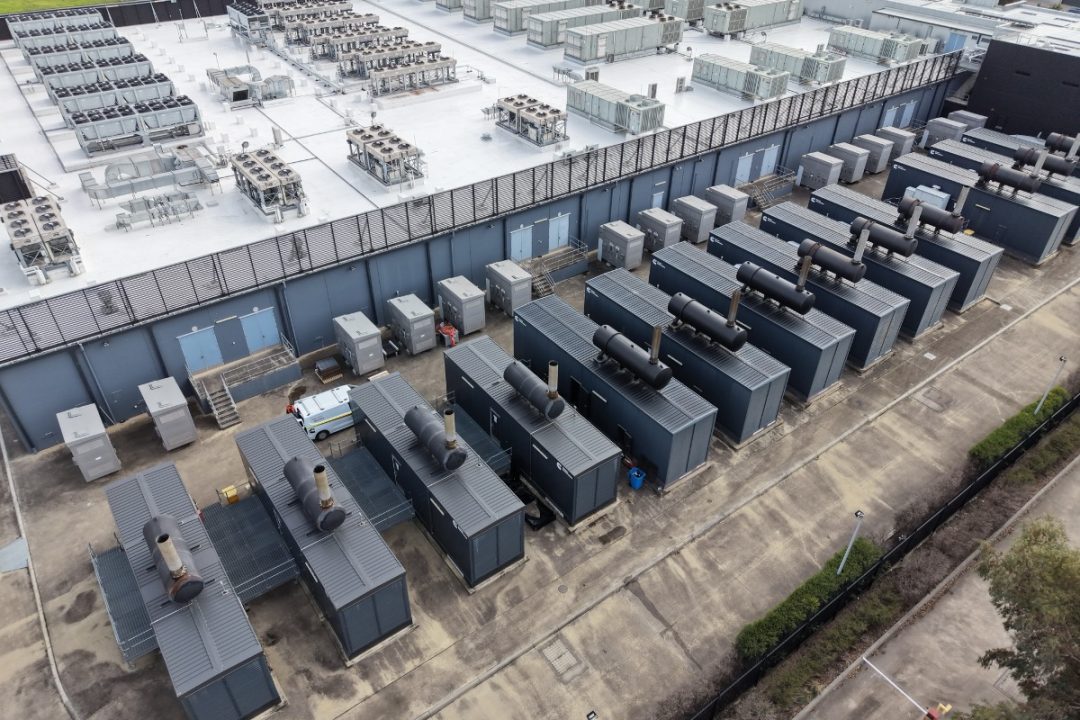
Compare that to how Washington is treating a genuinely massive new source of emissions: data centers.
In July, the EPA proposed eliminating the federal 30-day public-notice and comment requirement for “minor source” Clean Air Act permits — the exact permit category covering the backup diesel generators and gas turbines that data centers rely on for power. That federal floor for public participation has been in place for more than 50 years. Under the proposal, states and local agencies would simply decide for themselves whether communities get to see a permit application or weigh in before its approval.
Permit Surge
This is happening now, at scale. Georgia alone approved 20 minor-source permits tied to data-center generators between January 2025 and August 2026, compared with just 17 in the entire decade before that. According to Phoenix radio station KJZZ, Sandy Bahr of the Sierra Club’s Grand Canyon Chapter indicated that the proposal “clearly favors the data center industry.” A coalition led by the Center for Biological Diversity has formally urged the EPA to preserve the existing transparency requirements, noting the rule change would affect not just data centers but asphalt plants, landfills, and incinerators as well. However, data centers are the driving force behind the current permit surge.
Bold Hypocrisy
The EPA’s stated justification is administrative efficiency, letting states decide what’s “necessary.” But notice the asymmetry. When it comes to a can of deodorant spray in a suburban bathroom, the federal government has spent 50 years insisting that emissions, however trace, deserve strict national standards. When it comes to diesel generators powering the server farms behind the AI boom — a politically favored, trillion-dollar priority — the instinct is to strip away the very mechanism (public notice and comment) that lets ordinary citizens find out emissions are happening at all, let alone object to them.
The public comment period on the EPA’s proposal closed August 21, and the rule is not yet final. But the pattern is the lesson: Transparency and precaution apply rigorously to individual citizens and their household products, but evaporate the moment they might slow down an industry Washington has decided to fast-track.
This article is part of The New American’s weekly online newsletter Insider Report, which is emailed to TNA subscribers each week. Click here to subscribe to The New American to receive the Insider Report and access exclusive content.