As the World’s Choke Points Close, a Landlocked Pipeline Quietly Nears Completion
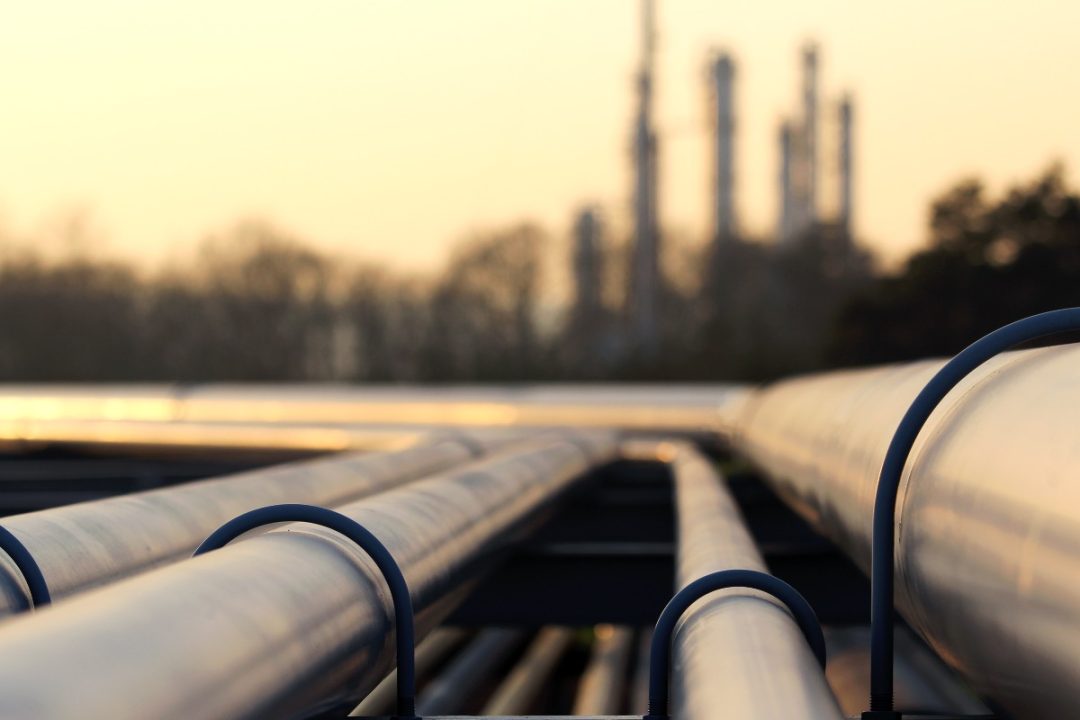
While the world watches the Strait of Hormuz, a different energy corridor has been climbing toward completion with very little American press coverage. The East African Crude Oil Pipeline (EACOP) — a roughly 900-mile heated pipeline carrying Ugandan crude to Tanzania — is nearing completion. A senior Tanzanian official says the first oil should reach a Ugandan pumping station in December, with the crude arriving at the coast by February and the first tanker being loaded in March. It will be one of the largest single infrastructure projects in East African history, and it is happening at the exact moment the world’s two premier oil choke points, Hormuz and the Suez Canal, have both become unreliable.
Strategic Significance
The Strait of Hormuz, through which roughly a fifth of the world’s oil normally moves, has been effectively blockaded since the U.S.-Iran war began this year. Thousands of miles away, the Suez Canal and its Red Sea approaches have never fully recovered from Houthi attacks that began in late 2023. Suez transit volumes remain roughly 60 percent below pre-crisis levels even after a partial ceasefire, and the canal’s revenue has reportedly collapsed from $10.25 billion to less than $4 billion annually.
Layer onto that the wars destabilizing the pipeline’s neighborhood — Sudan’s civil war, now in its third year, and the collapse of Ethiopia’s 2022 Tigray peace deal into renewed fighting this September — and East Africa looks like a region absorbing the shock of two failing global arteries at once. A pipeline that gives landlocked Uganda its own independent route to open water, bypassing both contested straits entirely, takes on a significant, strategic weight.
EACOP Issues
Still unresolved, though, are the human and environmental costs that made EACOP one of the most litigated infrastructure projects in Africa. Human Rights Watch found in 2023 that construction had “devastated” tens of thousands of people along the route, documenting forced displacement, forced labor, food insecurity, and household debt, and farmers told researchers they were pressured to sign compensation agreements written in English, a language many could not read. More than 100,000 people, mostly farmers, have been displaced, according to the #StopEACOP coalition, and more than 30 banks and insurers publicly declined to finance the project.
A Ugandan court in Hoima dismissed compensation claims from 42 affected families. Nevertheless, Ugandan farmers have pursued cases in Paris and London against TotalEnergies and EACOP Ltd. (the latter is incorporated in the U.K.), and the European Parliament passed a resolution in 2022 condemning the project’s human-rights and environmental record.
TotalEnergies holds 62 percent of the project, with Uganda’s and Tanzania’s national oil companies each holding 15 percent and China’s state-owned China National Offshore Oil Corporation holding the remaining eight percent. That ownership structure is worth noting: As Gulf shipping lanes and Red Sea trade both become geopolitical battlegrounds, a French-led, Chinese-invested pipeline is poised to open a new, previously marginal export corridor for East African crude.
Vying for Resources
In other words, other empires are vying to take advantage of the United States’ preoccupation with Iran and Russia in order to swoop in and take a larger market-share of oil. This is a natural consequence of globalization and its Achilles’ heel. In forcing countries to all adopt the same political models and technology, the globalist system is forcing them to all need the same finite resources.
In the book Constructing World Culture by John Boli and George M. Thomas, we read, “The increasing uniformity of societal interests within shared world-cultural goals and prescriptions implies that societies everywhere have increasingly similar goals and rely on increasingly similar resources. Uniformity at this basic level thus means that societies are much more likely to compete and struggle with one another than when they have different goals and rely on different resources.”
This article is part of The New American’s weekly online newsletter Insider Report, which is emailed to TNA subscribers each week. Click here to subscribe to The New American to receive the Insider Report and access exclusive content.