White House Promotes Cheap Gas From Opaque “Freedom Fuel” Network
The White House is now promoting cheap gasoline from a branded station network called Freedom Fuel.
The timing is not subtle. Gas prices jumped after the United States and Israel attacked Iran on February 28. They later eased from their May peak, but remain far above prewar levels.
The network offers regular gas for $3.47 a gallon, a price keyed to Donald Trump’s status as the 47th president. There are currently 25 Freedom Fuel stations, 21 in Pennsylvania and four in New Jersey, according to the network’s otherwise bare-bones website.
The discount is real, at least at the pump. As of Thursday, AAA reported average regular gas prices of roughly $3.99 in Pennsylvania and $3.89 in New Jersey. The national average is $3.846 a gallon.
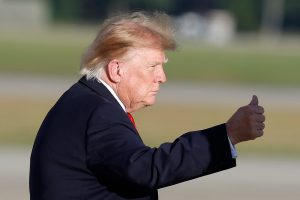
The president himself promoted the network on July 1, framing it as part of the fulfillment of his promise to lower gas prices. He hinted that Freedom Fuel was operated by a “VERY smart Retailer,” but officials have so far provided no details about who owns, finances, or runs it.
Many critics blasted the move as “communist.” But the more precise concern may be different. A private company is receiving high-profile promotion from the White House while its ownership and financing remain unclear. That looks less like a state takeover of private business and more like corporatist politics, where state power and favored private interests intertwine. Either way, it runs against the free-enterprise tradition America has long claimed as part of its foundation.
Freedom Fuel Arrives
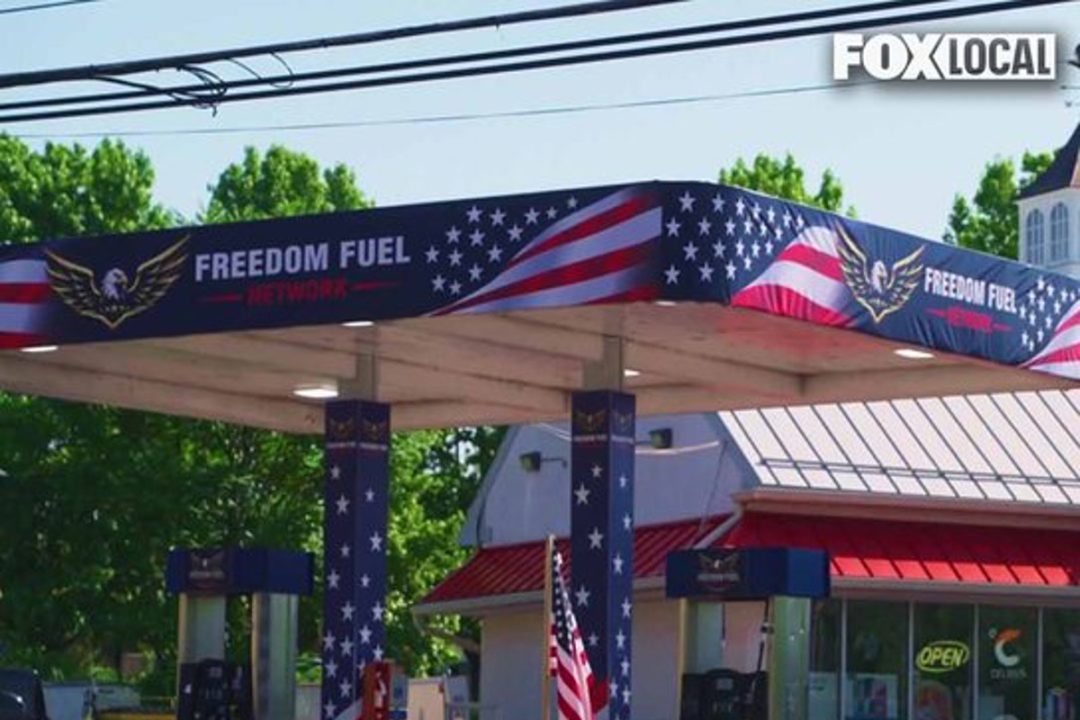
The White House unveiled the first Freedom Fuel station in a Tuesday post on X.
A promotional video accompanying the announcement shows drivers praising the cheaper fuel and thanking Trump at the red, white, and blue gas station decorated with American flags.
An older gentleman wearing a “USA” T-shirt said that he was “very happy about the cheap gas prices,” adding that it was “nice to see some stability” in a “difficult time.” A girl stated that she was “super pumped.”
“When I saw it I thought it was fake news, but I’m glad it’s true. I definitely couldn’t believe my eyes when I just rolled past,” said another man. He added that Freedom Fuel saved him “a lot of money” on a trip to the Jersey Shore.
The clip closes with customers thanking Trump for “helping our country.”
That presentation gave the rollout the look of an official program. It featured a White House announcement, a presidential price point, and customers praising the president. Yet the administration later said the government does not own the stations.
Private Network, Public Promotion
The ownership picture remains murky.
A White House spokesperson told CBS News that Freedom Fuel Network is a private company:
The spokesperson said the Trump administration is not involved with the company and is not subsidizing the gas stations, adding that the stations can offer lower prices by reducing their profit margins.
The report notes that state records show Freedom Fuel Network registered as a Delaware limited liability company on June 23. The company website was registered on June 13. Freedom Fuel applied to trademark its logo on July 1. CBS identified the trademark attorney as Anna Vishev of Staten Island, New York. She declined to comment.
The Philadelphia Inquirer reported that the company behind Freedom Fuel did not respond to a request for comment. The White House confirmed to the outlet that the network website listed 25 locations, but did not confirm that all 25 had opened. It also did not provide more information about the company.
That leaves basic public questions unanswered. Why is the White House promoting a private fuel network while saying little about who owns it, or how long the pricing can last?
And the pricing already looks fragile. At one Freedom Fuel station in Marlton, New Jersey, Investopedia reported, the posted price rose from $3.47 to $3.57 after a driver filled up. A station attendant described the first price as promotional. Even at $3.57, though, the station remained below local averages.
Gas Prices
The political appeal is easy to understand. Gas prices hit families hard, with affordability remaining a key voter issue. Trump may casually dismiss affordability concerns, but his advisors and the Republican establishment likely cannot.
As mentioned in the opening, the latest AAA figure listed the national average for regular gasoline at $3.846 as of today. That is below the May spike, when gas retailed for about $4.479 a gallon nationwide. But it is still much higher than before the Iran conflict.
U.S. Energy Information Administration (EIA) data show the national average for regular gasoline was $2.908 in February 2026. The week before the February 28 strikes, it stood at $2.937.
The comparison with 2025 also undercuts any simple victory message. EIA data show regular gasoline averaged $3.125 last July. It averaged $3.076 in January 2025, the month Trump returned to office.
So, today’s AAA average is about 94 cents above the February 2026 monthly average. It is about 72 cents above the July 2025 monthly average. Finally, it is about 77 cents above the January 2025 monthly average.
That price gap explains why Freedom Fuel matters beyond branding. It gives drivers some real savings at the pump, while turning cheaper gas into a public example Trump wants other retailers to replicate.
Questions Beyond the Pump
Trump framed Freedom Fuel as a model. His post said the unnamed retailer was “taking the lead” and that others “should follow.” He also said the retailer was doing it “because they love the U.S.A.”
That raises obvious questions. Are other fuel retailers now expected to cut prices out of sheer patriotism? If they do not follow, will they face pressure from the White House? If they do follow, will they receive praise, access, regulatory favor, or future incentives?
The White House says Freedom Fuel received no subsidy and simply cut its margins. But once the president singles out one private retailer as patriotic and urges competitors to copy it, the issue moves beyond gas prices. It becomes a question of pressure, favoritism, and political reward.
The questions also matter because Trump’s own financial disclosures have already raised broader conflict concerns. In 2025, the president went on an unprecedented stock-market spree, trading across virtually every sector of the economy. That included purchases of stocks in energy, an industry directly exposed to his own decisions on war, fuel prices, and regulation.
Surely, that does not prove Freedom Fuel is designed to help any Trump holding. But it makes transparency essential. When a president promotes a private fuel network, praises an unnamed retailer, urges competitors to follow suit, and personally holds assets in industries shaped by war, oil prices, and government policy, the public deserves more than patriotic branding. It deserves to know who owns the stations, who finances the discount, and what, if anything, the White House expects in return.