Libya Moves Off the U.S. Dollar
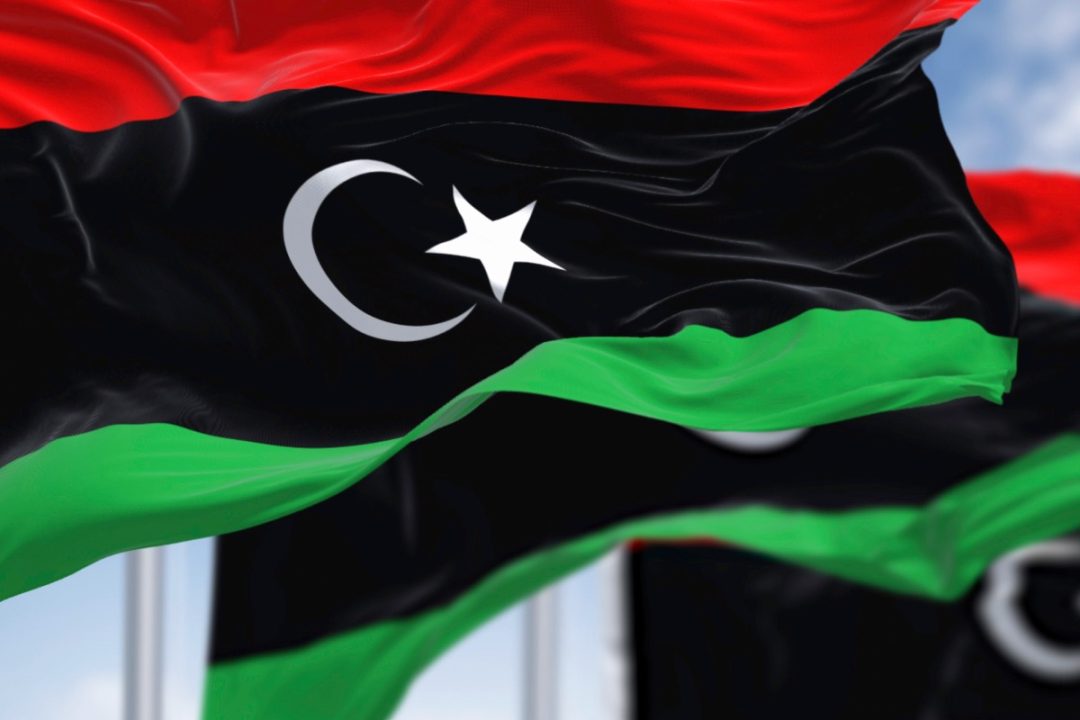
On July 19, the governor of the Central Bank of Libya, Naji Mohammed Issa, met his Chinese counterpart Pan Gongsheng in Beijing and signed an agreement connecting Libyan commercial banks to China’s Cross-Border Interbank Payment System (CIPS). The agreement enables direct yuan-denominated transfers between Libya and China, eliminates the need to route transactions through intermediary dollar-based institutions, allows letters of credit to be opened directly through Chinese banks, and includes Libyan entry into China’s bond market. A bilateral banking forum is scheduled for early 2027, alongside the China-Africa Forum.
Libya is not a major economy. Its agreement with Beijing will not by itself shake the dollar’s foundations. But Libya is not the point — the pattern is.
Financial Choke Points
To understand what CIPS represents, reference Edward Fishman’s Chokepoints: American Power in the Age of Economic Warfare — the most important recent account of how the United States weaponized the international financial system after September 11, 2001.
Fishman traces how the dollar’s dominance over global trade created a structural choke point: Virtually every significant international financial transaction, regardless of which countries were involved, passed through American-controlled infrastructure, primarily the Society for Worldwide Interbank Financial Telecommunication (SWIFT) messaging system and corresponding American banks. This gave Washington the ability to sanction countries, companies, or individuals by simply cutting them off from that infrastructure, effectively barring them from the global economy without firing a shot.
Post-9/11, successive administrations, both Republican and Democratic, transformed this structural advantage into an aggressive instrument of foreign policy. Iran, Russia, Venezuela, North Korea, and dozens of other countries found themselves cut off from SWIFT, their assets frozen, and their central banks sanctioned. The message was that access to the global financial system is a privilege Washington can revoke.
Fishman’s argument is that this weapon is being dulled by its own overuse. Every country that has been sanctioned, and every country that watches sanctions applied to others, has acquired a powerful incentive to build alternative infrastructure that routes around American choke points. CIPS, launched by China in 2015, is the most significant institutional response to that incentive.
The Dollar’s Rise to Dominance
The dollar’s dominance following WWII rested on a specific historical condition: the United States as the unchallenged architect of the international order formalized at Bretton Woods in 1944. That order survived the Cold War because the Soviet alternative never offered a genuinely functional financial system. When the Soviet Union collapsed in 1991, the unipolar moment arrived — a world in which American financial infrastructure had no serious competitor.
That moment lasted approximately three decades. What ended it was not a single rival power, but the accumulated resentment of the Global South — countries that had experienced American financial power not as a liberating force but as a coercive one. Russia’s expulsion from SWIFT following the 2022 Ukraine invasion was the watershed moment. For the first time, a major economy with nuclear weapons and significant commodity exports was cut off from the dollar system entirely. The message heard in Beijing, Riyadh, New Delhi, and Ankara was not “Russia was punished for bad behavior,” but “any of us could be next.”
The BRICS expansion — adding the United Arab Emirates, Iran, Egypt, and Ethiopia to the original five members (Brazil, Russia, India, China, and South Africa) — is the political expression of this realization. CIPS is its financial expression. The two are connected: a political bloc committed to multipolarity needs financial infrastructure that can survive American pressure. Libya joining CIPS is one more “brick” in the BRICS wall.
Pursuing Financial Sovereignty
Libya’s case is particularly ironic. Its current government exists in significant part because of the 2011 NATO intervention, a war conducted without a congressional declaration, justified by humanitarian rhetoric, and executed through air power that destroyed the Gadhafi government. One of then-leader Moammar Gadhafi’s stated ambitions, documented in diplomatic cables released by WikiLeaks, was the creation of a gold-backed African currency to replace the dollar for oil transactions, an ambition that made him a target for overthrow. That is exactly the type of financial sovereignty Libya is now quietly pursuing through legitimate banking agreements with Beijing.
A country whose government was installed in the aftermath of an unauthorized American-backed intervention is now connecting its banking system to China’s alternative to SWIFT.
Economic expert Abu Bakr al-Tour, commenting on the Libya-China agreement, noted that he does not expect significant American pressure on this step “given the limited volume of trade between Libya and China.” He is almost certainly right in the short term, as Washington picks its battles and Libya-China bilateral trade is not worth a diplomatic confrontation.
Death by a Thousand Cuts?
But this is precisely how dollar hegemony erodes — not through a single dramatic confrontation, but through a thousand small agreements, each individually beneath the threshold of American response, collectively representing a structural shift in how the world moves money. Saudi Arabia accepting yuan for oil sales; India settling Russian energy purchases in rupees; the UAE deepening CIPS connections; Brazil and China trading directly in their own currencies; and now Libya.
The dollar will not fall in a day. But as Fishman documents, the choke points that gave Washington its extraordinary leverage are being systematically routed around, built over, tunneled under, and bypassed by a Global South that has watched American financial power deployed as a weapon often enough to invest seriously in alternatives.
This article is part of The New American’s weekly online newsletter Insider Report, which is emailed to TNA subscribers each week. Click here to subscribe to The New American to receive the Insider Report and access exclusive content.