The First Man on His Feet
On Richard Henry Lee and the Seventh of June, 1776
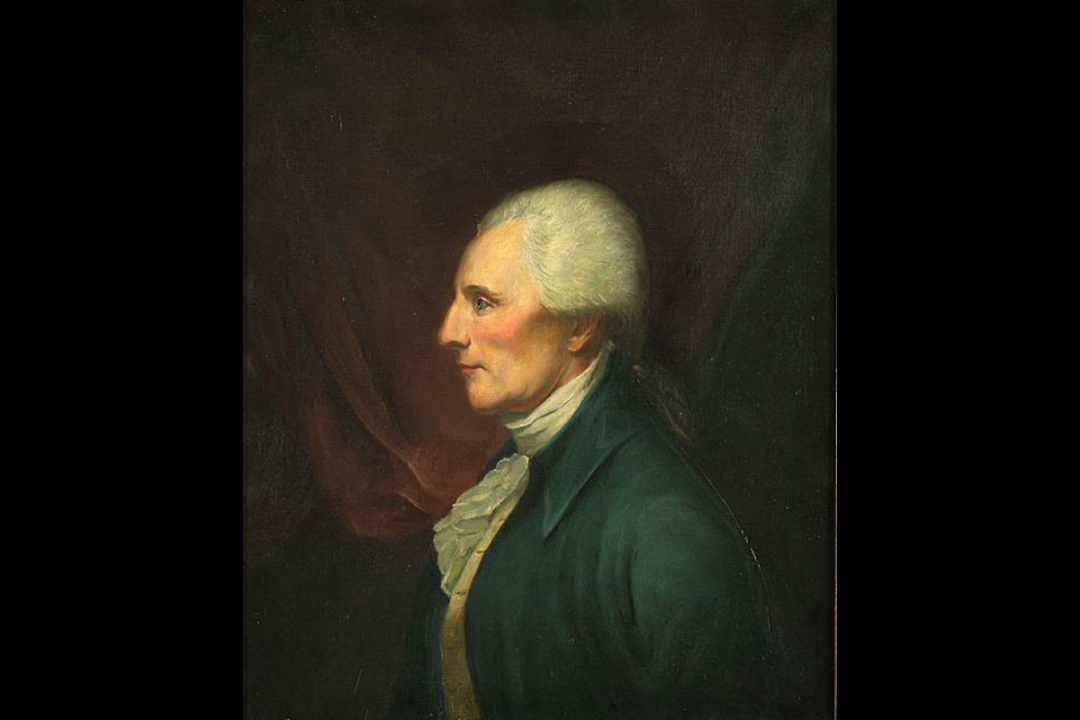
Two hundred fifty years ago, a man missing four fingers from his left hand rose in a sweltering room in Philadelphia and spoke words that, had the Revolutionary War gone the other way, would have fitted him for a noose.
It is the seventh of June, 1776. The Pennsylvania State House. The windows are shut tight against listening ears, the summer heat be damned. Richard Henry Lee of Virginia gets to his feet.
He knows how to command a room. They called him the American Cicero, and he had earned the title, not merely been flattered with it. Years before, a fowling piece had burst in his grip and torn the fingers from his left hand, and ever after he kept the ruin wrapped in black silk. A smaller man would have hidden it. Lee made it an instrument. When he spoke, he would lift that shrouded hand and let the dark silk fall, and not an eye in the chamber failed to follow it down.
Today he lifts it. And he reads three sentences.
The first one remade the world:
Resolved, That these United Colonies are, and of right ought to be, free and independent States, that they are absolved from all allegiance to the British Crown, and that all political connection between them and the State of Great Britain is, and ought to be, totally dissolved.
That is not a question laid before a committee. That is a motion that thirteen colonies cease, that very hour, to be British.
John Adams seconded it before Lee had fully regained his chair.
And then nothing happened.
This is the part we have quietly agreed to forget. No roar, no signing, no triumphant leap to the feet. Congress looked at what Lee had set upon the table, and Congress flinched. It voted to wait. Several delegations had no authority from home to take so enormous a step. Other men wanted foreign alliances secured and a plan of confederation settled before they leapt. And some, let us be honest about our forebears, were simply afraid. So they recessed, and the delegates rode home to put to their own people the unaskable question: Are we prepared to commit treason together?
Because treason is precisely what it was. Call it by its rightful name.
Every man who would one day say “aye” understood the arithmetic to the decimal. There was no legal independence, no nation, no army that had yet won anything that mattered. There was a king with the largest military on earth and the longest memory in Christendom. Lose the war, and the document under debate became a signed confession. The sentence for that confession was a rope. They knew it the way a man knows the weight of his own name. They debated anyway.
On the eleventh of June, Congress named a committee to draft a statement that would explain the decision, should these men ever find the nerve to make it: Thomas Jefferson, John Adams, Benjamin Franklin, Roger Sherman, and Robert R. Livingston. They handed the pen to the quiet Virginian, Thomas Jefferson. And here is the thing we have inverted entirely. That famous parchment we frame on our walls and read aloud each Fourth of July was, in the strict order of events, the footnote. It exists to justify Lee’s motion. The motion came first. The deed preceded the explanation, as the deed always does.
Now mark the detail that ought to be carved into stone somewhere public.
When the decisive vote came, on the second of July, 1776, Richard Henry Lee was not in the room.
His wife had taken ill. Virginia was framing herself a new government and wanted her ablest son at home to help build it. So the man who rose and proposed American independence swung up onto a horse and rode away before the question he had asked was ever answered. Adams stood in his place and carried the argument across the line.
He proposed it. He did not cast a vote for it. And he never seemed to spend a moment fretting over who would be remembered for it.
The resolution passed on the second of July. Adams was so certain that date would echo down the centuries that he wrote home predicting Americans would keep it forever with bonfires, parades, and illuminations. He missed by two days. We kept the fourth, the day the explanation was approved, and we let the seventh, the day a man first dared to say the thing out loud, slip silently off the calendar.
But the courage was never in the parchment. It never is.
The courage was in being first. In standing up inside a closed room, raising a maimed hand, and reading three sentences that made you a traitor the instant they left your mouth, with your name attached, in front of witnesses, before a single other Colony had pledged to stand beside you. And then trusting that strangers would summon the same nerve and finish what you had begun, even if you were not there to see it done.
That is the republican character the Founders meant for us to inherit. Not the framed document. The willingness to be the first man on his feet.