Pope Leo XIV Warns Against AI Dominance in First Major Encyclical
As the globalist overlords bet heavily on artificial intelligence, a force that makes a planetary prison technically possible, Pope Leo XIV has issued a warning from a very different moral universe.
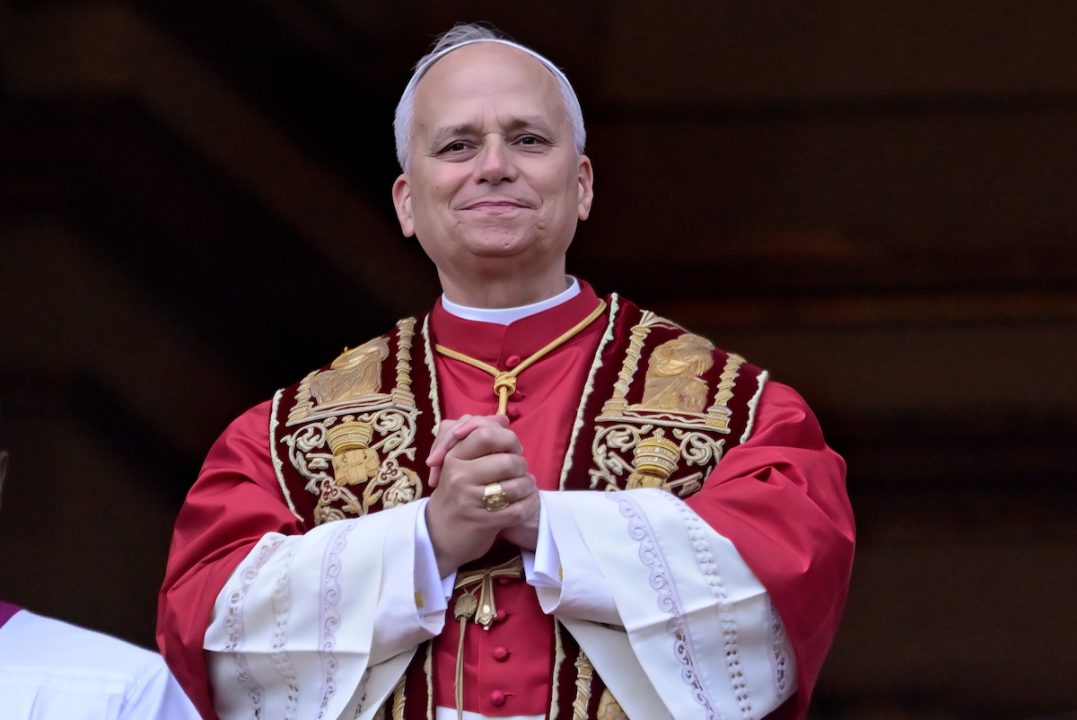
On Monday, the pope presented Magnifica Humanitas, his first major encyclical, devoted to “safeguarding the human person in the time of artificial intelligence.”
The pope’s warning is not merely political. It is theological. It is also deeply human. His plea is animated by love for the human person, which Christian teaching sees as a reflection of God’s love. Leo does not reject technology. He rejects its conversion into an instrument of domination. He does not fear intelligence, but he fears power without wisdom.
His central question is simple: What type of world are we building with AI?
Earlier in May, Leo had approved a new Interdicasterial Commission on Artificial Intelligence, bringing together seven Vatican bodies. The move followed his warning that AI represents “another industrial revolution” and poses “new challenges for the [defense] of human dignity, justice and [labor].”
Babel or Jerusalem
Leo frames the AI age through two biblical images: Babel and Jerusalem.
Babel represents power without God. It is the dream of unity without communion and a project of control. It speaks one language, moves in one direction, builds upward with confidence. But it forgets the human person and sacrifices dignity for scale.
Leo warns against what he calls the “Babel syndrome,” the “idolatry of profit,” a “uniformity that neutralizes differences,” and the pretense that “a single language — even a digital one — can translate everything, including the mystery of the person, into data and performance.”
Jerusalem offers another path.
In the Book of Nehemiah, the returned exiles found the city broken, its walls ruined and its gates burned. Nehemiah did not impose a plan from above. He prayed, surveyed the damage, gathered the people, listened to their concerns, and gave each family a section of the wall to rebuild.
The contrast matters. Babel is imposed. Jerusalem is rebuilt. Babel concentrates power. Jerusalem distributes responsibility. Babel reduces man to a function. Jerusalem restores man to communion.
For Leo, the question is not whether technology will advance. It already has. The question is whether mankind will build with God at the center and the human person at the heart, or whether it will construct another tower destined for ruin.
AI and Dominance
The pope describes AI as part of a broader “technocratic paradigm,” one that lets “the logic of efficiency, control and profit” shape personal, social, and economic life. When technology becomes the measure of all things, he warns, it begins to decide “what matters and what can be discarded,” reducing creation to an object and human beings to “mere cogs in a system driven toward ever greater efficiency.”
That danger has grown with artificial intelligence. AI, robotics, biotechnology, nanotechnology, and cognitive science can serve human development. But they can also accelerate the technocratic order.
The pope warns that AI concentrates power in ways older political systems cannot easily govern. He writes,
In many cases within the digital context, control over platforms, infrastructure, data and computing power does not rest with States, but with major economic and technological actors. These entities effectively set the conditions for access, determine the rules of visibility and shape the very possibilities for participation.
And when power gathers in so few hands, Leo says, it “tends to become opaque and evade public oversight.” The result is not liberation. It is “new dependencies, exclusions, manipulations and inequalities.”
That is why AI must be judged by the principles of Church’s social doctrine:
[These principles] demand that we assess whether the power of digital infrastructures and algorithms truly fosters participation and responsibility, protects the vulnerable, ensures fair access to opportunities and remains directed toward the good of all.
Machines Are Not Neutral
Leo also attacks the central myth of tech culture — the worship of AI because it surpasses human intelligence while remaining “objective.”
But Leo draws a sharp distinction. Artificial intelligence is not human intelligence. It can imitate language and simulate sympathy. It can answer quickly by processing oceans of data. But it does not know. More importantly, it does not have moral conscience. Yet, the elites are increasingly outsource the decision-making to these systems. According to the encyclical,
Important and sensitive decisions — concerning employment, credit, access to public services or even a person’s reputation — risk being fully delegated to automated systems that do not know “compassion, mercy, forgiveness, and above all, the hope that people are able to change,” and can therefore give rise to new forms of exclusion. There are clearly harmful uses, such as the manipulation of information or violations of privacy. Yet there is also a subtler danger, for when AI systems present themselves as neutral and objective, they end up reflecting and reinforcing the stereotypes or ideological bias of their designers and developers.
One part of Leo’s answer is simple. Humanity must “remain profoundly human.” No machine can replace “the grandeur of humanity bestowed upon us and revealed in its fullness in Christ.” True progress comes from “a heart open to others,” “an intelligence willing to listen,” and “a will that seeks what unites rather than what separates.”
Truth, Work, Freedom
Leo then turns to the daily consequences.
AI threatens truth. It blurs the line between fact and fiction. It amplifies disinformation, shapes the public imagination, and trains people to act as if the powerful can define truth.
“Truth is a common good,” Leo writes. It is “not the property of those with power or influence.” He urges societies to defend serious journalism, verify facts, make content-selection systems transparent, protect personal data, and teach people when not to use AI.
AI also threatens work. Leo does not romanticize drudgery. He welcomes technology that relieves people from dangerous and repetitive labor. But he warns that automation must not sacrifice workers on the altar of profit.
“Every introduction of automation and AI should be accompanied by verifiable measures to protect the employment, retraining and participation of workers,” he writes. Without those protections, “innovation tends to become an accelerator of injustice.”
Finally, AI threatens freedom. Not only through censorship or surveillance, though those dangers are real. Leo warns that opaque algorithms do more than shape access. They dehumanize, turning people into profiles, risk categories, data trails, or functions inside a machine civilization.
That is why Leo returns again and again to dignity:
The quality of a civilization is measured not by the power of its means, but by the care it is able to offer, by its ability to recognize the other as a face not merely as a function.
Disarm AI
Leo’s most striking phrase is “to disarm” AI, making it “human-friendly” rather than dominant.
He is no Luddite. He does not call for rejecting technology. On the contrary, he notes,
Christian humanism does not reject science or technology, but embraces them with gratitude and realism, and grounds them within a higher vocation.
But gratitude is not surrender. Leo insists that AI must be stripped of the mentality of domination. As he puts it, AI is already “an environment in which we are immersed,” as well as “a force with which we must engage.” For that reason, “merely regulating it is insufficient; it must be disarmed, welcoming and accessible.”
Per the encyclical,
Disarming AI means freeing it from the mentality of “armed” competition, which today is not limited simply to the military context, but is also an economic and cognitive phenomenon.
In practical terms, that means resisting the race for bigger models, larger datasets, greater control, and geopolitical or commercial dominance.
Then Leo adds even more clarity:
To disarm means discrediting the assumption that technical power automatically confers the right to govern.
It also means “preventing it from dominating humanity,” freeing technology “from monopolistic control,” and restoring it “to the plurality of human cultures and ways of life.”
That is why Leo is not satisfied with corporate ethics statements. He warns that “a more moral AI is not enough if that morality is determined by a few.” Instead, he says,
What is needed is a more active political involvement that is capable of slowing things down when everything is accelerating, and of protecting the opportunities for communities still to be able to participate and ask questions.
He also speaks directly to developers. “Every design choice reflects a vision of humanity,” he writes. Those who build AI carry “a particular ethical and spiritual responsibility.”
Finally, the pontiff returns the question to each person:
We all have our own areas for action, and it is precisely there — and nowhere else — that we must choose whether to fuel the mentality of force (even if only through indifference, cynicism, lies or hatred), or to preserve the mindset of peace (with truth, moderation, closeness and care).
That is the heart of the document.
The AI age asks man to become more efficient. Leo asks him to become more human. The builders promise optimization. Leo speaks of love and dignity. The technocrats dream of control. Leo calls for communion.
The choice is old. It is also new: Babel or Jerusalem. Power or person. Machine logic or the human heart.