

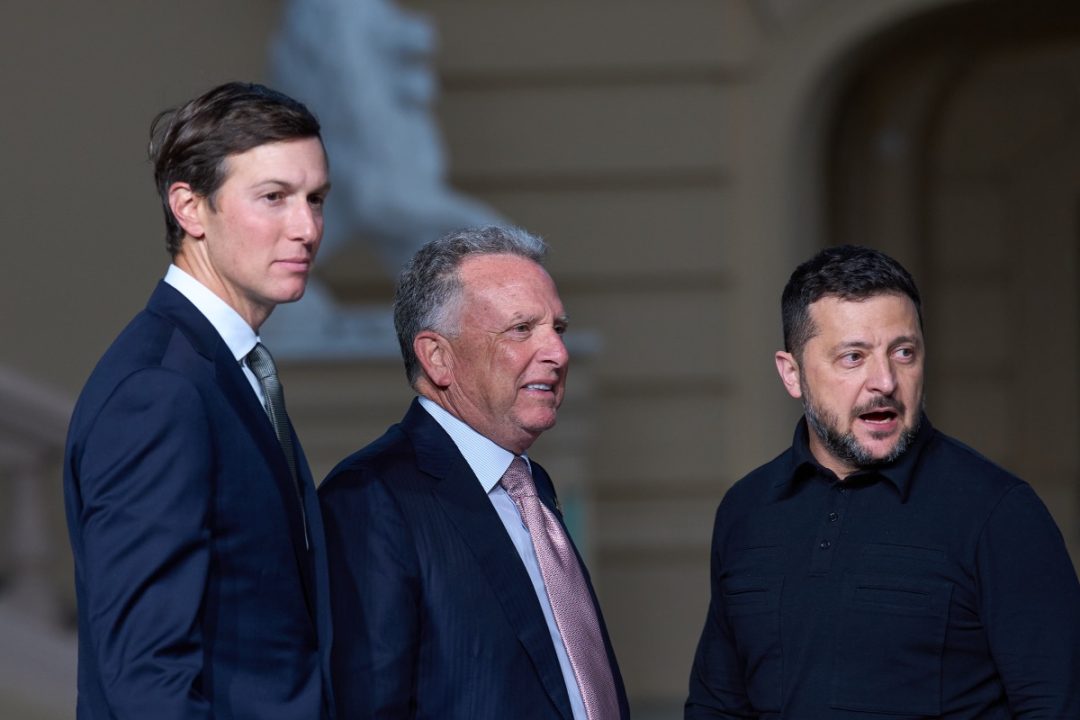
Envoys Shuttle Between Moscow and Kyiv As War Enters a New Phase
Though neither of them has been officially approved by the U.S. Senate, as the Constitution requires, Steve Witkoff and presidential son-in-law Jared Kushner spent the Labor Day weekend acting as pseudo-diplomats, meeting Russian President Vladimir Putin in the Kremlin for more than three hours on Saturday, September 5, before traveling overland to Kyiv to see Ukrainian President Volodymyr Zelensky the next day. It was their first joint Moscow visit since January, and it came after nearly eight months in which the administration’s Ukraine diplomacy had stalled while U.S. attention was consumed by the war with Iran.
Both sides took steps to make the trip possible. The Kremlin ordered a 72-hour halt to strikes on Kyiv, and Zelensky reciprocated by pausing Ukrainian strikes on Moscow, though neither side announced a broader ceasefire and the pause did not extend to the rest of the front.
Kremlin aide Yuri Ushakov called the Putin meeting “substantive, constructive, [and] exceptionally candid,” saying Putin “confirmed his intention to continue working jointly with the Americans to seek political and diplomatic solutions.” Self-styled “special envoys” Witkoff and Kushner, for their part, described the follow-up talks in Kyiv as “substantive,” with Witkoff saying he was “very encouraged.” Notably, Kremlin spokesman Dmitry Peskov had downplayed expectations beforehand, saying there was “no talk of new ideas” — a reminder that goodwill language has not yet translated into a signed deal.
Both Countries Claim Willingness to Negotiate
On the other side of the balance sheet, however, Putin has repeatedly signaled openness to ending the war through negotiation rather than battlefield escalation. He reiterated that stance to Witkoff and Kushner, though Moscow continues to insist that any settlement include Ukraine ceding four claimed regions and addressing what it calls the conflict’s “root causes.”
Zelensky’s posture has shifted markedly: Beyond the weekend’s strike pause, the famously obdurate head of state has floated a full ceasefire and a face-to-face meeting with Putin. In addition, he told reporters in August that Kyiv sent Washington new proposals to end the war, and has helped shape a U.S.-brokered framework envisioning a ceasefire, mutual troop withdrawal, and a buffer “free economic zone.” “I am very serious, and it is important for me to end the war,” Zelensky said.
Both leaders have shown genuine openness to stopping the fighting, but “open to” is not the same as “agreed to,” and no comprehensive ceasefire is yet in place. The prospect of the end of hostilities may be as authentic as the diplomatic credentials of Witkoff and Kushner.
Ukraine Still Hit Hard
Kyiv suffered its eighth consecutive night of Russian drone strikes just before the envoys’ arrival, with attacks hitting Ukraine’s Security Service headquarters near St. Sophia’s Cathedral and a Coca-Cola bottling plant, part of a barrage that killed or wounded dozens of Ukrainians in early September alone.
Ukraine also faces a worsening shortage of U.S.-made interceptor missiles as winter approaches, so Ukraine and Washington’s sudden willingness to broker an armistice may have less to do with a desire for peace than with the dwindling stock of missiles that America can offer Ukraine as the United States continues its simultaneous conflict with Iran.
This article is part of The New American’s weekly online newsletter Insider Report, which is emailed to TNA subscribers each week. Click here to subscribe to The New American to receive the Insider Report and access exclusive content.