
Fuel Skyrockets As Wars, Tight Refineries, and Record Diesel Profits Collide
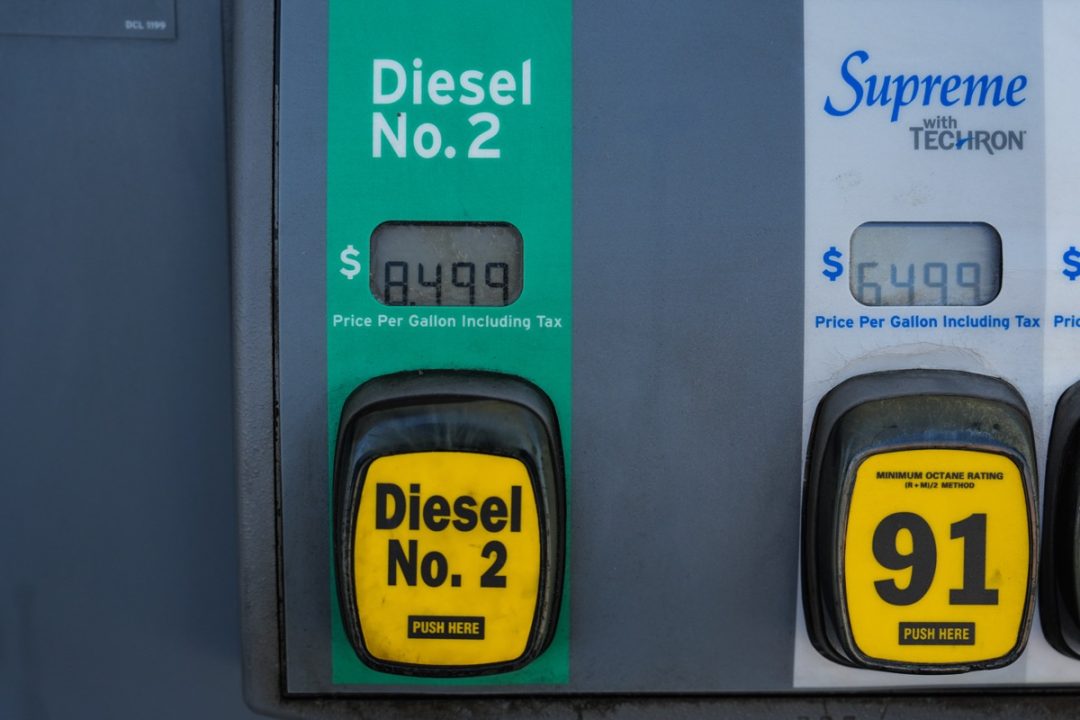
Rising fuel prices are stressing out American motorists, who will lose more sleep once those increases affect groceries. The fuel crisis is also creating intense pressure on farmers. Reports say some farmers are on the verge of closing their operations because diesel costs are wiping out profits. In other places around the world, people have responded with violence. In certain Middle Eastern, Latin American, and European countries, riots have erupted over skyrocketing energy costs.
Recent Surge in Prices
The price of fuel began surging again last week after Iraqi-based militants struck a Saudi pipeline and put it out of commission. Around the same time, Iranian-backed Houthis seized a vital energy corridor in the Red Sea that was used as an alternative to the Strait of Hormuz.
It appears the Iranians, via their network of regional proxies, intend to choke off points that allow oil and other goods to flow from the Middle East to the rest of the world, presumably with the ultimate goal of making President Donald Trump cry uncle. It’s probably no accident all this is happening within weeks of the midterm elections.
Trump told reporters on Wednesday that Iran wants to make a deal, a claim he’s made multiple times in the past. Perhaps it’s true. But among the very few things the Iranian economy has going for it is that it has little left to lose. The people there are already dealing with gas lines and food scarcities. So perhaps it’s Trump who’s more eager to make a deal. He is, undoubtedly, under immense pressure to wrap up this war now that diesel prices are breaking records, with and gasoline prices closely trailing.
The surge in fuel costs has made the already unpopular war against Iran even less popular. Americans have hated the war from the beginning, with only a 52-percent approval rating in March. Now, only 34 percent of people think it was the right decision, according to Rasmussen.
Multiple Causes
While the turmoil in the Middle East has gotten most of the blame for rising fuel costs, deservedly so, there’s more to it than that. The Ukraine war hasn’t helped. Russian refinery runs recently fell to multi-decade lows, 30 percent below a year earlier. That’s why Trump recently told the Ukrainians to stop hitting Russian refineries.
Others are pointing the finger at American oil companies. Tennessee Republican Representative Tim Burchett blames high diesel costs on price gouging by oil companies that are “ripping us off”:
They … profit around $15 a barrel or 35 cents per gallon, usually. That’s generally when times are good and things are going by really well. Now they’re making $117 per barrel, or 278 cents per gallon. Folks, that’s nearly an 800-percent increase in what’s going on, … and they’re claiming this is a commodity. Folks, they are ripping us off and we need to do something about it. This is ridiculous, and hopefully this legislation that I’m proposing will do just that.
This isn’t the first time someone in D.C. has excoriated oil companies. In early August, Trump said Chevron and ExxonMobil were “making too much money.” He added that one company “made 12 times what they made the year before.”
The Wall Street Journal reported last month that oil companies have increased profits this year several times over. According to the Journal:
Marathon, Valero and Phillips 66 all reported their highest second-quarter earnings in four years. Shares of Marathon and Valero are up about 85 percent so far this year. Phillips 66 stock is up nearly 60 percent. Marathon earned $5.1 billion, quadrupling its profit from the same period last year. Valero booked net income of $3.7 billion, up more than fivefold. Phillips 66 collected $3.8 billion, more than four times the profit it made during the same period last year. Exxon, which Trump criticized for posting a $14.5 billion profit last week, reported that $5.5 billion of that came from refining operations, quadrupling what it made last year.
What is happening is that the cost of diesel has spiked as refineries run at capacity to keep up with demand they can barely meet. Energy consultant Stillwater Associates explains it this way;
In a normal market, the flat price of crude plus the marginal cost to produce products through a refinery sets the crack (profit margin). That’s not what’s happening right now. Instead, refineries are running all out (>97% utilization!) and can’t keep up with demand. Instead, they’re drawing down inventory to place product, especially diesel. Instead of marginal refinery capacity setting the price, inventory drawdown and the marginal customer’s willingness to go without product are setting the price.
In other words, because there is no extra unused refining capacity to set the price, the cost is established by two other factors instead: How fast the tanks are being drained and how high the price at the pump will rise before motorists stop buying diesel.
Oil Companies Deny Blame
The oil companies, however, blame supply and demand. “I’ve never seen the available capacity relative to demand as low as it is today,” Darren Woods, chief executive of Exxon, told the Journal last month. “It’s going to take a while for the industry to kind of climb its way out of that hole.”
And there appears to be some truth to that. The world is running short about five million barrels a day of refining capacity. In the U.S., 11 refineries have closed down since 2020, four of them in California. But the one with the largest capacity among the 11 was in Philadelphia. When we zoom out, the number of shuttered refineries since 2000 is more than double (27) the number of closings since 2020. Oil refineries have been steadily closing in the U.S. since at least 1982, when there were 254. Today there are 128.
Regarding the 11 refineries we’ve lost since 2020, the remaining facilities have picked up most of the slack. According to various sources, collective refining capacity is between three and five percent lower than it was in 2019. At least one refinery, ExxonMobil’s facility in Beaumont, Texas, has expanded its operation.
Burchett’s Legislation
On Thursday, Burchett introduced two pieces of legislation, one that bans diesel fuel exports until January 2027, the other a ban on exports once the average national price hits $5.00 per gallon. Senate Majority Leader John Thune (R-S.D.) said earlier this week that he was open to the idea. “I do think if we have the supply in this country and we’re exporting it right now, that might be one way of getting at it,” said Thune. “If that would take pressure off of prices, you know, I’m open to exploring it.”
But not everyone thinks halting diesel exports is a good idea. Tracy Shuchart, senior economist at the commodities trading platform NinjaTrader, is among them. She believes a diesel export ban would have the opposite of its intended effect, saying:
First, the United States is not short of diesel, it is short of cheap diesel, and the price is set by the global barrel. Gulf Coast refiners export a record volume of distillate because Europe and Latin America lost roughly 30% of Russian refining capacity to Ukrainian strikes and then lost the rest to Moscow’s July export ban, so the marginal buyer of American diesel sits in Rotterdam and Santos, not Pennsylvania. Pulling US barrels off that market does not lower the global price, it raises it, and the US retail pump still prices off the global market.
Another reason it won’t work, according to Shuchart, is because banning exports traps diesel in the Gulf since it can’t cheaply move north. That, in turn, tanks Gulf refining profits. Refiners then make less fuel, so the shortage gets worse, not better.
The Middle East Angle
As for the events that have pushed today’s energy crisis into high gear, an Iraqi-based militant group hit Saudi Arabia’s East-West Pipeline with drones and shut it down last week. The pipeline was moving between four and five million barrels of oil a day, two million of those used domestically. On Tuesday, U.S. Energy Secretary Chris Wright said the pipeline would be pumping oil again in days. It’ll more likely be weeks before it’s fully functional again.
The East-West Pipeline was a contingency plan for the disruption in the Strait of Hormuz, which is allowing barely a trickle of what was flowing through before the war.
On top of all that, the Iranian-backed Houthis seized the Bab el-Mandeb Strait in the Red Sea and are blocking Saudi shipments from flowing through. Saudi Crown Prince Mohammed bin Salman asked Trump for military help. But Trump declined, bolstering speculation that reports of depleting U.S. munitions are true.
Could This Be a Wake-up Call?
So it turns out there are a number of factors causing today’s energy crisis: bad domestic energy policies, “greedy” oil companies, and, of course, U.S. intervention abroad. It’s safe to say that had the president not launched his unconstitutional war, the energy situation would not be so dire. It certainly wasn’t on February 27, when the Strait of Hormuz was open and Americans were paying half of what they’re paying today for diesel.
There’s also a lesson here on the Ukraine front. The United States has been the primary crutch holding up the Ukrainians, mainly through communications and targeting intel. Americans have nothing to gain with the perseverance of this war. Both Ukraine and Russia are corrupt and run by oligarchs. Had the U.S. bowed out completely, this war may have concluded and more Russian energy would be on the global market.
Perhaps a silver lining can emerge out of this. Maybe this becomes the watershed moment the American people, en masse, vehemently sour on foreign intervention. Just as Covid tyranny created lasting distrust toward the expert class and government “health” institutions, it is possible that the current crisis will jolt people awake to the destruction caused by foreign intervention.