Wisconsin Surplus Deal Collapses Amid Taxpayer Backlash
Wisconsin’s failed $1.8 billion surplus deal exposed the real problem in Madison: The state did not create the surplus by reducing the size and scope of government, but by overtaxing Wisconsin families. Rather than returning the full overpayment to taxpayers, the bipartisan package would have used much of the surplus to grow government, expand school spending, and create future budgetary pressures — all while offering only limited relief to those who paid the bill.
Taxpayers Overcharged
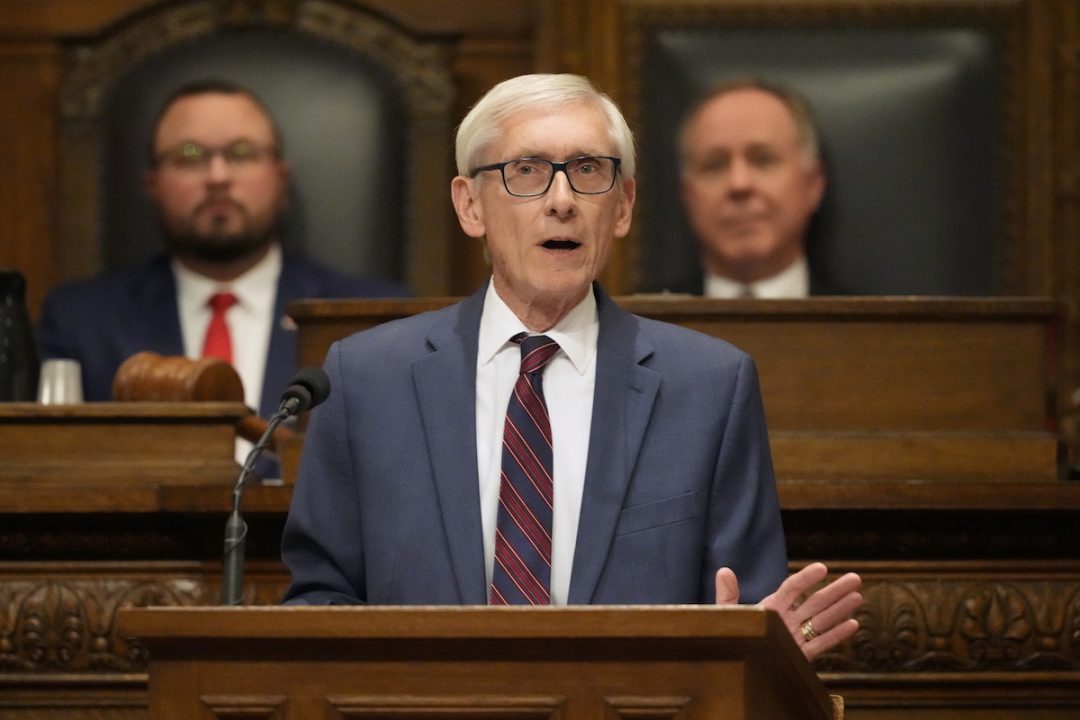
The proposal, May 2026 Special Session Assembly Bill 1, was introduced at the request of Governor Tony Evers and advanced by the Joint Committee on Finance. The bill would have created income-tax subtractions for qualified tips and overtime compensation, provided one-time surplus rebate payments, increased state aid for school districts, boosted special education and school-age parents programs, and increased state aid to technical colleges.
The bill passed the Assembly on May 13, but failed in the Senate that same day by a vote of 15-18. All Democrats and three Republicans (Senators Hutton, Kapenga, and Nass) in the Senate voted against the package.
Governor and Lawmakers Clash
Evers blasted the vote afterward, claiming Wisconsin’s “kids and schools” would not receive the investment they “desperately need” because of politicians thinking about the next election. However, that framing ignores the fundamental question: Why should Madison keep spending money that taxpayers should never have been forced to surrender in the first place?
Representative Lindee Brill (R-Sheboygan Falls), who holds an 83-percent score on The New American’s Freedom Index, was the lone Assembly Republican to oppose the bill, correctly noting that Wisconsin taxpayers “overpaid” the state by $2.3 billion. She argued that the deal would provide only modest relief — including a surplus rebate payment for taxpayers — while potentially saddling the next Legislature and governor with a structural deficit. The bill itself limited the payments to $300 for most individuals and $600 for married couples filing jointly, and the payment could not exceed the taxpayer’s 2024 net income-tax liability.
Senator Chris Kapenga (R-Delafield), who holds a modest 71-percent lifetime freedom score, made a similar point, warning that a one-time surplus should be returned as a one-time refund to taxpayers, not used to create or expand ongoing spending commitments. That is basic household budgeting, but government rarely operates by household logic. When politicians discover extra money, they often treat it as permission to spend — not evidence that taxpayers were charged too much.
School-aid Criticism
The school-funding portion of the plan also deserves scrutiny. The bill would have added $85 million in fiscal year 2025-26 and $230 million in fiscal year 2026-27 for special education and school-age parents programs. It also would have created a new $302.5 million per-pupil state-aid payment beginning in the 2026-27 school year.
Supporters claimed the package would “invest” in schools and lower property taxes. Yet the Legislative Fiscal Bureau noted that payments from the general aid appropriation are under revenue limits, meaning the additional aid “would provide property tax relief but not additional resources for school districts.” Based on current enrollment, the bureau estimated that payment at about $387 per pupil.
Strange Coalitions
The failed vote also scrambled the usual partisan lines. U.S. Representative Tom Tiffany (R-Minocqua), who has one of the highest freedom scores in Congress (95 percent) and is running for governor, argued that the surplus existed only because “Madison overtaxed” Wisconsinites in the first place, promising to return all of it if elected governor. He also tied the issue to Evers’ infamous 400-year property-tax increase in a comment on his Facebook post, saying taxpayers would spend their own money better than “Madison bureaucrats.” Yet some Democrats also raised concerns. Senator Mark Spreitzer (D-Beloit), who holds a 13-percent lifetime freedom score, noted that nearly half of the school-aid column being promoted by Evers would not actually be money that schools could “keep and spend on kids,” citing the Legislative Fiscal Bureau’s explanation that the general-aid payments would provide property-tax relief rather than additional school-district resources.
Assembly Minority Leader Greta Neubauer (D-Racine), as well as Representative Ryan Clancy (D-Milwaukee), who is a member of Democratic Socialists of America and has a 22-percent lifetime freedom score, likewise opposed the package from the Left, though for different reasons than constitutional conservatives. Neubauer warned that the proposal could put Wisconsin in “a very difficult financial position in future years,” arguing that lawmakers should not overspend now and risk future cuts to schools and healthcare. Clancy was even more direct, thanking opponents for defeating what he called Evers’, Vos’, and LeMahieu’s “sloppy, lame duck, $1.8B plan to spend down Wisconsin’s surplus.” While their solutions differ sharply from Tiffany’s and other fiscal conservatives, their criticism underscored a key point: The so-called bipartisan deal was not the clean taxpayer-relief package its supporters claimed it to be.
Madison’s Bigger Problem
That distinction matters. The public was sold a package as though it were both a major school investment and property-tax relief. But a large share of the school-aid component would have shifted funding sources rather than directly improved classroom outcomes. More fundamentally, it would have sent hundreds of millions of dollars into a government-school system that continues to demand more money while too often failing to deliver better results for students and families.
Under the new legislative maps passed in 2024, Democrats are likely to have a better chance of winning a majority in the state Senate while Republicans are expected to hold the Assembly. Unless another costly bipartisan agreement is reached, the surplus will likely remain in state coffers until one party controls the Assembly, Senate, and governor’s office. Depending on how November unfolds, there is at least some chance that either party could secure a trifecta.
The larger issue is constitutional and fiscal. Taxpayer money belongs to the people who earned it, not to politicians looking for ways to buy goodwill or reward favored constituencies to win future elections. A surplus created by overtaxation should be returned to taxpayers as fully and directly as possible — equally, not equitably. Instead, this package reflected the familiar Madison pattern: Republicans campaign on fiscal restraint, Democrats campaign on expanding government, and too often both sides meet in the middle and compromise to spend more.
Evers and other left-wing officials tried to portray the vote as a failure to help children, schools, and working families. But families struggling with rising costs do not need Madison to redistribute their money through a political formula. They need government to stop taking so much of it in the first place.
Hold Your Legislators Accountable
The collapse of the surplus deal is a reminder for voters to look beyond party labels and campaign slogans. The real test is how lawmakers vote when billions of taxpayer dollars are on the line. To see whether state and federal legislators are upholding limited government, fiscal responsibility, and constitutional principles, citizens should use The New American’s Freedom Index and state Legislative Scorecards.