Trump and U.S. House Protect Lead Ammunition and Fishing Tackle
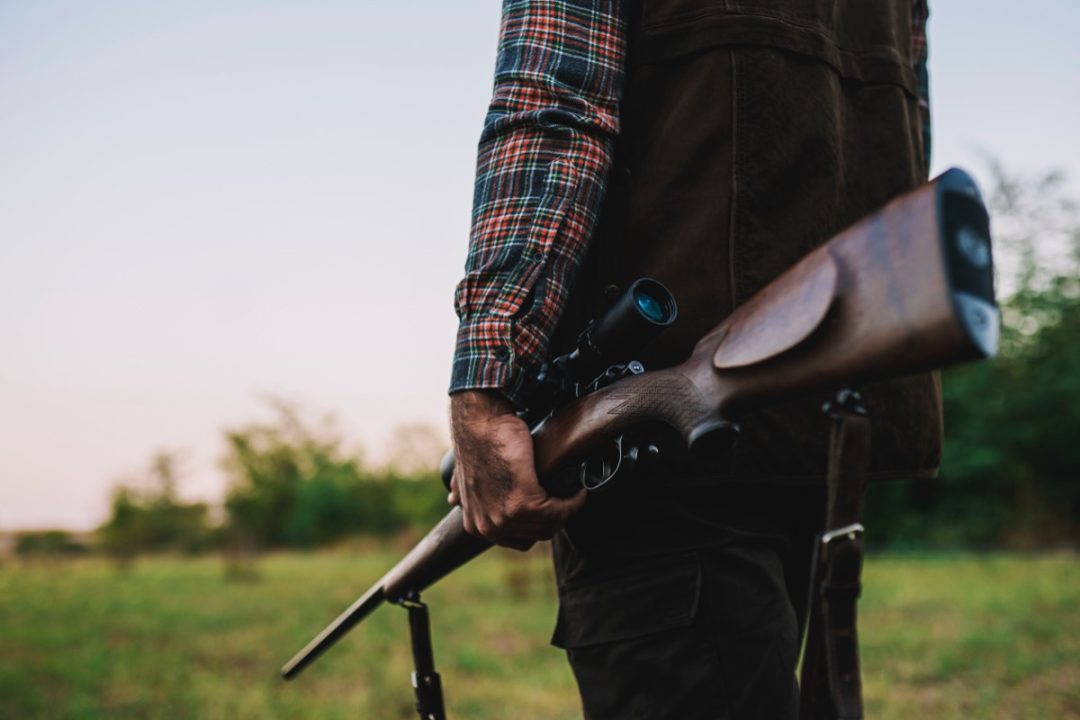
President Donald Trump signed an executive order on September 17 to expand hunting and fishing access on federal lands, including by directing federal agencies to permit the use of traditional lead ammunition and fishing tackle. The order comes six months after the U.S. House of Representatives passed legislation, H.R. 556, to place similar restrictions on federal agencies — but in federal statute rather than executive policy.
Executive Order
Trump signed the executive order, titled “Reinvigorating America’s Hunting Heritage,” after hosting about 100 hunting, fishing, recreational-shooting, conservation, and outdoor-industry leaders at a White House Rose Garden dinner. Participants included the National Rifle Association, Rocky Mountain Elk Foundation, Ducks Unlimited, Safari Club International, and Bass Pro Shops. The Congressional Sportsmen’s Foundation described it as the “first ever such celebration of America’s sportsmen and women in the Rose Garden.” Trump also signed a companion order, “Restoring American Saltwater Angling and Recreation,” directing agencies to review federal fisheries policies and expand recreational-fishing opportunities.
The hunting order establishes what the administration calls a “presumption of accessibility” for federally managed lands. It directs federal officials to propose changes within 180 days of the order’s signing that would generally allow hunting on federal lands, improve recreational access and infrastructure, and “permit the use of traditional lead ammunition and tackle.” It also directs the Department of the Interior (DOI) to encourage expanded Sunday hunting opportunities, and calls for additional archery and hunter-education opportunities.
Congressional Action
Those provisions parallel an ongoing effort in Congress. The House passed H.R. 556, the Protecting Access for Hunters and Anglers Act, on March 18 by a vote of 215-202. U.S. Representative Rob Wittman (R-Va.), who holds a 62-percent lifetime Freedom Score, introduced the measure. Seven Democrats joined 208 Republicans in voting for the bill, while 201 Democrats and one Republican, Representative Brian Fitzpatrick (R-Pa.), who holds a 27-percent lifetime Freedom Score (the lowest score among incumbent Republicans), opposed it.
The legislation would prohibit the secretaries of agriculture and the interior from banning lead ammunition or fishing tackle on federal lands and waters under their jurisdiction that are open to hunting or fishing. It would also prevent their departments from issuing general regulations governing the amount of lead in ammunition or tackle used on those lands.
The prohibition would not be absolute. A restriction could still be imposed on a specific federal unit if officials determine from field data that a wildlife-population decline is primarily caused by lead ammunition or tackle. The restriction would also have to be consistent with state laws or wildlife policies, or be approved by the appropriate state fish and wildlife agency.
The House-passed bill was received by the U.S. Senate on March 19 and referred to the Senate Committee on Environment and Public Works, where it currently remains.
Cost and Conservation Funding
Lead has long been used in ammunition, sinkers, and fishing jigs because of its density, availability, and relatively low cost. Alternatives made from copper and other materials are available, but costs and availability vary considerably by caliber and product. And there have been concerns over copper shortages.
The Firearm Industry Trade Association (NSSF, formerly the National Shooting Sports Foundation), a firearms-industry trade group that supports H.R. 556, has estimated that alternative ammunition costs an average of 25 percent more than traditional lead ammunition. More significantly, the U.S. Fish and Wildlife Service (FWS) acknowledged in its September 1 hunting and fishing regulations that lead-free alternatives for some calibers remain difficult to obtain and that anticipated improvements in their availability and cost had not occurred on a sufficient scale in every state.
That matters because hunters and anglers already bear the costs of firearms, ammunition, rods, reels, licenses, permits, clothing, travel, and other equipment. Supporters of H.R. 556 argue that additional federal requirements could increase barriers to participation, particularly for younger hunters and families with limited recreational budgets. A March letter supporting the bill, signed by numerous hunting, fishing, and conservation organizations, similarly argued that broad restrictions could affect participation when comparable alternatives are not readily available at similar prices.
Hunters, anglers, and manufacturers also provide significant conservation funding through unconstitutional federal excise taxes. The FWS announced in February that more than $1.2 billion would be distributed to states and territories in fiscal 2026 through wildlife and sport-fish restoration programs. The money comes from excise taxes on firearms, ammunition, archery, and fishing equipment, along with certain fuel taxes and import duties.
According to the NSSF, approximately $805 million of the nearly $1.3 billion distributed through those programs in 2026 came directly from firearm- and ammunition-industry excise taxes.
The Debate Over Lead
The scientific dispute is not over whether lead can harm individual animals. The FWS states that lead ammunition can fragment inside harvested animals, and that scavenging wildlife can ingest fragments left in carcasses or gut piles. The agency currently operates voluntary lead-free ammunition incentive programs at 26 refuges in 19 states.
The dispute surrounding H.R. 556 instead concerns what level of evidence should be required before the federal government prohibits lead products.
Supporters of the bill argue that evidence of lead exposure in individual animals does not by itself establish a population-level problem warranting a broad prohibition across federal lands. They contend that wildlife populations, habitats, hunting practices, and environmental conditions differ among locations and that federal restrictions should therefore be based on conditions at the affected unit and coordinated with state wildlife officials.
Opponents argue that the bill sets the evidentiary threshold too high. During a House debate, U.S. Representative Debbie Dingell (D-Mich.), who holds a 10-percent lifetime Freedom Score, argued that lead contamination may operate alongside habitat loss, disease, and other stressors, making it difficult to prove that lead is the primary cause of a population decline. Her proposed amendment would have allowed restrictions when the best available science showed that lead “may contribute” to a wildlife-population decline, but the motion to recommit failed 206-209.
The legislation therefore represents a substantive policy choice: Federal managers would retain authority to restrict lead products, but only under the narrower, site-specific conditions established by Congress.
Biden-era Restrictions Reversed
This issue gained prominence during President Joe Biden’s administration. In 2022, the FWS said lead ammunition and fishing tackle could negatively affect wildlife and human health, and began moving to impose lead restrictions in certain national wildlife refuges. In 2023, the agency proposed phasing out lead ammunition and tackle at eight additional refuges by fall 2026.
The policy changed under the Trump administration. Secretary of the Interior Doug Burgum issued Secretary’s Order 3447 on January 7, directing DOI agencies to review restrictions on hunting and fishing, and stating that federally managed lands should generally remain open unless a “specific, documented, and legally supported exception” applies. The order also emphasized coordination with state, tribal, and territorial wildlife authorities.
The FWS followed on September 1 with its final 2026-2027 hunting and sport-fishing regulations. The agency reversed lead-ammunition or tackle phase-outs at nine national wildlife refuges that had been adopted during the previous administration and were scheduled to take effect that same day. The FWS said that some site-specific lead restrictions would remain where they aligned with state rules, conditions in nearby state-managed lands, sensitive wetland areas, or other localized concerns.
Trump’s September 17 executive order expands that policy across multiple departments by directing officials to propose regulatory changes permitting traditional lead ammunition and tackle on federal lands.
There is, however, an important distinction between the executive order and H.R. 556. Executive orders generally remain effective, but a later president may alter or revoke a predecessor’s order. A federal statute is more durable, because changing it requires further congressional action. That gives H.R. 556 continuing significance despite the Trump administration’s recent actions.
The Broader Federal-land Question
The controversy over hunting intersects with a much older debate over federal land ownership and federalism. The federal government manages about 28 percent, or 640 million acres, of the total land in the United States, with federal holdings particularly concentrated in Alaska and the Western states. Four agencies — the Bureau of Land Management (BLM), FWS, National Park Service, and Forest Service — administer the overwhelming majority of those lands.
Article I, Section 8, Clause 17 of the U.S. Constitution authorizes exclusive federal jurisdiction over the District of Columbia and places acquired with state consent for forts, magazines, arsenals, dockyards, and other “needful Buildings.” However, it does not give the federal government authority to own and manage land for recreational or ecological purposes.
Constitutionalists have long advocated returning to a narrow federal role in land ownership, strictly within the limits of the Constitution, which grants only certain enumerated powers to the federal government. These include the Enclave Clause and the Property Clause’s reference to disposing of federal property.
The constitutional issue extends beyond federal land ownership and the division of power between Washington and the states. As The New American previously explained in “The God-given Right to Hunt,” hunting and fishing are rooted in man’s God-given stewardship over creation and the natural right to provide for one’s family. Although the Constitution does not specifically enumerate a right to hunt or fish, the Ninth Amendment makes clear that the enumeration of certain rights “shall not be construed to deny or disparage others retained by the people.” Hunting and fishing are among those preexisting, unenumerated rights retained by the people rather than privileges granted by government.
Broad bans on traditional lead ammunition and fishing tackle therefore implicate more than wildlife-management policy. Prohibiting commonly used ammunition or tackle burdens the practical exercise of the God-given right to hunt and fish by limiting the means by which people can exercise it. Just as government cannot properly convert a natural right into a government-granted privilege through licensing or regulation, it should not use broad federal restrictions to impede Americans’ ability to harvest game, catch fish, provide food for their families, and exercise responsible stewardship over creation.
Current Supreme Court precedent, however, incorrectly interprets the Property Clause. In Kleppe v. New Mexico (1976), the Court recognized Congress’ authority to regulate federal lands and wildlife on those lands. The Constitution Annotated notes that states generally retain jurisdiction over federal lands within their borders absent consent or cession, but federal laws enacted pursuant to the Property Clause can supersede conflicting state laws. Judicial precedents, however, should not be revered or conflated with the text of the Constitution itself. Supreme Court Justice Clarence Thomas has stated that court rulings are not “the gospel.”
Thus, arguments for transferring significant federal landholdings to states represent a constitutional and federalism critique of the prevailing case-law framework. State ownership of land may be permissible under state constitutions, but ownership of vast amounts of land is not the proper role of government. Transferring federal lands to the states would nevertheless be a significant first step toward reducing federal control and returning authority closer to the people.
H.R. 556 takes a narrower approach. Rather than resolving the broader land-ownership debate, it would require greater state involvement before the Departments of Agriculture or the Interior could restrict traditional ammunition or fishing tackle on federal property, while preserving greater access to and use of those lands by the people.
A Recent Attempt to Sell Federal Land
The debate over Washington’s vast federal landholdings surfaced during consideration of the One Big Beautiful Bill Act in 2025. U.S. Senator Mike Lee (R-Utah), who holds a solid 93-percent lifetime Freedom Score and serves as chairman of the Senate Committee on Energy and Natural Resources, initially included a proposal that would have required the sale of portions of BLM and Forest Service land across 11 Western states. Lee described the proposal as a way to put underutilized federal land to use for housing and generate revenue. After the Senate parliamentarian determined that an earlier version did not comply with the reconciliation process, Lee narrowed the proposal by excluding Forest Service land and reducing the required sales to between 0.25 and 0.50 percent of certain BLM-managed land. The revised plan focused on land near population centers, and required that the land be used for housing.
Lee ultimately withdrew the land-sale provision on June 28, 2025. He said the restrictions of the budget-reconciliation process prevented him from establishing safeguards guaranteeing that the land would be sold only to American families rather than foreign interests or large investment firms. The proposal also faced opposition from several Republican lawmakers in both chambers. The Senate subsequently passed the One Big Beautiful Bill Act without Lee’s federal land-sale mandate, and Trump signed the final legislation into law on July 4, 2025.
Although Lee’s proposal did not survive, the episode is relevant to the larger federal-land debate. The Constitution’s Property Clause expressly gives Congress authority to “dispose of” property belonging to the United States. Lee argues that the federal government controls too much Western land and that at least some of it should be transferred or sold, while opponents of his 2025 proposal raise concerns about public access, recreation, and who ultimately might acquire the property.
States, Washington, and Wildlife Management
Beyond lead ammunition, Trump’s September 17 executive order directs agencies to improve access to federal lands, work with states and local governments, expand hunting opportunities, improve habitat, support youth and veteran hunting programs, and facilitate the donation of wild game.
The Trump administration’s actions do not end the disagreement over lead. The FWS continues to encourage voluntary lead-free ammunition use at selected refuges, while retaining some location-specific restrictions. Environmental and wildlife advocates argue that federal land managers need sufficient flexibility to address lead exposure before it produces severe population declines. Supporters of H.R. 556 counter that restrictions should require stronger evidence and closer coordination with state wildlife agencies.
For now, the administration has changed federal policy through executive and administrative action, while Congress continues to consider whether similar policies should be written into statutory law.
To learn more about how your state and federal legislators vote on issues of constitutional importance, visit The New American’s Freedom Index and state Legislative Scorecards. You can also stay informed about what is happening in your state legislature and in Congress by signing up for legislative alerts here.