Police AI Drones Take the Surveillance State Airborne
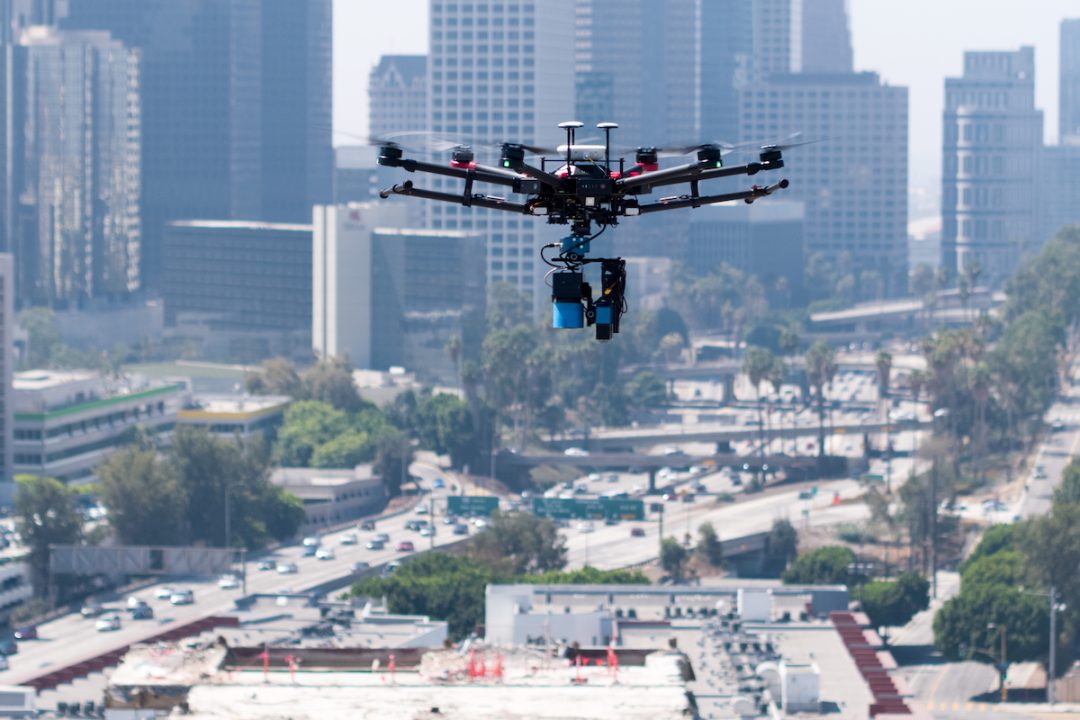
Police departments across the country are deploying autonomous drones that can launch from rooftops, fly beyond visual range, track vehicles, and transmit live video directly to police command centers. Increasingly, artificial intelligence helps analyze those feeds, flag objects, and connect aerial surveillance with other police data.
Federal funding is helping speed the buildout. Public oversight is moving more slowly. The result is a policing network that can watch larger areas from above, process what it sees at machine speed, and operate with fewer of the physical limits that once constrained surveillance.
Aerial AI Surveillance
Truthout reported on August 10:
As of February, more than 1,000 law enforcement and public safety agencies had received waivers from the Federal Aviation Administration (FAA) to operate autonomous surveillance drones as part of so-called ‘drone-as-first-responder’ (DFR) programs, according to public records obtained by the Electronic Frontier Foundation (EFF) and released in July. While the list of waiver recipients includes fire departments and other first responders, the vast majority are law enforcement agencies, including police in cities large and small.
Police have used drones for years. What makes the new generation different is AI.
AI increasingly handles tasks once performed by a human pilot. It can navigate the aircraft, avoid obstacles, follow targets, and move from a docking station to an incident with less human control.
EFF researcher Beryl Lipton described the shift to Truthout:
The human increasingly is not flying the drone; the drone is driven by artificial intelligence and just deployed from one spot to another spot.
That changes the scale of surveillance. Automation allows one operator to supervise multiple drones while software handles much of the flying.
AI is therefore not merely an add-on to DFR. It is what makes persistent aerial surveillance scalable.
Drones as Cops
Among other similar companies (more on that later), Flock Safety is moving aggressively into that market. The company is best known for automated license plate readers (ALPRs). Its DFR system takes those policing capabilities into the air.
Flock describes it this way:
Flock DFR is a fully remote Drone as First Responder system that launches automatically in response to 911 calls. It provides real-time video of the scene within an average of 86 seconds, giving officers situational awareness before they arrive. The system integrates with your existing tech stack, like CAD and LPR, enabling fast, automated aerial response, all without requiring rooftop staff.
The capabilities are substantial. Flock says its Alpha drone can fly at 60 mph and operate within a four-mile radius covering roughly 50 square miles. It can read license plates from as far as 2,000 feet away and carries thermal imaging and powerful zoom optics.
According to Flock, its drones reach calls in an average of 86 seconds and arrive before officers 78 percent of the time. They also allow police to clear about one in five calls without dispatching a patrol unit.
The business is expanding quickly. On Wednesday, CEO Garrett Langley told Business Insider that drones are now Flock’s “fastest growing business.” The company has more than 200 DFR customers.
The significance is hard to miss. The company that helped normalize automated vehicle tracking is now placing a mobile surveillance layer above the same streets.
The View From Above
A July investigation by Wired offered an unusually clear and chilling look at that aerial layer.
Security researchers Sam Curry and Maik Robert discovered that live video from five San Francisco Police Department Skydio drones was exposed through a publicly accessible web link. The feed included color video, thermal imagery, GPS metadata, and information identifying police drone pilots.
The researchers archived roughly three hours of footage covering 20 flights over about 48 hours. WIRED found that the drones recorded hundreds of people and vehicles.
The footage went far beyond dramatic police operations.
One drone tracked a vehicle across the city and zoomed in on its license plate. Another hovered over a young person sitting alone on a rooftop. Other footage captured people inside or near apartment buildings. One drone followed two men until they parked and began playing basketball.
Curry described the experience:
When you’re watching a drone feed live, you can look into dozens of different apartments, you can see police zooming in on people, you can see arrests. The fact that all of this was exposed feels like a really big issue from a privacy perspective.
SFPD said the link was intended for law enforcement and had been improperly accessed. The researchers said they bypassed no authentication because none was required. Police later tightened sharing controls.
The leak matters beyond cybersecurity. It showed how much ordinary life a police drone can capture during a routine mission. A camera sent after one suspect also records rooftops, windows, sidewalks, cars, courtyards, and bystanders.
AI makes that collection more consequential. Humans cannot review every frame from thousands of hours of video. Machines can.
The Backlash Is Already Arriving
Some cities are beginning to resist.
Nashville police launched a limited DFR trial in May. Three drones operated from the roof of the Madison Precinct and covered a two-mile radius. Police credited the program with helping locate suspects and, in one August case, a missing infant.
But the program triggered a political fight. City lawmakers learned that police had launched it without a council vote or public hearing. The department ended the trial on August 7. Council members were already pushing legislation to close the loophole that allowed it.
New Orleans faced an even sharper controversy.
Truthout reported that activists discovered internal policy language that could have allowed police drones to carry weapons(!) with approval from the police superintendent. Public pressure forced the department to abandon that language.
On August 6, the New Orleans City Council adopted new reporting requirements for police drones, including when and why drones were deployed and who supervised flights.
Yet the rules mainly add transparency. They do not broadly restrict deployment.
Once a city buys the hardware, installs launch stations, signs software contracts, and trains operators, surveillance becomes part of ordinary policing.
The Federal Grants
Besides taxpayers, who is financing the buildout?
Truthout noted that police departments often receive surveillance funding from wealthy private donors, police foundations, and federal grants. Technology companies also offer free trials and help departments pursue grants and regulatory waivers.
The federal component is notable.
In June, the Department of Justice (DOJ) launched what amounts to a large-scale pilot program. Its $300 million Model Cities Initiative will select two to four cities to test a federally backed “whole-of-a-city” approach, with successful strategies intended for replication nationwide.
Eligible purchases include license-plate readers, AI systems, unmanned small aircraft systems, counter-drone technology, and real-time crime centers.
The federal buildout extends further. As The New American reported in January, Congress appropriated another $500 million for state and local infrastructure to “detect, identify, track, or monitor” unmanned aircraft deemed a threat.
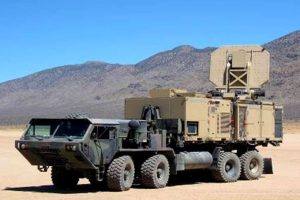
While the bill does not spell out the hardware, that infrastructure could include radio-frequency sensors, radar, and optical cameras feeding live airspace data into command centers. Those centers could then integrate drone tracking with police drone video, license plate readers, fixed cameras, AI analytics, and dispatch data.
The DHS grants do not directly fund ordinary DFR patrols. But they can finance another sensor layer in the same increasingly integrated surveillance network.
The Companies
A small group of technology companies is building the hardware and software behind DFR policing.
Flock Safety entered the market aggressively after acquiring drone startup Aerodome in 2024. Its system connects docked drones directly to 911 calls, license-plate reader hits, gunshot alerts, and real-time crime centers.
Skydio is another major player. The California company builds autonomous drones such as the X10, along with rooftop docks that keep them charged and ready for remote deployment.
The company has already drawn scrutiny over the military origins and expanding domestic use of its technology. As The Grayzone reported last November, Skydio sent more than 100 reconnaissance drones to Israel shortly after October 7 for use by the Israeli military in Gaza. The outlet described the technology as “battle-tested” there before expanding across U.S. law enforcement. It reported that Skydio drones are now “flying over American cities, surveilling protestors and automatically uploading millions of images to an evidence database.”
Then there is Axon, best known for Tasers and body cameras. Its “complete” DFR offering combines Skydio aircraft with Axon’s evidence, dispatch, and real-time intelligence platforms, plus counter-drone technology from Dedrone, which Axon acquired in 2024.
That is where the industry is heading. The drone is only one component. The real product is an interconnected surveillance platform linking aircraft, cameras, license plate readers, dispatch records, AI analytics, and police databases in real time.