
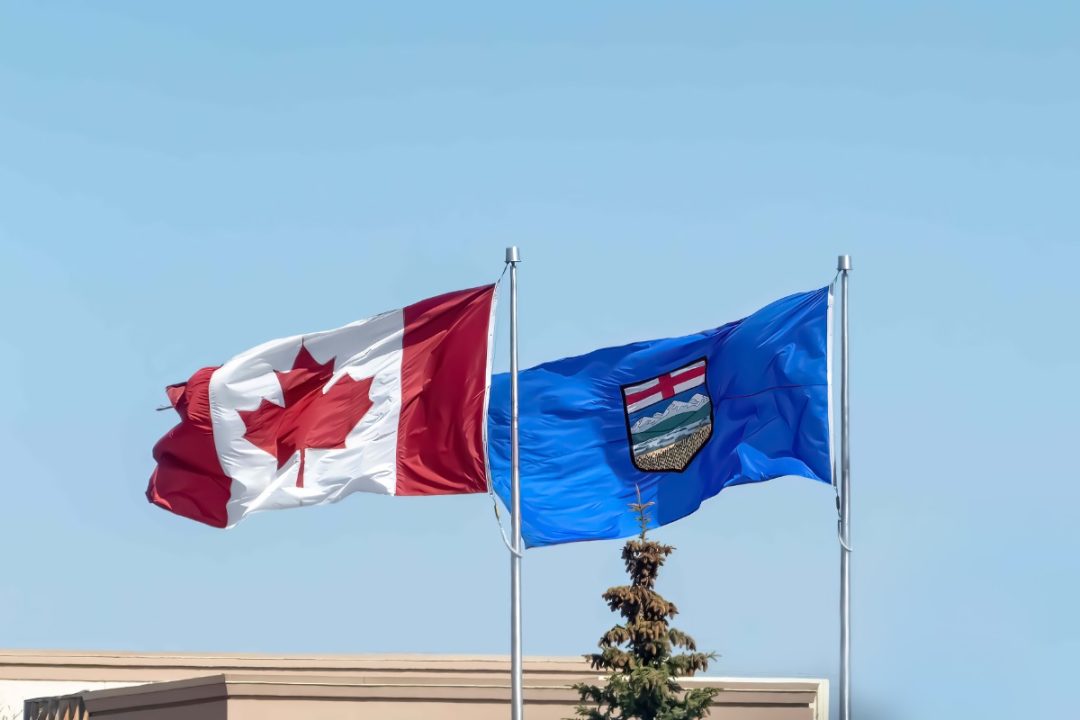
Albertans Vote to Stay in Canada, but Want Less Immigration
Three-quarters of Albertans voted to stay Canadian in a referendum on Monday that would have rendered the oil-rich province free of the globalists in Ottawa. But the majority also voted for less immigration and more financial input from immigrants who benefit from welfare system, this just days after Canada’s top immigration official hinted that the government was working on a plan to bring in more foreigners.
The Referendum
On Monday, Albertans voted in a referendum with 10 questions that included issues of independence and immigration. Prime Minister Mark Carney used a hokey slogan to urge voters to vote against secession and “no to the nine.”
The secession referendum, which according to some has been 46 years in the making, was largely fueled by frustration over Ottawa’s attacks on fossil fuels, something the ground in Alberta holds plenty of and the people there view as a source of massive potential for wealth. With Canada’s government wholeheartedly sold on the green agenda, Ottawa has repeatedly harmed Alberta’s oil and gas industry through regulations, environmental policies, pipeline delays, and other climate initiatives.
Carney, who served as the UN Special Envoy for Climate Action and Finance, responded to the failed secession effort with boilerplate political rhetoric void of any practical commitment from Ottawa. “Albertans have chosen Canada, and we’re moving forward together with renewed purpose and high ambition — to build a stronger future for all,” he said.
Alberta Premier Danielle Smith ruled out holding another secession referendum while she remains in her position, but acknowledged the changes Albertans obviously want and vowed to see them become reality. “I’m also pleased that Albertans … gave our government a mandate to take greater control over immigration, to ensure temporary residents pay their share of the services they use and to require proof of citizenship to vote,” she said. “Those reforms are coming, and they will strengthen Alberta’s autonomy.”
The Energy Factor
Some trace the Alberta secession movement all the way back to 1980, when the federal government, then under the leadership of Prime Minister Pierre Elliott Trudeau, passed the National Energy Program (NEP). As the energy outlet BOE Report noted, the NEP kept domestic oil prices below global levels and increased the federal government’s share of oil revenues. At the time, world oil prices were skyrocketing because of the 1970s oil crises, and Canada’s largest oil-producing province stood to benefit enormously. The NEP put a cap on those benefits, and many Albertans saw it as a federal money grab. The NEP had been dismantled by the mid-80s.
By 2019 the green agenda had metastasized throughout the Western world. The Canadian government, given decades of rule by leftists, fully embraced the “green con,” as U.S. President Donald Trump likes to call it. Albertans once again noticed that Ottawa did not share its interests. BOE Report noted:
The United Conservative Party under Jason Kenney [won] power in Alberta, capitalizing on discontent over federal rules and policies deemed to impair Alberta’s ability to create wealth, particularly in oil and gas. Premier Kenney [fought] for more independence from Ottawa but remain[ed] a staunch advocate for the province staying in [the] Confederation.
Covid Tyranny
The Covid era only turned up secession fever. As Canadian Broadcasting Corp. (CBC) producer Jason Markusoff observed in an October 8 analysis, “The COVID-19 pandemic had myriad social, economic and political effects around the world, but Alberta may be the only place it helped spawn a separatist movement.” Among those who woke up during that period was Chris Scott, who ended up going toe-to-toe with the government over the mandatory closing of his restaurant. He told CBC of that period, “It kind of shattered my illusion of what I thought a free Canada was.”
Canada became especially tyrannical during Covid. The pushback reached peak fever when freight truckers from all over the country descended on Ottawa, garnering worldwide media attention. The government proved the truckers’ allegations of tyranny correct by responding to the protests with more tyranny. Then-Prime Minister Justin Trudeau’s government froze the bank accounts of hundreds of people tied to the Freedom Convoy protests.
The country became so overtly tyrannical that police were barging into people’s homes because they had a suspiciously large number of cars in their driveway and thereby were guilty of hosting private gatherings that had become illegal.
“Asserting Independence”
Smith replaced Kenney three years later, in 2022, winning “on a platform of further asserting independence from Ottawa.” By January, the Alberta Prosperity Project had received permission to launch a petition asking whether Alberta should leave Canada. The petition gathered about 223,000 signatures within months and was considered a success.
The secession movement gained further momentum after Carney’s Liberal Party won the 2025 federal elections. Some secession leaders even met with Trump administration officials to get support from their American neighbors. U.S. Treasury Secretary Scott Bessent called Albertans “very independent people,” and said the province was a “natural partner for the US.” President Trump, of course, has made Trumpian-style overtures not just to Alberta, but to Canada as a whole. He trolled the Canadians just days after he won reelection in 2024 with social media posts suggesting that Canada become the 51st state and calling then-PM Trudeau “governor.”
But on Monday, the secession effort hit a wall. And, for now, that wall is expected to stand tall and sturdy.
Immigration
Albertans did, however, approve several immigration-related measures. They voted for more provincial control over immigration “for the purpose of decreasing immigration to more sustainable levels, prioritizing economic migration and giving Albertans first priority on new employment opportunities.” They approved a measure to bar illegal immigrants from receiving welfare. Also approved was a mandatory one-year waiting period for illegals and non-permanent immigrants before they can qualify for any provincial welfare, if other laws stay as they are. And voters approved leveling a fee on nonresidents and those with non-permanent status who are living in Alberta “for their and their family’s use of the health care and education systems.”
Alberta’s population grew by more than 600,000 people — to five million — in the last five years of the Justin Trudeau government, according to Smith. “Albertans are tired of pretending that adding hundreds of thousands of people to their province in one big wave over the last several years hasn’t put additional pressure on housing, employment, infrastructure, and services,” wrote David Wiechnik, a reporter for the right-wing Canadian outlet Western Standard.
Ottawa, however, has other plans. As Wiechnik noted, Immigration Minister Lena Metlege Diab hinted that the government was on the verge of letting more migrants in, saying:
We’ve taken a step backwards on immigration. Our population increase. It was the slowest population growth since World War II. … We have an ambitious agenda. We are going to want to drive growth. We do need people.
Carney, it appears, has no intention of dialing back immigration, telling The New York Times that it was time to bring in more foreigners:
The question starts to become, when do we resume some controlled increase in population? That will happen, and we just want to make sure that we’ve got it under control.
It looks like Alberta and Ottawa remain at odds on immigration. Will Albertans get the one thing the majority agree on? Will it follow in the footsteps of Quebec, another province with a taste for secession? Under the 1991 Canada-Québec Accord, it has managed to accrue more control over immigration.
As Wiechnik observed, “a non-binding referendum doesn’t automatically transfer immigration powers from Ottawa to Edmonton, but now the real work begins.”