
300 Years’ Worth of Lithium Discovered in Appalachia
The United States has been importing thousands of tons of lithium a year. In 2025, more than 4,000 tons of lithium flowed into the country, meeting more than half of American demand for the element. The previous year, 3,300 tons came in. The year before that, in 2023, the United States imported more than 3,700 tons.
The international appetite for lithium has been growing year after year. In 2025, global production increased 31 percent from 2024. The previous year, it increased by 18 percent. U.S. demand has been no different. It, too, has been growing from year to year.
America imports most of the lithium it uses, almost all of it originating from Argentina and Chile. But lithium must be processed and refined before it can be used, and China dominates the market when it comes to lithium refining. According to the Australian energy news outlet Discovery Alert, “China controls more than 60% of global lithium processing capacity, creating downstream dependency despite upstream sourcing from South America.”
New Discovery
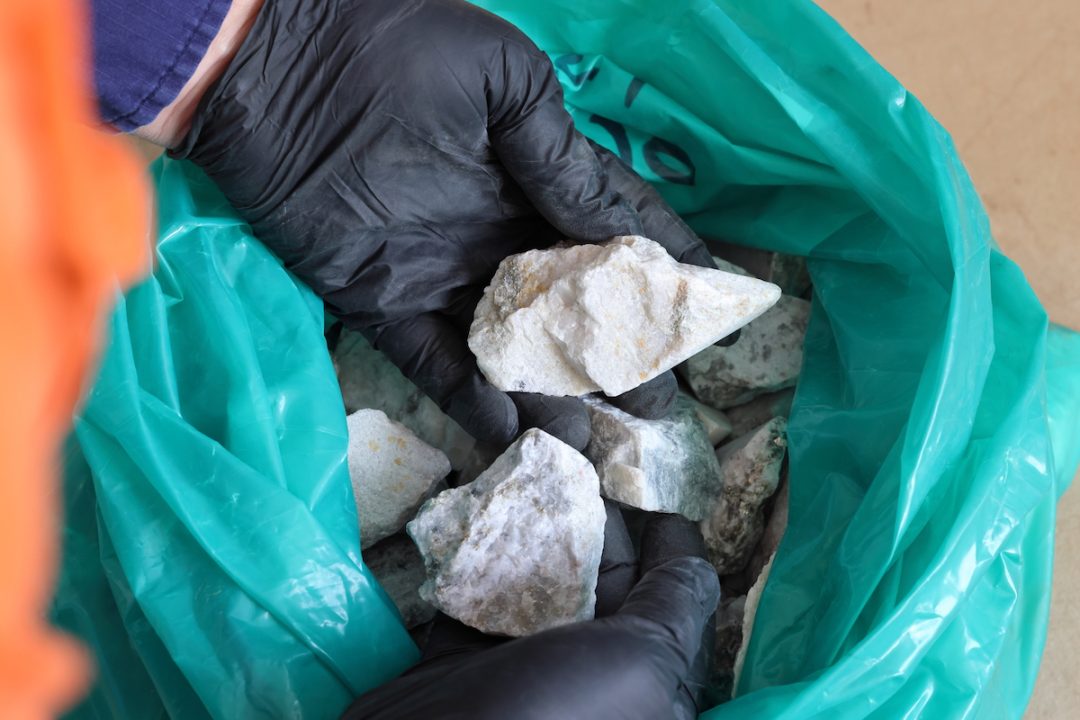
But a recent discovery may help drastically reduce, perhaps completely eliminate, America’s dependence on foreign suppliers for this critical element, which is used to make batteries for computers, smartphones, data centers, electric vehicles, and military equipment. The U.S. Geological Survey (USGS) announced last week that it discovered enough lithium in the Appalachian mountains to “replace 328 years of U.S. imports.” According to the USGS, the Southern Appalachian mountains, particularly those in the Carolinas, hold more than 1.5 million tons of lithium. The northern part of the ranges, those in Maine and New Hampshire, has nearly one million tons of lithium.
This is a big deal for mineral independence. USGS Director Ned Mamula noted, “This research shows that the Appalachians contain enough lithium to help meet the nation’s growing needs — a major contribution to U.S. mineral security, at a time when global lithium demand is rising rapidly.” The USGS said this is enough lithium to produce 1.6 million grid-scale batteries large enough to stabilize an electric grid, a 1,000-year supply of laptops for the entire world, or 500 billion smartphones.
EPA Administrator Lee Zeldin said the discovery means “being able to reduce our reliance on foreign sources,” including China. “Critical minerals, rare earth — from extraction through processing — needs to be ramped up inside the United States,” said Zeldin. “You hear a lot about unleashing energy dominance. We also care about batteries and magnets and chips and semiconductors. When we have these resources within our own country, we should not only be extracting them here — we should be processing them here.… This was a great find.”
Things Have Changed
Three decades ago, the United States was the world’s largest producer of lithium — and more. A U.S. Department of Energy report titled “Critical Materials Strategy” noted:
In the early 1990s, the United States was the largest producer and consumer of lithium minerals and compounds worldwide. In the early 1990s the U.S. Department of Energy also sold about 37,200 tonnes of excess lithium material from the thermonuclear weapons programs of the 1950s and 1960s. In 1997, the U.S. closed down its last spodumene mine in North Carolina and lithium carbonate production from hard rock ores in the U.S. ended.
But thanks in large part to growing environmental laws and regulations, it became cheaper to import lithium. So production fizzled to a shadow of what it once was, and the United States became dependent on China for an element now critical to some of the most widely used technology.
The United States is signaling it’s not only ready to extract lithium, but process it.
A January 14 White House executive order emphasizes the need for increased processing of lithium and other critical elements.
Also, the Appalachian lithium discovery announcement came around the same time a dormant mine in North Carolina’s Kings Mountain, the Kings Mountain lithium mine, was cleared for restart. The mine is in Cleveland County, and has been dormant since the 1980s. In 2023, the U.S. Department of Defense bought “$90 million in lithium from the 800-acre Albemarle site off Interstate 85, about 35 miles west of Charlotte,” NewsNations reported. Mining company Albemarle said the North Carolina mine will have the potential to extract about 420,000 tons of lithium-bearing spodumene concentrate a year. Armale has also been processing lithium for 50 years.
Back in January, Tesla fired up what CEO Elon Musk announced as the largest lithium refinery in America.