
Secret Russian Financing Shadows Alaska Gas Project Discussed by Putin and Trump Envoys: Reports
A $25 billion Alaska gas venture promoted as advancing American energy independence has reportedly been receiving secret financing from a Russian energy giant facing U.S. sanctions.
Investigations by The New York Times and Financial Times revealed that Novatek, one of Russia’s largest natural-gas producers, allegedly financed and influenced the American venture without obtaining necessary regulatory approvals.
The revelations triggered a leadership exodus and raised serious questions about sanctions compliance. The project also reached the highest levels of U.S.-Russian diplomacy. President Vladimir Putin personally discussed it with President Donald Trump’s envoys during negotiations over Ukraine. Those talks reportedly included a possible exchange of Russian technology for American sanctions relief.
Russian Money Behind an American Project
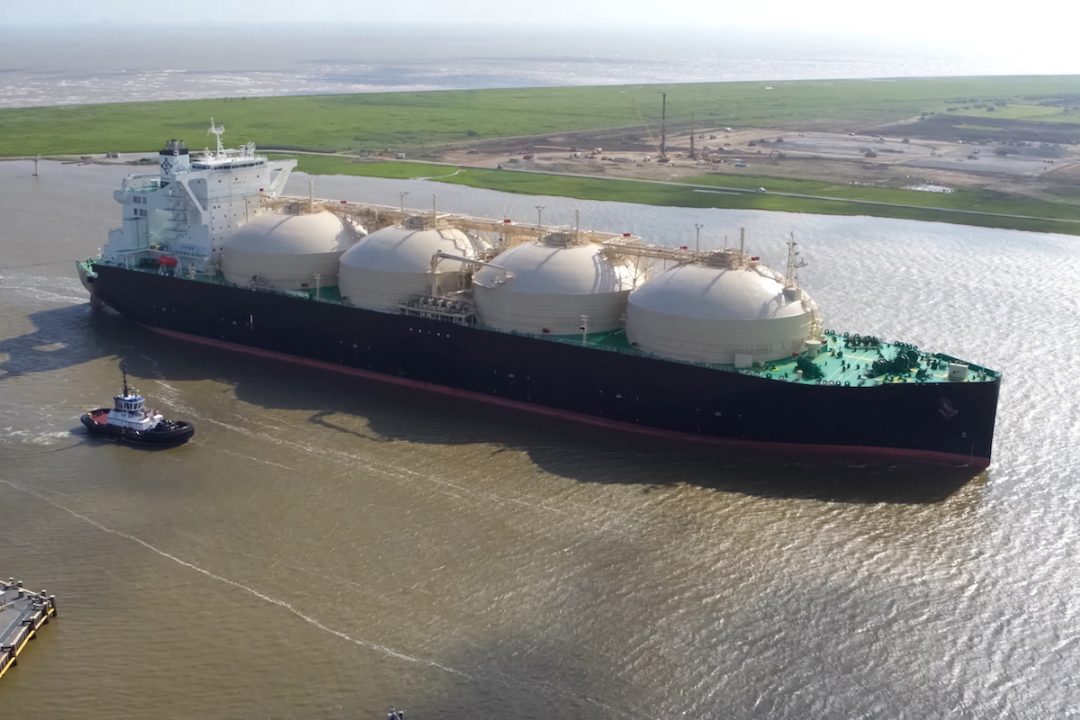
Polar Train LNG, commonly called Polar LNG, plans to develop Alaska’s enormous natural-gas reserves and export liquefied natural gas (LNG) to Asian markets.
The company markets itself as a champion of American energy independence. Its website declares, “Energy Security Starts in Alaska.”
Its plan centers on acquiring a massive, 640,000-ton concrete-and-steel offshore platform from Novatek. The structure would sit on the seabed near Alaska’s northern coast. Equipment installed on it would liquefy natural gas for shipment overseas.
But according to the investigations, Russian interests played a much larger role in the venture than its American executives initially understood.
Joel Riddle, Polar LNG’s former chief executive, resigned in September after discovering that money supposedly coming from an Abu Dhabi company originated, at least partly, with Novatek.
Riddle told the Financial Times:
I resigned as chief executive of Polar LNG because I felt uncomfortable that the Russian company Novatek was financing and ultimately controlling the strategic direction of the company.
Riddle initially believed American investor Gentry Beach and Abu Dhabi-based Tech Wave Industrial Projects Management were financing the venture.
He later discovered that Beach had not invested in the company and held no ownership or executive position, according to the FT.
Messages reviewed by the outlet showed senior Novatek executives discussing up to $15 million in financing for Tech Wave, Polar LNG’s parent company.
Novatek’s deputy chairman, Denis Solovyov, and chief executive, Leonid Mikhelson, reportedly participated in those discussions.
Following an August meeting in Abu Dhabi, Solovyov communicated directly with Riddle about anticipated payments.
The dispute triggered a leadership exodus. Chief Financial Officer Dan Chandra and Executive Vice President Jim Smith also departed.
Polar LNG disputed Riddle’s account, describing him as a disgruntled former employee dismissed for cause. However, documents reviewed by the FT indicate that Riddle resigned six days before receiving a termination notice.
The company appointed Tim Talkington, a former chief executive of Goldman Sachs Bank Russia, as acting chief executive.
Putin’s Interest and the Peace Negotiations
The Alaska venture was not merely a private commercial initiative. It also featured in broader U.S.-Russian negotiations over economic cooperation and the war in Ukraine.
According to the Times, Putin personally discussed the gas proposal with Trump’s envoys, Steve Witkoff and Jared Kushner, in September.
The newspaper found no evidence that either envoy knew about Polar LNG’s disputed financing. An American official said the proposal received only general discussion.
Putin had publicly expressed interest in such cooperation before.
In August 2025, shortly after meeting Trump in Alaska, he acknowledged discussions with American partners about developing LNG projects using Russian technology, including in Alaska.
The idea resurfaced as Washington and Moscow explored commercial arrangements that might accompany a settlement in Ukraine.
The Times also reported discussions involving Russian oil producer Lukoil’s international assets and potential American participation in future Russian gas exports to Europe.
Some prospective investors reportedly had business connections to Witkoff or Kushner.
Gentry Beach, who helped advance discussions with Novatek, has his own political connections. He attended college with Donald Trump, Jr. and served as a finance vice chairman for Trump’s 2017 inauguration.
Beach previously acknowledged negotiating with Novatek about bringing its technology to Alaska. His current involvement remains unclear.
Representatives for Donald Trump, Jr. denied that the president’s son participated in the venture.
The administration maintains that its envoys act exclusively in America’s national interests.
Sanctions Relief for Russian Participation?
The most consequential revelation concerns a possible exchange of American sanctions relief for Russian participation in the Alaska project.
According to the Financial Times, American and Russian negotiators discussed an arrangement under which Novatek would provide technology and expertise for Polar LNG in exchange for Washington lifting sanctions on Russia’s Arctic LNG 2 project.
Washington imposed blocking sanctions on Arctic LNG 2 in November 2023 as part of its efforts to restrict Russia’s energy revenues during the war in Ukraine. Novatek itself faces more limited financial restrictions, while several affiliated entities face additional sanctions.
The Russian facility was designed to produce approximately 19.8 million metric tons of LNG annually. Western restrictions have complicated its operations, equipment deliveries, and access to specialized shipping.
Removing those restrictions could therefore provide substantial commercial relief to Novatek.
The proposed arrangement could benefit the Russian company twice. It could gain a foothold in American gas production while recovering access to its sanctioned export project.
Novatek denied that providing its technology depended on sanctions relief.
Meanwhile, Polar LNG sought Treasury Department authorization to acquire equipment associated with the sanctioned Russian facility.
Legal memoranda prepared by Baker Botts, an international law firm, warned that Novatek’s connections to the American venture could complicate regulatory approvals.
The Times also reported that federal officials had questioned whether an investor was acting on Novatek’s behalf.
Novatek acknowledged that it was moving toward minority ownership in Polar LNG but denied secretly controlling the company.
No public finding has established that the disputed financing violated American sanctions.
Washington Was Warned
The concerns did not remain confined to company executives.
Riddle and other departing executives reportedly alerted Trump administration officials about the alleged Russian financing and urged an investigation.
The Department of Energy (DOE), which received the warning, did not respond to the Times’ questions. It remains unclear whether federal authorities have opened an investigation or taken other action.
Meanwhile, Polar LNG faces considerable practical obstacles. Its Arctic project requires specialized ships, complex engineering, and multiple federal approvals. It also competes with a separate, approximately $50 billion Alaska gas pipeline project supported by successive American administrations.
Whether Polar LNG ever becomes operational remains uncertain.
But the financing revelations expose a more immediate problem. An American energy venture allegedly operated under substantial Russian financial influence while Washington explored sanctions relief that could benefit the same Russian company.
Peace with Russia and mutually beneficial commerce are legitimate objectives. Neither necessarily requires preserving every sanction indefinitely.
But the combination of undisclosed financing, politically connected intermediaries, and private commercial interests raises serious questions about how Washington conducts its diplomacy.
The Trump administration promises American energy dominance. Yet this arrangement could give a powerful Russian company both a stake in American gas production and relief from restrictions imposed over the Ukraine war.
Federal officials were warned about the disputed financing. The public still has no clear account of what followed.
And that leaves a question extending far beyond one Alaska gas project: Who ultimately benefits when American foreign policy and private business deals become so closely intertwined?
Related Articles:
Trump Faces Growing Bipartisan Opposition Over Russian Diesel Deal
Envoys Shuttle Between Moscow and Kyiv As War Enters a New Phase